
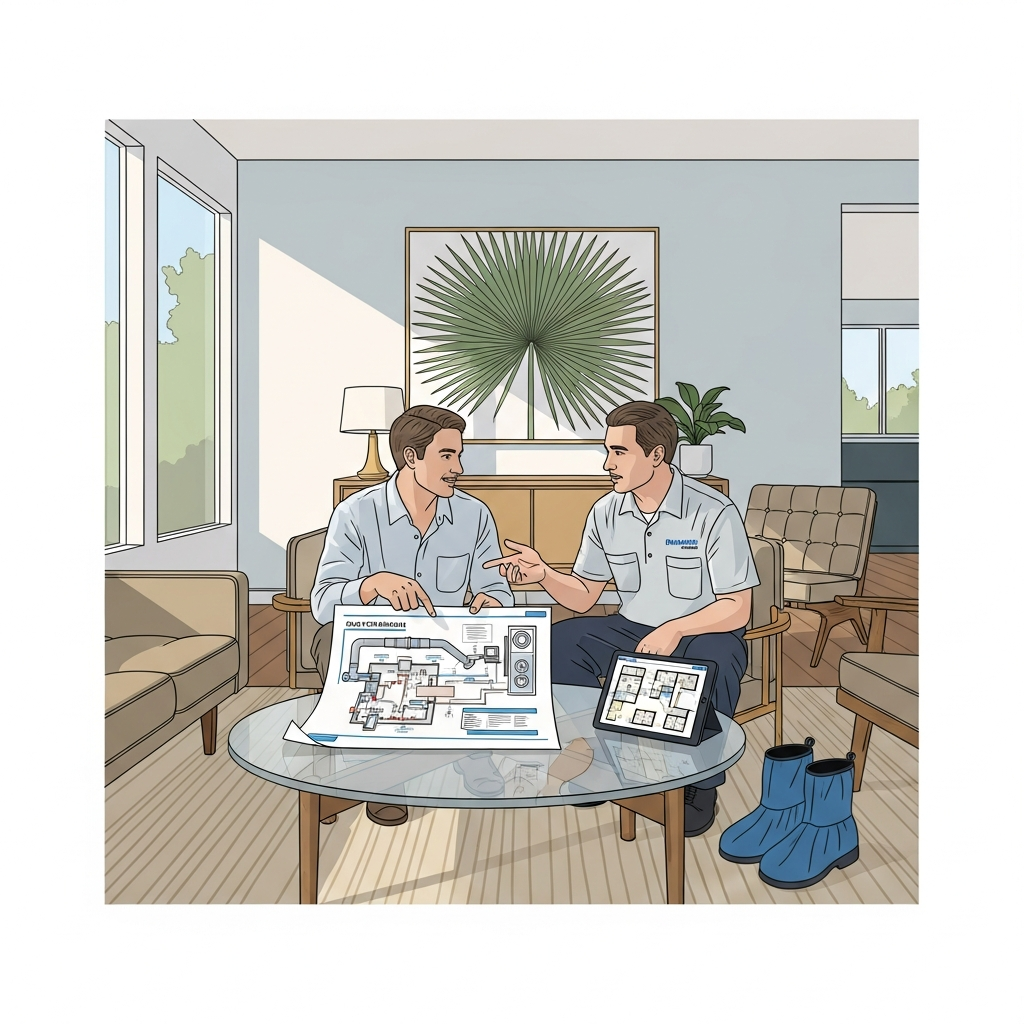
Talking about the “average cost” of air duct cleaning in Beverly Hills invites a deeper conversation than a single figure can ever provide. Homes here vary widely, from hillside villas with long duct runs and rooftop equipment to elegantly compact condos with mechanical closets tucked behind custom millwork. The factors that shape the final scope have less to do with a number on a page and more to do with what it takes to care for the system that quietly supports your comfort every day. Instead of chasing a ballpark figure, the smartest move is to understand what drives the range and how a high-caliber provider approaches your home, your time, and your finishes. Early in that discovery, it can help to acquaint yourself with vetted approaches to air duct cleaning so you can confidently frame questions and expectations.
There is a distinct Beverly Hills element to this topic. Beyond square footage, we see intricate architectural details, multiple HVAC zones, and a lifestyle that prizes discretion and precision. Many properties have undergone tasteful renovations over the years, layering new finishes and smart controls onto established infrastructure. Some residences are served by tight alley accesses or steep driveways that reshape how equipment is staged. Others share walls and hallways with neighbors who work from home and depend on a quiet building environment. Every detail affects planning, communication, and the methodical steps that deliver a result you can feel when you inhale in your living room on a bright afternoon.
What really shapes the scope
When homeowners ask what drives the investment decision, the first answer is always the system itself. The number of supply registers and returns, the presence of zoning dampers, humidifiers, UV air purifiers, or high-efficiency filter cabinets all influence time and technique. A single-story home off Rexford with a straightforward layout presents a very different workflow than a multi-level residence in Trousdale with rooftop air handlers and long trunk lines tucked between steel and glass.
Next comes the story of the home’s recent past. If you have completed a remodel—new hardwoods and cabinetry in the kitchen, reimagined bathrooms, or a beautiful media room—fine particulates from construction tend to ride air currents and settle inside duct walls and return cavities. Entertaining often brings in outdoor air as doors open to the patio or terrace, which stirs dust and pollen in a way that neatly sealed spaces do not. Pets add warmth to a home but also contribute dander that accumulates in filters and eventually the duct interior. These nuances do not translate neatly to a single average; they define the care and time required for a proper reset.
Local logistics that matter in Beverly Hills
Even the smoothest duct cleaning relies on respectful logistics. In condos along the Wilshire Corridor, access windows must align with building guidelines, elevators need padding and reservation, and a polite quiet-hours etiquette prevails. In hillside homes, narrow approaches and limited parking ask for thoughtful equipment staging and a light footprint. Larger estates often include house managers or staff who coordinate schedules, and the provider must be flexible and discreet. This choreography takes planning. It is not a hidden surcharge so much as the reality of doing work right in spaces that deserve it.
Protection is a major element as well. In homes with marble thresholds, delicate stone, and high-gloss lacquered cabinetry near returns, technicians should use the right coverings and tapes to prevent marking. Corner guards, clean boot covers, and careful register handling are not optional; they are proof that the team values your interiors. The conversation about “average cost” is incomplete without acknowledging the time and materials allocated to preserve the home you have so carefully assembled.
Process quality and why it counts
Thorough duct cleaning is a series of exacting steps: a pre-walk to understand the layout and your concerns, a careful setup that isolates work zones, negative-air containment to keep dust from drifting through hallways, methodical agitation and extraction of debris, and a final review so you can see and feel the difference. Each step takes a portion of the day. Skipping or rushing any of them may save minutes but costs results. Beverly Hills homeowners tend to notice the details—the absence of a faint stale smell on startup, the way sunlit rooms stay cleaner longer between dustings, the evenness of temperature delivery—so a provider who is proud of the process will describe it clearly long before a date is set.
Along the way, assessment matters. A seasoned technician will read the clues: filter history, lint in return cavities, scuffs or fine dust on registers, and the sound and feel of airflow when the blower runs. Those impressions guide where time is best spent, how to navigate tricky runs, and whether accessories like zoning components or humidifiers need extra attention. Great workmanship is not guesswork; it’s observation and technique from the first knock on the door to the last walk-through.
Comparing proposals without fixating on a single number
When you request proposals, you may receive a range of timelines and scopes. Rather than scanning only the bottom line, weigh the narrative. Does the provider describe how they will protect your finishes? Do they plan for access and building coordination? Are they prepared to document rooftop equipment or reach tight mechanical closets? Will they explain what they find as they go and offer practical aftercare advice? The best proposals read like a plan tailored to your home, not a one-size template.
Understanding these elements also frees you from the gravity of the word “average.” Your home is not average. Your goals are not generic. A clear, respectful plan matched to your property’s demands is what creates value. If you want examples of method and care to benchmark against, you can consult a trusted overview of air duct cleaning practices to frame your expectations and ask better questions before choosing a date.
What you should expect on the day
On service day, the team should arrive on time and ready to protect your home. They will walk through the plan again, confirm any building requirements, and set coverings. Equipment is staged to minimize movement and footprint, especially in homes with intricate flooring patterns or delicate rugs. Negative-air systems are set to pull dust away from living areas into secure collection. Registers and returns are removed with care—labeling and protecting decorative pieces—and the internal cleaning proceeds methodically from trunk lines to branches, with special attention to transitions and turns where debris likes to settle. The process is efficient but unhurried, aiming for thoroughness, not pageantry.
If your property includes multiple zones, the team will complete one at a time to keep the flow organized and contained. Rooftop units are photographed or documented for reassembly accuracy. If humidification or UV accessories are present, they are inspected for function and cleanliness. The final steps include reinstalling registers, confirming airflow, and tidying the path of travel so the only visible change is a brighter, fresher feel to the air when the system starts again.
Aftercare that preserves your result
Following the visit, small habits extend the benefits. Replace or check filters on the schedule appropriate to your system and lifestyle—homes with pets or frequent entertaining may need more frequent checks than quieter households. If a remodel is on the horizon, plan duct cleaning to follow the last bit of finish work to avoid reintroducing dust. If your system includes smart zoning, consider a short follow-up to ensure dampers are responding properly after cleaning. These steps keep your system breathing well and your spaces settling into the calm equilibrium you prefer.
The Beverly Hills reason this conversation matters
In a city where care is evident everywhere—from meticulously manicured hedges to galleries of art and sculpture—air quality is part of the same standard. Clean ductwork supports the serenity you designed into your rooms. Fewer particles land on glass, polished stone, and lacquer; odors recede into the background; airflow feels even and confident. While it is tempting to seek a simple average to guide your decision, what you truly want is assurance that the result will match your home and lifestyle. That assurance comes from process, protection, and thoughtful scheduling much more than from a generalized figure that cannot see the marble, the sunlight, the canyon breezes, or the people who live there.
Frequently Asked Questions
Here are some of the most common questions Beverly Hills homeowners ask when they begin planning, especially those who are comparing proposals for the first time.
Can you give an exact number without a walkthrough?
Responsible providers avoid quoting a firm figure without at least a basic assessment. The layout, access points, number of registers, and the system’s condition all shape the scope. Even a brief, well-structured site visit—or, in some cases, a video walkthrough with clear notes—allows a proposal that respects your property and avoids surprises later.
What if my home has very delicate finishes?
Then protection becomes a named part of the plan. Technicians should explain the coverings they will use on stone thresholds, stair treads, and high-gloss cabinetry. Decorative registers should be removed, labeled, and cleaned with care. If anything in your home is especially rare or newly installed, point it out during the walkthrough so the protection plan accounts for it from the outset.
Will cleaning help with dust that appears quickly after housekeeping?
It often does. Duct interiors that carry residual construction dust, lint, or fine particulate from seasonal winds can redeposit those materials onto surfaces even after thorough cleaning. By removing buildup inside the system and replacing filters on schedule, many homeowners find dusting stretches farther and rooms retain their just-cleaned clarity longer.
How long does a typical visit take?
Timing varies. A smaller condo with a simple layout may be completed in a morning, while larger homes with multiple zones and specialty components may require most of a day. The right pace is steady and precise, with time allocated for protection, methodical cleaning, and an orderly wrap-up that leaves your home as serene as it was when the crew arrived.
Will my pets need to leave during the service?
Not necessarily, but it helps to keep pets comfortable in a quiet room away from the work area. Crews can plan their path of travel to avoid startling them, and protective coverings will help keep paws safe from cords or equipment. Share any pet routines at the start so the team can work respectfully around them.
What is the best way to compare two proposals?
Look beyond the headline promise and read the methods. Do they describe setup, containment, protection, and a step-by-step cleaning path? Do they address your home’s specific access needs and finishes? Are they prepared to coordinate with a concierge or house manager? The proposal that acknowledges these details is usually the one that treats your home as more than a line item.
Moving forward with clarity
The right conversation is not about an average; it is about your home and how to care for it well. If you would like a reference point for thoughtful methods and a sense of what a well-planned visit looks like from start to finish, explore an established perspective on air duct cleaning. When you are ready, schedule a day that aligns with your routine and enjoy the quiet confidence that comes with a cleaner, more composed home environment.