
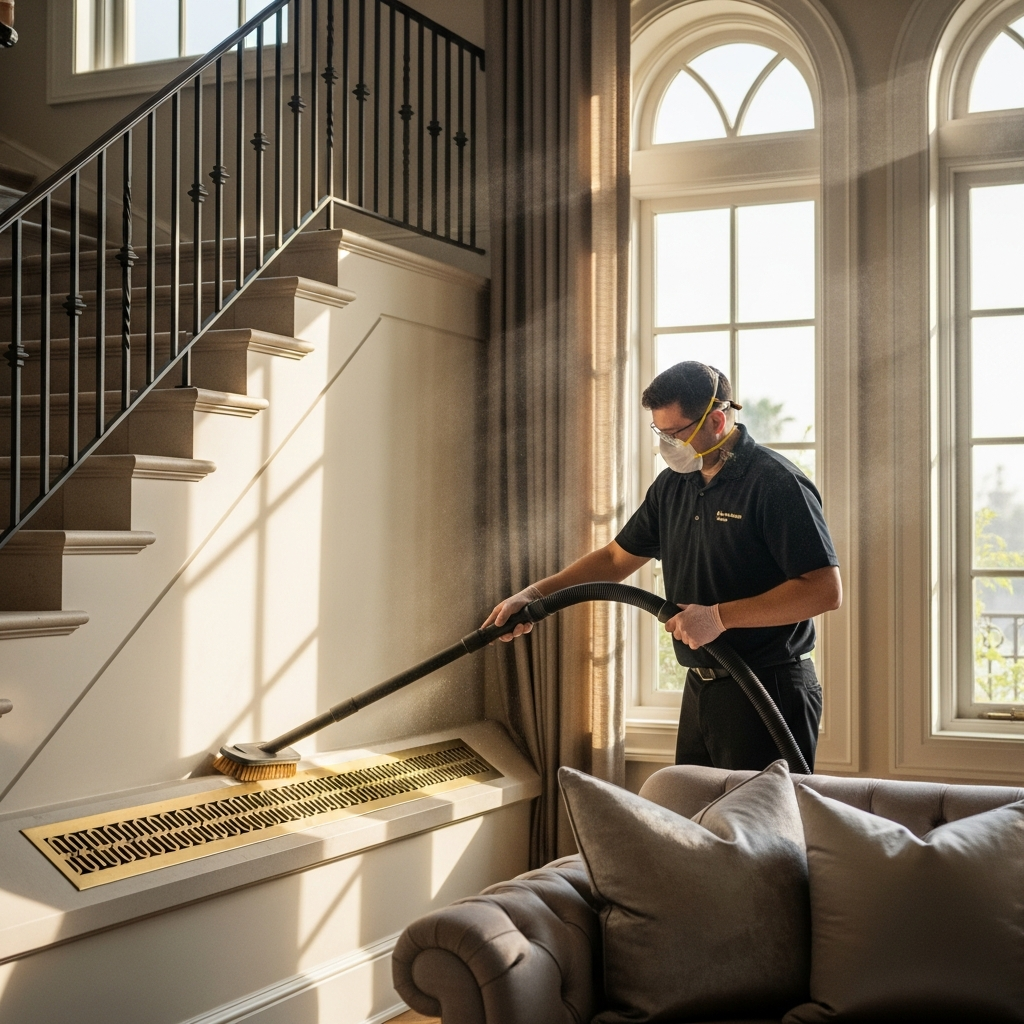
If you have ever opened a supply register in a Beverly Hills home and felt a faint puff of air that smelled a little like last season’s fireplace or last week’s dinner party, you have already met the quiet world inside your air ducts. In neighborhoods from the Flats to Trousdale and the winding streets above Sunset, our homes move a surprising amount of air through those concealed passages all day and all night. Cleaning them is one of those deceptively simple home care steps that, when done correctly and at the right time, resonates everywhere in the house—from how your space smells when you return from a trip, to the steadiness of the temperature in a media room, to how easily your HVAC responds during the first burst of Santa Ana winds.
As someone who has spent years walking mechanical rooms tucked behind art walls and under limestone staircases across Beverly Hills, I have seen what a careful, methodical approach to air duct cleaning can do. The benefits aren’t flashy; they are felt in the quiet background moments, the ones you only notice because a small daily annoyance suddenly disappears. What follows is a look at those benefits through a local lens—because our climate, our architecture, and the way we live here all put their own signature on the air we breathe indoors.
Breathing Easier in Microclimates from the Flats to the Canyons
Beverly Hills is deceptively varied in its microclimates. The Flats enjoy coastal influence and mild breezes, while the canyons—Coldwater, Benedict, and beyond—trap air differently depending on time of day and time of year. Add Santa Ana events that race downslope with arid force and you have a recipe for dust entering through the smallest gaps, settling in returns and supply lines, and then recirculating. When ducts are cleaned with source-removal techniques, you are not just extracting “dust” in a generic sense; you are removing a localized blend of canyon dust, tiny leaf fragments from jacaranda and olive trees, and fine ash that can drift here after regional wildfires. The result is a perceptible change in the air’s neutrality. Homes smell less “lived in,” more like themselves—clean but unperfumed, calm, and clear.
People often tell me the clearest sign after a thorough cleaning is the morning feel in bedrooms and primary suites. Instead of a faint mustiness from overnight cycling, there is simply less of anything at all. This matters not only for comfort but also for how fabrics and finishes age. An invisible haze of particulate eventually finds its way onto drapery linings and silk upholstery. Keeping ducts clean reduces that constant settling, extending the time between deeper interior cleanings and helping preserve delicate textiles and finishes that define so many Beverly Hills interiors.
Temperature Consistency and the Gentle Sound of Balance
When ducts are loaded with accumulations, the airflow is disrupted in ways you can feel as subtle temperature swings between rooms or persistent hot-and-cold corners. A clean network supports more even distribution, especially in homes where the architecture—double-height ceilings, dramatic glass stairwells, and long gallery corridors—naturally challenges any HVAC system. After a quality cleaning, supply registers stop wheezing. The faint hiss becomes a steady whisper, and dampers respond more predictably. In one Benedict Canyon residence with a cantilevered living room, the homeowner finally stopped nudging a thermostat up and down during dinner because the warm corner near the fireplace was no longer starving the far corner of air.
The sonic benefit is real. Registers that collected lint on the vanes and returns that carried a thin felt of dust can change the tone of air moving through them. Properly cleaned, the background white noise softens. The home sounds quieter, calmer. It is a small—but telling—signal that the system is sliding into an easier rhythm.
Protecting the Investment: Art, Finishes, and Mechanical Longevity
Most Beverly Hills homes are collections of materials we deeply care for: lacquered millwork, stone islands, custom rugs, framed works, and often, museum-scale pieces. Particles traveling through ducts eventually settle where air slows—on frames, under furniture edges, inside cabinetry. Reducing the burden at the source lowers what lands on those surfaces. I have seen cleaning coincide with fewer micro-scratches on high-gloss cabinetry because there is simply less particulate floating in the room when doors open and close. Less dusting friction, fewer fine abrasions over time.
There is a second layer to this. A dust-loaded system puts extra strain on fans and coils, not unlike a car driving with a clogged air filter. While the physics are straightforward—less resistance means smoother operation—the effect shows up as steadier cycling and less mechanical “work” for the system to achieve the same comfort. In practical terms, that can mean fewer service calls for odd noises and a longer lifespan for components that are not running against a constant film of debris.
Odors: From “Something’s Off” to “Back to Neutral”
Odor is the language of the unseen. In older homes that have welcomed decades of holidays and remodels, smells can linger inside ductwork: traces of a long-gone pet, a persistent kitchen note, a whiff from a fireplace weekend. Cleaning doesn’t “perfume” the ducts; it removes the places where those molecules cling. Afterward, when the system ramps up, what circulates is simply conditioned air, not a medley of memories. That neutrality helps everything else in the house read as cleaner—the bedding feels fresher, the closets smell quieter, the entryway welcomes you in crisp silence.
In several hillside properties, we have also seen post-fire season odors clear after cleaning even when the home never took on visible smoke. Fine ash and smoke compounds can lodge invisibly in returns. Source-removal cleaning flushes those materials and the odor profile that comes with them. It is satisfying to have guests stop at the door and remark on how “calm” the house feels without being able to put a finger on why.
Allergy Relief and the Seasonal Rhythm of Beverly Hills
Spring in Beverly Hills is glorious—and sneezy for many. Jacaranda bloom, olive pollen, and local grasses can all pass through window screens on gentle days, later pulled into returns. For sensitive individuals, having ducts that are free of buildup simply reduces one more place those seasonal particulates can linger. While cleaning isn’t a medical treatment, it complements good filtration and housekeeping so that the indoor baseline is more stable when the outdoor air is exuberant with plant life.
Similarly, during the dry Santa Ana periods, aridity lifts fine dust into the air. Homes with open canyon exposures experience this acutely. A cleaned system filters and cycles without that extra internal reservoir of settled dust waiting to recirculate. The net effect is a steadier indoor environment through the rhythms that define our local calendar.
When Architecture is the Star, Air Needs to Support the Scene
Our homes here love to push boundaries: soaring spaces, hidden doors, and rooms that open entirely to terraces. The ducts, vanishing by design, are left to perform behind the curtain. When those ducts are maintained, the architecture reads the way it was drawn—quiet, effortless, without temperature or sound distractions nudging you out of the moment. In a Trousdale renovation with expansive glass, cleaning paired with air balance transformed a living area that once felt drafty. The stone held its temperature better, art lighting was no longer competing with heat plumes, and entertaining could go past midnight without anyone reaching for a wrap.
Even in more traditional estates where rooms are defined and compartmentalized, a clean duct system shows up as small gracious moments: a dressing room mirror that doesn’t gather a nightly veil of dust, a library that keeps its polished wood scent untainted by hallway traffic, a kitchen where cooking aromas stay where they belong and fade when the evening ends.
What Quality Cleaning Looks Like (And Why It Matters)
Not all approaches are equal. The most effective methods focus on source removal: agitating interior surfaces with specialized tools while the system is under negative pressure so debris goes one way—out—without drifting into rooms. Register by register, return by return, the technician works the entire pathway. When the work is done meticulously, you can often see a visible brightening inside the duct through access panels or by peering into a register opening with a light. The goal is not a quick pass but a reset, a fresh baseline for the system.
This is also the moment to look at details like the cleanliness of return cavities, the state of insulation within duct chases, and whether any minor gaps at joints might be inviting attic or crawl air into the mix. Addressing those while the system is open adds a compound benefit: the air you breathe is cleaner, and the pathway is tighter and more efficient. Somewhere in the middle of a full-home project, when the living level is finished and the bedroom level is about to begin, I like to pause and listen. The house sounds different—quieter, lighter—an ideal midpoint reminder of why the work matters as we move toward completion and revisit the upstairs returns. Speaking of midpoints, many homeowners choose that stage to schedule an additional service like coil cleaning or simply to take a deep breath of the difference. It is also a natural time to plan the next step toward continued air duct cleaning as part of a broader seasonal routine.
Entertaining, Hospitality, and the Subtle Comforts Guests Notice
This is a city of gracious hosts. Great rooms open to terraces, caterers move in and out with practiced elegance, and guest suites see a revolving door of family and friends. Clean ducts play a supporting role in that hospitality. Spaces recover more quickly after a lively evening. Fresh air scent returns by morning, and bedding and upholstery don’t retain a trace of hors d’oeuvres or a passed tray of sliders. In guest rooms that are rarely used, there is less stale odor when the door opens, because there is less residual dust and fewer odor compounds sitting in the system waiting to cycle through.
For households with pets, the effect is similar. We love them dearly, and we also notice how their dander lingers in fabrics and returns. Removing that reservoir at the duct level shortens the half-life of pet scent in the home, so a morning clean actually feels like a reset, not a temporary mask.
A Quieter, Calmer Maintenance Rhythm
One of the less obvious benefits is how cleaning resets the rhythm of other household tasks. When ducts are clean, filters tend to look cleaner longer because they are not immediately reloading from deeper in the system. Housekeeping discovers that dusting truly lasts from week to week. Your HVAC contractor can hear the system better during regular service because wind noise and whistling from grime-coated registers are gone, making it easier to spot actual mechanical issues before they grow.
In homes with smart building management, we also see better agreement between sensors and lived experience. The thermostat says 72, and the bedroom feels like 72—no compensating by layering throws or adjusting vents. That alignment is a small daily luxury.
Planning, Timing, and Respect for Your Home
Because Beverly Hills homes often host art, bespoke finishes, and busy calendars, planning is part of the benefit story. Quality providers protect floors and furnishings, coordinate with estate managers, and stage work so daily life continues. When a project is mapped to your schedule—say, upstairs in the late morning and downstairs after school pickup—the sense of disruption all but disappears. The cleanup looks like we were never there, except that the house feels better.
It is also wise to choose timing that relates to your life. Right after a remodel closes up is ideal, as is a reset ahead of spring entertaining or following a dusty wind season. The house will tell you when it is ready: registers that show lint earlier than they should, a gentle mustiness after returning from the weekend, an extra layer on a coffee table one day after housekeeping. Listen to those cues; cleaning restores the balance.
Frequently Asked Questions
How often should Beverly Hills homeowners schedule duct cleaning?
Most homes here benefit from a thorough cleaning every two to four years, with the shorter interval for canyon properties, homes with pets, frequent entertaining, or those affected by nearby construction or wildfire smoke. After a remodel, it is wise to schedule a reset no matter the calendar.
Will cleaning make my home smell like chemicals?
No. Proper source-removal cleaning relies on mechanical extraction, not perfumes. Your home should smell like itself—neutral and calm—when the work is complete. If a sanitizer is discussed for a specific concern, it should be used judiciously and only when appropriate.
Can duct cleaning improve airflow to a stubborn room?
Cleaning removes internal resistance, which often helps. If a room still struggles, it may need balancing, duct modifications, or a review of door undercuts and return pathways. Cleaning is the foundation that lets those adjustments work as intended.
Is there a risk to delicate finishes or custom registers?
With careful protection and the right tools, finishes and custom grilles remain safe. Registers are removed and reinstalled with gentle handling, and work areas are covered. Communication with your estate manager or designer ensures every surface is respected.
How long does a whole-home cleaning take?
Most single-family homes can be completed in a day, while larger estates may take two or more days, staged to minimize disruption. The goal is thoroughness, not speed, and a tidy wrap at each day’s end.
What should I do to prepare?
Clear access to mechanical rooms and visible registers is helpful. Let your team know about special art, sensitive furnishings, or rooms that must remain undisturbed. From there, a good provider handles protection and cleanup.
Will cleaning solve all indoor air quality issues?
Cleaning is an essential part of a broader strategy that includes filtration, ventilation, humidity control, and smart housekeeping. It removes a major reservoir of dust and odor compounds so your other measures perform at their best.
Call to Action
If you are ready to feel the quiet difference a clean system makes—crisper mornings, calmer evenings, and interiors that simply stay themselves—schedule professional air duct cleaning with a team that understands Beverly Hills homes. With thoughtful staging and respect for your space, the work disappears into the background while the benefits linger in every room you live in.