
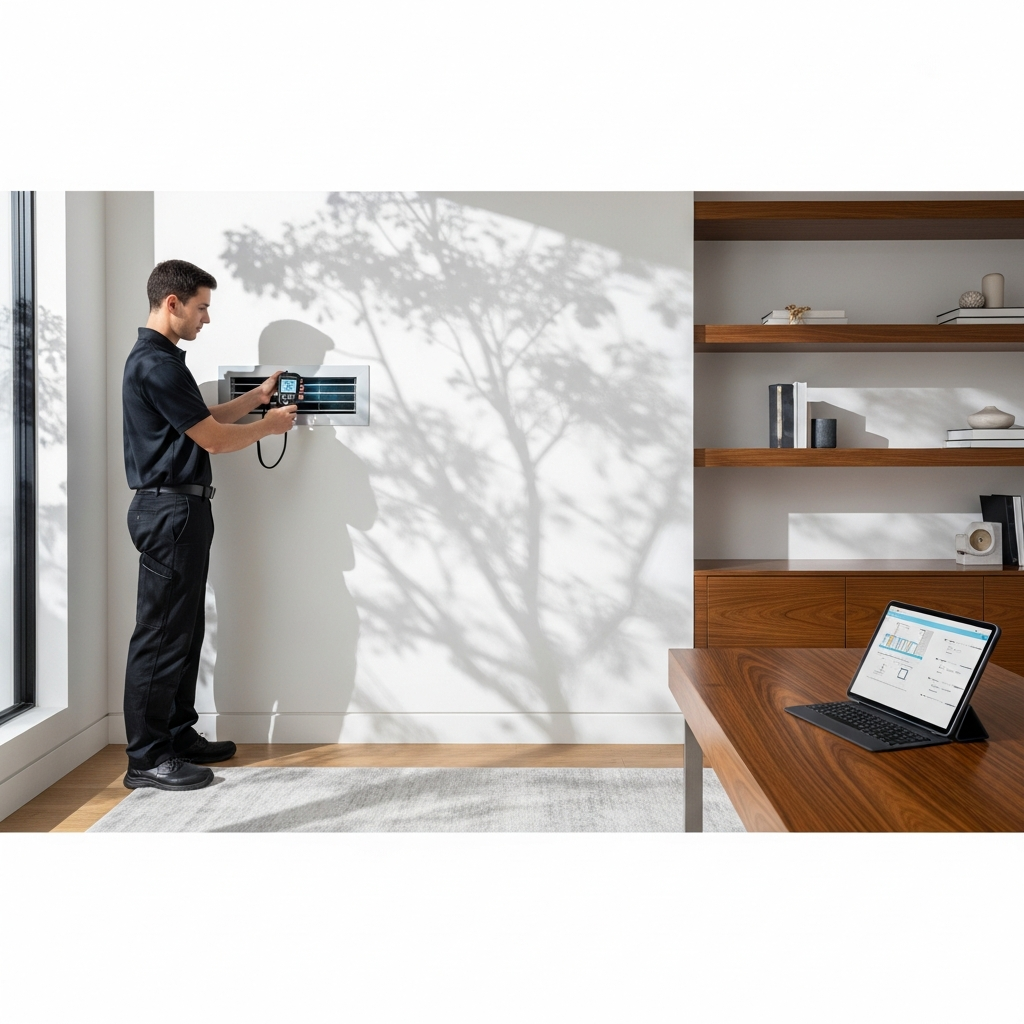
On a typical Beverly Hills afternoon, the sun slides across canopies of jacaranda and ficus, turning sidewalks into pockets of light and shade. Interiors respond in kind: a sunroom warms quickly, a shaded study stays cool, and a second-floor bedroom swings a few degrees as breezes change. In this dance, one constant separates easy comfort from daily improvisation—a system that has been cared for on purpose. That is why establishing a routine of air conditioning maintenance matters here more than almost anywhere. Our homes are high-performing, our expectations are high, and our weather asks for quiet reliability, not just raw cooling power.
When you consider the way Beverly Hills is built—expansive glass, discrete mechanical rooms, flat roofs paired with terraced gardens—you see how much is asked of cooling systems. They are expected to be invisible until needed, then immediate and whisper-quiet. Maintenance is the act of aligning equipment with those expectations. It turns theoretical efficiency into felt comfort and transforms “it works” into “I don’t have to think about it.”
A Climate That Rewards Preparedness
We live between marine layers that drift east in June and heat waves that roll in from the Valley by August. That variability means a system might idle gently for days, then be called into heavy service for a week straight. Without maintenance, those shifts expose the weak links—slightly dirty coils that turn into warm rooms, a marginal capacitor that fails on a 100-degree afternoon, or a drain line that clogs because algae had a quiet month to grow.
With maintenance, the system is prepared for both edges of the season. Filters are chosen for local particulates, coils are spotless so heat exchange is easy, and electrical components are verified so the first hard start of summer is uneventful. Preparedness shows up as reliability, and reliability is the standard by which comfort is measured during our busiest months.
Why Comfort Depends on Airflow
Whenever someone tells me their home never quite feels right, nine times out of ten the issue comes back to airflow. In larger homes, static pressure creeps up as filters load and ducts accumulate a film of dust. Registers deliver less air than design intended, which forces longer runtimes and creates uneven spaces where the thermostat says one thing and your skin says another. Maintenance addresses this not as a one-off fix, but as a practice. Each visit checks the path air travels—from return grilles through the air handler, across the coil, and into the ducts—to make sure nothing is quietly undermining performance.
That attention pays dividends when multiple systems serve distinct zones. Bedrooms in the Flats behave differently than hillside studios with late sun exposure. Balanced airflow lets each zone meet its target without borrowing from another, reducing those awkward compromises where you cool one wing aggressively just to make another wing tolerable.
Health and Serenity Indoors
Air quality tends to get attention during the visible moments—when wildfire smoke descends or when pollen peaks in spring. But the habits that keep air fresh are built during maintenance. Consistently clean filters, condensate pans free of biofilm, and coils that shed moisture quickly limit the environment where odors and irritants originate. You experience that as fewer sneezes, less dust on surfaces, and a home that never smells “stale” after a long day with doors closed.
There is also the serenity that comes with a quieter system. Vibrations, rattles, and fan noise often signal parts that need cleaning or alignment. Service restores balance, so you hear less of the system and more of your home—the voices at dinner, the soft rustle of leaves in the courtyard, the calm of a late-night movie without a blower punctuating dialogue.
Protecting Architectural Finishes
From custom millwork to textured plaster and curated stone, Beverly Hills interiors are crafted with care. Maintenance is a guardian for those finishes. Condensate overflows can stain ceilings and swell wood; an unnoticed refrigerant issue can drive runtimes long enough to pull extra humidity through a coil, leaving rooms feeling sticky even when cool. Regular inspection and tune-ups keep those dominoes from falling. You safeguard the investment in your home by tending to the system that quietly protects it.
On the exterior, a clean, secure condenser matters too. When landscaping is part of the visual composition, equipment should live discreetly without intruding. Gentle coil cleaning and vibration checks prevent the rumble that can echo in quiet courtyards and make outdoor dinners feel less refined.
Efficiency You Can Feel
Efficiency is not purely a line on a spec sheet; it is felt as responsiveness. After proper maintenance, setpoints are achieved faster, and the system modulates rather than sprints, avoiding the temperature swings that make you reach for a sweater one minute and a glass of ice water the next. It is the difference between comfort that needs explaining and comfort that you simply inhabit.
There is a broader benefit too. By reducing energy use during peak hours, a well-tuned system contributes to neighborhood stability when demand spikes. That matters in late summer, when grid alerts are more common and the collective effect of efficient homes becomes tangible.
What Maintenance Really Means
People often picture a technician changing a filter and moving on. In reality, a proper visit reads like a story about how your system is performing. Electrical tests catch components nearing end-of-life. Refrigerant levels are assessed to confirm not just quantity but the way the system behaves under load. Coils are inspected for both cleanliness and fin spacing, because bending and dirt both impede heat transfer. Airflow is measured to ensure the fan curve and duct design are aligned. If something is out of tune, the fix is targeted, not generic.
These checks are particularly important with variable-speed systems that thrive when tuned. They are capable of beautiful, quiet performance, but only when the basics—airflow, charge, cleanliness—are spot on. Maintenance tunes the instrument so the advanced features sing.
The Beverly Hills Schedule
A spring service is a classic choice, but our microclimates encourage a more nuanced rhythm. Homes in canyon-adjacent zones accumulate dust differently than those in the Flats. Properties with summer entertaining schedules benefit from a pre-event check to avoid surprises. Late August, as nights stay warm, is a smart time for a second visit focused on electrical health and condensate systems. That timing helps the system carry through September without stress.
Mid-season touchpoints are also wise for households that travel. If you set back temperatures and rely on remote monitoring, a quick verification ensures sensors are reading accurately and that the system returns to normal operation smoothly when you are on the way home.
Smart Controls Need Smart Baselines
Smart thermostats, zoning panels, and home automation all shine when the mechanicals they command are steady. Maintenance gives those technologies a baseline they can trust. Schedules become predictable, learning algorithms make better decisions, and you avoid the frustration of watching a graph oscillate because the equipment is chasing problems it cannot resolve alone. The whole home becomes calmer when the HVAC backbone is sound.
If you have been thinking about a filter upgrade, a different thermostat strategy for guest rooms, or even minor duct improvements, the middle of the cooling season is an excellent time to bring those ideas up. Pairing them with professional air conditioning maintenance ensures changes are tested under real conditions, not just on paper.
Peace of Mind for Owners and Managers
For homeowners who split time between residences and for managers overseeing multiple properties, maintenance creates predictability. You get reports, photos, and measured data that chart where the system stands. You know what was done, what can wait, and what should be prioritized before the next heat spell. That visibility reduces stress and makes budgeting for future improvements less speculative.
It also builds a relationship with a team that knows your home. In an emergency, that familiarity shortens the path to a solution. In everyday life, it means you can text a quick question and get a contextual answer, not a script.
Frequently Asked Questions
How often is maintenance necessary in our climate?
Twice a year is a strong baseline: spring to prepare and late summer to ensure a clean finish to the season. Homes with heavy use, significant dust exposure, or complex zoning may benefit from an additional mid-season check focused on airflow and drains. The right cadence fits your home’s actual behavior, not just a date on the calendar.
Does maintenance really affect energy bills?
Yes. Clean coils and correct airflow reduce the work your system performs to achieve the same comfort, which shortens runtimes. Over a season, those minutes add up. You will notice not just numbers on a statement, but a home that reaches target temperatures without feeling like it has to try.
What if my system is new?
New systems still need care to keep them operating at their designed efficiency. Early maintenance verifies that installation choices are holding steady and that filters and settings are appropriate for your home. It is also essential for maintaining manufacturer warranties, which typically require documented service.
Can maintenance solve hot and cold spots?
Often, yes. Many comfort issues are caused by restraints in airflow or duct imbalances that a trained technician can diagnose during routine service. Sometimes the solution is as simple as adjusting dampers or returns; other times a modest retrofit brings a dramatic improvement without invasive work.
How long does a visit take?
Time varies with system complexity, but thorough maintenance is unhurried. Expect a visit long enough to measure, clean, test under load, and discuss findings. Rushing undermines the value; a careful pace is part of what you are choosing when you prioritize service.
Will a maintenance plan help if I travel frequently?
Yes. A consistent plan paired with remote monitoring ensures your system holds safe temperatures and alerts are not false alarms. Before you return, it is easy to set temperatures back to normal and arrive to a home that feels exactly right.
What are the signs I should not ignore?
Short cycling, a new buzz or rattle, weak airflow at familiar registers, and any moisture where it does not belong near air handlers are all signals to act. The sooner you address them, the more likely you avoid a larger issue during a heat wave.
Is maintenance different for variable-speed systems?
The fundamentals are the same, but the stakes are higher. Variable-speed equipment rewards precise tuning. When airflow, charge, and cleanliness are right, it delivers sublime comfort. When they are off, the system can mask problems by running longer at low speeds, which wastes energy silently. Maintenance keeps the promise of that technology intact.
When comfort matters as much as craft, it pays to be proactive. If you want a home that meets you with quiet confidence during every warm spell, start with a plan and keep it. Reach out today to align your schedule, discuss your home’s unique needs, and put a rhythm in place that carries you through the season. To make the next step easy, schedule your air conditioning maintenance now and enjoy the difference thoughtful care makes from the first summer evening onward.