
Step inside a cool Beverly Hills home on a warm afternoon and you experience a kind of quiet magic: rooms feel lighter, fabrics less heavy, and the entire space breathes at a slower, more comfortable pace. That magic has a method. At its core, your air conditioning system moves heat, not cold, escorting thermal energy from indoors to outdoors and balancing airflow with exquisite timing. As a local who spends days in homes from the Flats to the ridgelines above Sunset, I’m often invited to decode what’s happening behind the scenes—why certain rooms run cooler, how humidity stays in check, and what you can do to make the whole system work with the architecture rather than against it.
The Cooling Cycle, Explained Simply
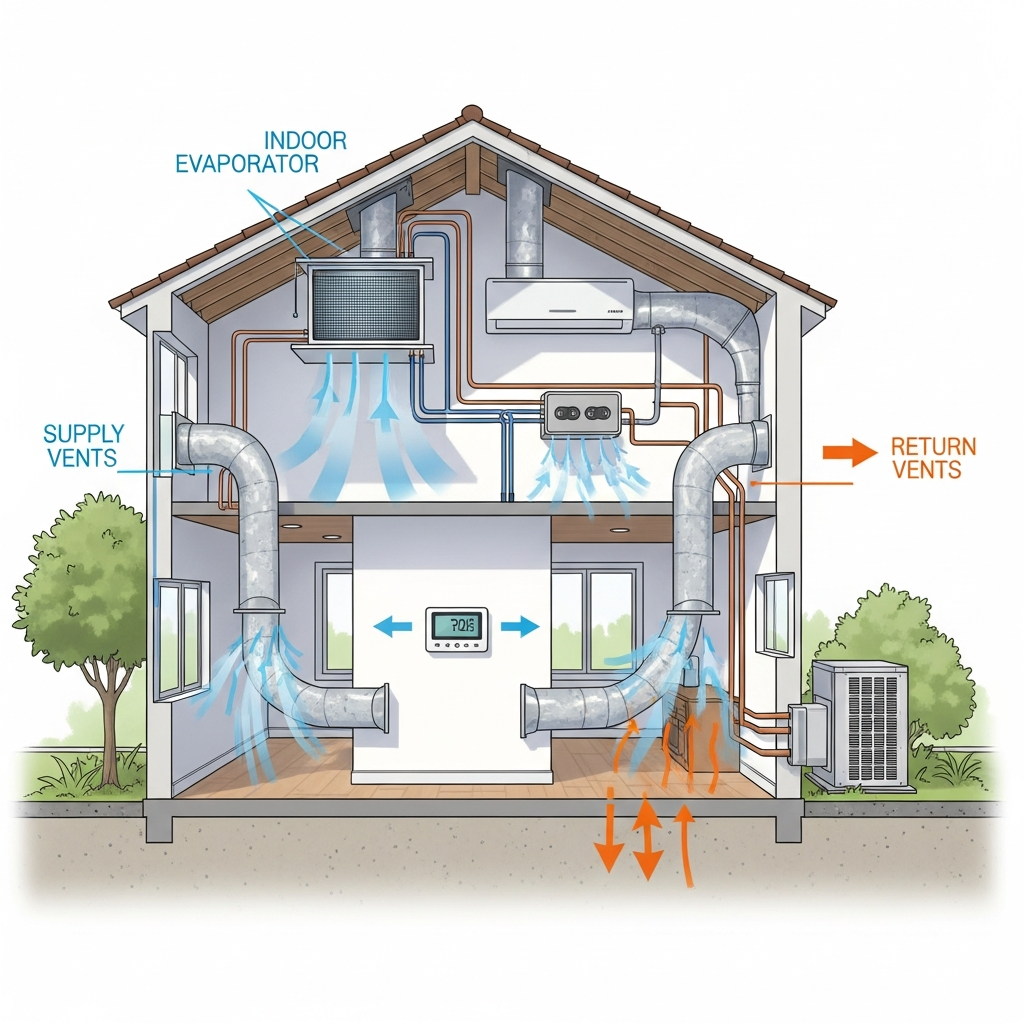
The principle begins with refrigerant, a fluid engineered to absorb and release heat as it changes state. Inside, the evaporator coil sits near your blower. Warm indoor air passes over that coil; the refrigerant inside evaporates, pulling heat and a measure of moisture out of the air. The air that leaves the coil is cooler and drier, which lends that crisp feeling you love. The refrigerant, now a warm vapor, travels through copper lines outdoors to the condenser coil, where a fan and compressor collaborate to release the heat into the open air. The refrigerant condenses back into a liquid, returns indoors, and the cycle continues. It’s a loop of careful choreography that keeps living spaces at that just-right temperature.
Airflow: The Unsung Hero
Cooling capacity is only half the story. Airflow is the other half, and in Beverly Hills homes—where room additions, vaulted ceilings, or long interior hallways are common—airflow design makes all the difference. The blower must move enough air across the coil to pick up the right amount of cooling. Ducts must deliver that air evenly and return it smoothly without turbulent losses. When airflow is restricted, even the best equipment struggles: coils get too cold, can frost, or short cycle; rooms feel stuffy; and humidity sneaks higher. Conversely, balanced airflow ensures each room experiences comfort consistently, from a canyon-facing bedroom to a sunlit living room just off Rodeo Drive.
Return air placement is a frequent conversation. Homes with a single return in a central hall sometimes leave distant rooms under-served. Strategic return additions, sometimes small and discreet, reduce pressure imbalances. The result is quieter operation and steadier comfort—proof that the path air takes matters as much as how cold it is.
Thermostats, Sensors, and Smarter Control
Thermostats translate comfort preferences into instructions. In our climate, gentle, longer cooling cycles often feel better than short bursts; they also wring out humidity more effectively. Modern thermostats can be programmed to encourage these smoother patterns. Placement matters, too. A thermostat basking in a slice of afternoon sun or neighboring a heat-generating sconce will lie about the true comfort of the home, prompting erratic cycling. A small relocation—away from drafts, windows, and heat sources—gives the system better data and improves the way it treats your rooms.
In larger homes, zoning divides spaces into independently controlled areas. A sensor in the primary suite ensures that nighttime comfort is handled with precision, while a separate zone cares for the main floor. Dampers in the ductwork modulate airflow to each zone. When tuned well, zoning invests in comfort efficiency; when neglected, it creates conflicts that feel like hot-cold arguments across hallways. Regular checks of damper operation and sensor calibration keep zones harmonious.
Humidity and the Beverly Hills Microclimate
Though Southern California is often thought of as dry, humidity still plays a role in how cool feels. A well-performing system lowers indoor humidity as it cools, which is why your home feels more serene on a good AC day than it does with only fans running. In coastal-influenced pockets of Beverly Hills, that dehumidifying effect becomes even more noticeable. The evaporator coil’s temperature and the speed of the blower shape this behavior; slower, steady cycles often remove moisture more effectively, especially during shoulder seasons when the sun is bright but the air is not excessively hot.
Duct Design in Architectural Context
Architecture shapes airflow. Mid-century homes with flat roofs may rely on limited attic space for ducts, while grander estates use long runs with multiple branches. Bends, transitions, and even the material of the duct influence efficiency. Leaks at joints, especially in older systems, can pull attic air into the return or leak cooled air into unconditioned spaces, reducing delivered cooling and upsetting pressure balances. Sealing and modestly resizing certain runs often yield outsized results: quieter vents, cooler far bedrooms, and a system that seems to exhale more easily.
Equipment Types and What They Mean for Operation
Most Beverly Hills homes rely on split systems with an indoor coil and an outdoor condenser. Many also use heat pumps, which can reverse the cycle to provide heat in mild winters. Variable speed and two-stage equipment deserve a nod here. These systems can modulate their output, matching real-time needs rather than sprinting at full speed. That means longer, calmer cycles that control humidity and limit temperature swings—an approach that harmonizes perfectly with our climate and the quieter ambiance many homeowners prefer.
Noise considerations also inform choices. Outdoor units near patios or bedroom windows benefit from models designed with sound-dampening in mind. Indoors, a variable-speed blower reduces the whoosh of air at start-up and sustains a balanced flow. All of this supports the sense that the system is present but not intrusive—doing its work in the background while you enjoy the quiet.
Filters, Coils, and the Clean-Air Connection
Filtration is not just about dust; it is about the entire breathing experience of a home. High-MERV filters capture fine particulates that otherwise settle on furniture and infiltrate fabrics. But there’s a trade-off: finer filters can impede airflow if not sized properly or replaced regularly. In dusty or pollen-heavy weeks, such as after winds sweep down from the canyons, more frequent checks keep the system operating at its design sweet spot. Clean evaporator and condenser coils maintain thermal exchange; even a modest film of dust can reduce performance and cause the system to work harder than necessary.
What “Right-Sized” Means Here
There’s a temptation to think bigger is always better, but an oversized AC cools the air so quickly that it doesn’t run long enough to remove moisture or even out temperatures between rooms. The result can be a home that is technically cool but not truly comfortable. Right-sizing considers window orientation, shading from mature trees, insulation levels, and the heat load from cooking and entertaining. In Beverly Hills, where sun angles and landscaping vary widely across properties, a thoughtful load calculation is priceless for both comfort and energy mindfulness.
Maintenance as a Comfort Strategy
Seasonal maintenance keeps all these moving parts aligned. A professional will verify refrigerant levels, test electrical components, confirm safe condensate drainage, and measure temperature differentials that reveal how well the coil is exchanging heat. They will also evaluate duct integrity and advise on any room-by-room airflow quirks. Think of this not as a chore but as an annual calibration of the home’s comfort instrument—a tune that lets the orchestra play softly yet beautifully, even on hot days.
Putting It All Together in Day-to-Day Living
When the design, equipment, and maintenance merge, the sensation inside your home changes subtly but profoundly. Mornings start cool without a blast of noise, afternoons remain composed even when the sun leans hard against west-facing glass, and evenings invite conversation without the distraction of gusty vents. Midway through a summer day, when you step back inside from an errand on Cannon or Beverly Drive, that familiar, measured coolness is proof that your system is doing more than just chilling air; it is curating comfort. It is one reason many residents opt to review their systems each spring, considering modest upgrades like variable-speed blowers or refined controls that elevate the experience even further and keep their air conditioning in tune with the way they live.
Frequently Asked Questions About How AC Works
Why do some rooms feel cooler than others?
Uneven temperatures usually indicate airflow imbalances or duct leakage. Long runs, undersized branches, or a lack of returns in far rooms create pressure differences. A professional airflow assessment can pinpoint adjustments—like resizing a run or adding a return—that bring rooms into alignment.
Is it normal for my AC to run for a long time?
Yes, in many cases longer, steadier cycles are ideal. They are quieter, better at controlling humidity, and kinder to components. Short bursts often signal an oversized system or thermostat placement that encourages rapid cycling.
What does the filter really do for cooling?
A good filter protects the coil from dust that would otherwise insulate it and reduce heat transfer. It also improves indoor air quality. The key is choosing a filter with the right balance of capture efficiency and airflow and replacing it regularly.
Do smart thermostats actually help?
They can, particularly when programmed for gentle temperature ramps and when sensors are placed thoughtfully. Smart control is only as good as the information it receives, so location and calibration still matter greatly.
Should I consider zoning?
If your home has spaces with very different loads—sunny second floors, shaded lower levels, or guest suites used sporadically—zoning offers nuanced control and can reduce conflicts between rooms. Proper commissioning is essential for best results.
Ready to Experience Smoother Comfort?
If you want your home to feel consistently calm and cool from breakfast to bedtime, a focused review of airflow, controls, and equipment can transform the experience. Reach out to a local team that understands our architecture and microclimates, and let’s fine-tune your home’s comfort so your air conditioning works with elegance as well as power.