
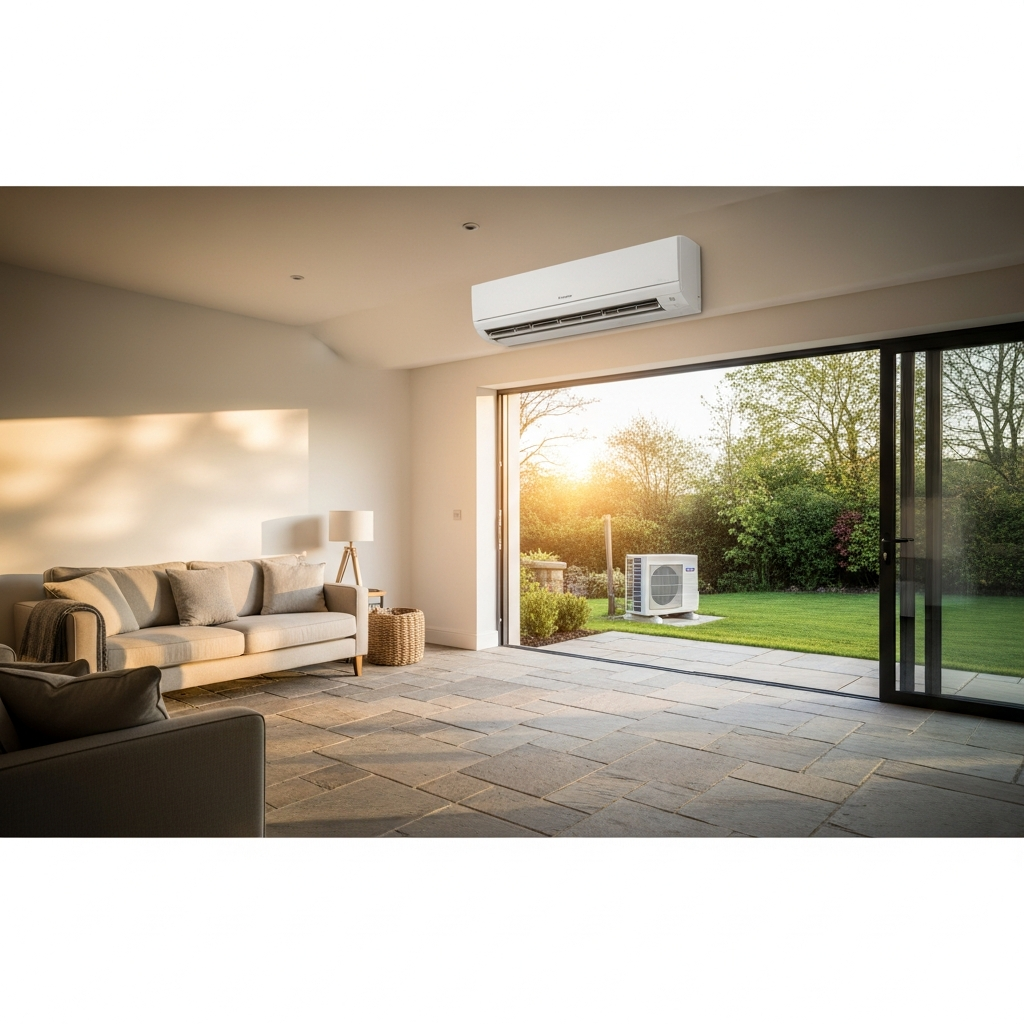
In Beverly Hills, guest houses are more than overflow sleeping quarters. They are extensions of hospitality and privacy—quiet work studios, serene wellness spaces, or elegant accommodations for family and friends. These structures often sit across a courtyard, above a garage, or along a garden path, and they call for comfort solutions that are independent, discreet, and quick to respond. Ductless systems—particularly modern inverter-driven mini-splits—excel in this role. They offer precise temperature control, superb efficiency, and installation flexibility that respects architecture. Over years of helping homeowners fine-tune detached suites from Trousdale to Benedict Canyon, I have seen ductless designs elevate the entire property by delivering reliable, quiet air conditioning without the disruption of extensive ductwork.
Guest houses pose distinctive challenges. They are often compact yet highly glazed, with doors that open frequently to terraces or pools. Occupancy can swing from empty to full in a day. Traditional central systems, designed for steady loads, may not be nimble enough for these patterns. Ductless systems shine because they modulate output continuously, adjusting to the smallest demand changes. When the space is vacant, they idle at low power; when guests arrive under a hot afternoon sun, they ramp smoothly to restore comfort without noise or fuss.
Why Ductless Excels in Detached Suites
Mini-split systems pair a small outdoor unit with one or more indoor heads that deliver conditioned air directly to the room. Without long duct runs, there is little opportunity for energy loss or airflow noise. Installation is surgical: a small wall penetration for line sets, a condensate drain route, and a compact mounting location for the indoor unit. For spaces where architectural features must be preserved, the low-impact approach is invaluable. There is no need for soffits or bulkheads, and no disruption to meticulously finished ceilings.
Because ductless systems are inverter-driven, they deliver capacity with remarkable finesse. They avoid the hard starts of traditional equipment, which keeps sound low and extends component life. Guests experience an even, soft cool that never fights with drafts. For studios where creative work or recording takes place, this quiet consistency is priceless.
Designing for Aesthetics and Comfort
Ductless does not mean a compromise on style. While high-wall units are common, many projects benefit from low-profile ceiling cassettes or slim ducted units that hide above a closet or hallway, feeding subtle linear slots. The key is mapping the airflow path to room use: directing throw across the main seating or sleeping area instead of onto it, and locating returns or intakes where air can circulate freely. With careful selection, the visual presence of equipment recedes, leaving the guest house’s character front and center.
Color and finish options help. Some manufacturers offer unit colors that blend with walls, and tasteful architectural grilles can disguise linear diffusers for slim ducted applications. When planned early, these details merge mechanical function with design intent.
Humidity, Fresh Air, and Year-Round Use
Even in our dry climate, humidity spikes can occur, especially around pools or during monsoonal surges. Ductless systems with advanced dehumidification modes pull moisture from the air gently, allowing slightly higher temperature settings to feel just as comfortable. For guest houses used as fitness or spa spaces, we often integrate a compact, whisper-quiet ventilation solution to refresh air without sacrificing cooling efficiency. The combination keeps the space feeling buoyant and clean, a hallmark of true luxury.
Another benefit is shoulder-season versatility. Many ductless systems provide efficient heating when evenings turn cool, extending the functional season for outdoor entertaining and making the guest suite welcoming year-round. For properties exploring partial electrification, this capability supports broader sustainability goals while simplifying mechanical infrastructure.
Placement, Sound, and Neighborly Considerations
Placement of the outdoor unit is an art in Beverly Hills. We aim to tuck condensers where they neither command the eye nor project sound toward sleeping areas—yours or your neighbors’. Hedge screens, small planters, and set-backs help diffuse sound while preserving service access and airflow. Wall brackets can elevate units above grade where needed, and vibration isolators keep structure-borne noise from telegraphing into the suite.
Indoors, modern ductless heads are impressively quiet at low fan speeds. We set fan profiles that suit sleep and conversation, prioritizing smooth background operation. For two-room guest houses, a multi-zone outdoor unit can serve both spaces with independent control, or we may choose two small single-zone systems for redundancy and even lower sound.
Electrical, Controls, and Integration
In most guest houses, electrical loads are modest, and ductless systems fit neatly within available capacity. We coordinate dedicated circuits with licensed electricians and route line sets discretely, painting covers to match exterior walls. Controls are intuitive—wireless remotes or sleek wall thermostats—and can integrate with whole-home platforms where appropriate, allowing the main residence to oversee temperature and readiness before guests arrive.
Schedules and occupancy modes transform guest comfort. A pre-cool routine set for late afternoon brings the space to a welcoming temperature, then eases back overnight. If no motion is detected the next day, the system idles efficiently, preserving the calm and keeping energy use responsible.
Real-World Results from Beverly Hills Projects
On an upper-terrace guest suite with floor-to-ceiling glass, a high-wall unit aimed across the room kept the seating area comfortable while avoiding drafts on the bed. The owners appreciated how quickly the space became livable when they hosted short-notice dinners. In another project, a writer’s studio above a garage needed silence and steady temperatures for long sessions. A slim ducted unit hidden above built-ins delivered air through linear slots, and the result felt as though the room simply held its temperature without effort. In both cases, the systems blended with the architecture and day-to-day use patterns.
We also see ductless shine in wellness suites. With a compact ventilation unit exchanging fresh air and the mini-split holding temperature and humidity steady, the space feels spa-like without mechanical intrusion. It is the type of comfort that exudes thoughtfulness, where guests notice how they feel rather than what they hear.
Maintenance Made Simple
Ductless systems are straightforward to care for. Washable filters slide out easily, indoor coils stay cleaner thanks to steady low-speed operation, and outdoor units benefit from a quick seasonal rinse. Annual professional service—checking refrigerant, electrical connections, and condensate drains—keeps performance at its peak. Because line sets are short and accessible, inspections are efficient, and any refinements happen with minimal impact on the guest space.
Owners often appreciate how maintenance does not require opening ceilings or disrupting finishes. In properties where privacy is prized, this light-touch approach is a distinct advantage.
Frequently Asked Questions
Q: Will a ductless system cool my guest house as well as a central system?
A: In most cases, yes—often better. By delivering conditioned air directly to the room and modulating output continuously, ductless systems provide faster, more precise comfort with lower energy loss compared to long duct runs.
Q: Are ductless units visually intrusive?
A: Modern options are compact and can be selected to complement interiors. Ceiling cassettes and slim ducted units further reduce visual impact by tucking equipment out of sight while preserving quiet, even airflow.
Q: How quiet are ductless systems?
A: Very quiet, especially at low fan settings. Inverter technology avoids the loud starts and stops of traditional units. With thoughtful placement and tuning, ductless systems fade into the background of daily life.
Q: Can one outdoor unit serve multiple rooms?
A: Yes. Multi-zone systems can connect several indoor units to a single outdoor condenser, allowing independent control of each space. Alternatively, two small single-zone systems can provide redundancy and exceptionally low sound.
Q: What maintenance is required?
A: Regular filter cleaning, seasonal coil inspection, and an annual professional check of refrigerant, electricals, and drainage keep ductless systems performing beautifully. Maintenance is generally simpler and less invasive than for ducted systems.
Make Your Guest House Effortlessly Comfortable
If you are refreshing a guest suite, converting a studio, or building anew, a ductless design can create comfort that feels immediate and refined. With flexible installation, quiet operation, and agile control, your guests will simply feel at home the moment they arrive.
When you are ready to explore a tailored plan for ductless air conditioning that complements your property’s architecture, let’s talk through your goals and bring a serene, efficient solution to life.