Commercial AC Care Rooted in Beverly Hills Know-How
Commercial air conditioning maintenance in Beverly Hills, California is as much about protecting your brand and guest experience as it is about protecting your mechanical assets. In a city where comfort is part of the daily expectation—whether inside a luxury boutique on Rodeo Drive, a physician’s office off Wilshire, or a private production suite tucked into a discreet building in the Flats—cool, clean, and consistent air is a silent promise you make to everyone who walks through your doors. The difference between a space that merely operates and a space that truly performs often comes down to disciplined maintenance that respects the climate, the architecture, and the cadence of local business.
From my years servicing buildings here, I can tell you that smart operators start the season with a clear plan and a trusted partner. If you are building that plan right now, it helps to frame the task not as a one-off tune-up but as a proactive culture. That mindset keeps air handlers efficient, keeps noise down in client-facing areas, and extends the life of compressors that work hard through our long, sunlit afternoons. The most reliable starting point is to schedule comprehensive air conditioning maintenance before your busiest months so your systems glide, not grind, into summer.
What Beverly Hills Buildings Demand from AC Systems
Commercial properties in Beverly Hills are not homogenous. You may manage a historic storefront on Brighton Way with limited rooftop access and tight setbacks; you may oversee an executive office with a modern variable refrigerant flow system; or you might be responsible for a restaurant where sensible cooling and dehumidification must balance an open kitchen. Each of these envelopes air differently, and each imposes its own stress on coils, blowers, and controls. That is why local maintenance isn’t about a checklist printed in a distant climate—it is about tuning to the load patterns of your specific building, block, and clientele.
We experience coastal influence in the late afternoons, heat that radiates from paved boulevards, and microclimates created by canyons and the shadow lines of mid-rise buildings. All of this shapes return-air temperatures, humidity, and runtime hours. A seasoned technician pays attention to these subtleties during maintenance: static pressure readings that reflect how a boutique’s dense displays limit airflow, refrigerant superheat and subcooling values that drift when a penthouse condensing unit bakes in direct sun, and control sequences that need refinement because the lobby door is in constant motion. When maintenance accounts for these realities, comfort becomes predictable.
Preventive Maintenance That Protects Revenue
In commercial settings, every maintenance action should map to a business outcome. Cleaning condenser coils is not just about efficiency; it also reduces compressor strain, which cuts down on mid-day emergency calls that disrupt operations and client appointments. Inspecting and tensioning belts lowers the risk of squeal or drift that can interrupt a quiet retail ambiance. Verifying economizer settings matters because cool evening air can offset internal gains from lighting and equipment, keeping overnight conditioning gentle on both equipment and occupants who may work late.
Filtration strategy deserves special attention. Many Beverly Hills spaces balance aesthetic considerations with performance; return grilles are often hidden, and filter access can be awkward. Yet the right filter, changed at the right interval, is the backbone of indoor air quality and coil cleanliness. Commercial maintenance should include differential pressure readings across filters to time replacements precisely, not just by calendar. Pair that with coil cleaning suited to your coil’s fin density and material, and you preserve a clean heat-transfer surface that keeps supply air temperatures where you expect them.
Noise, Vibration, and the Luxury of Quiet
Noise control is part of the brand here. When an air handler’s bearings begin to wear or a rooftop unit’s vibration isolators start to flatten, that subtle hum can turn into a distraction that undermines the refined calm your space promises. During maintenance, we look for early indicators—motor endplay, misaligned pulleys, UV-hardened belt surfaces, and loose sheet metal that resonates at specific fan speeds. Addressing these details keeps mechanical soundscapes smooth, so your music, conversations, and focused work remain undisturbed.
In office suites and medical settings, that quiet has another dimension: privacy. A poorly balanced system can drive sound through return paths or undercuts, carrying voices farther than intended. Maintenance that measures and adjusts airflow, reseals access panels, and reinspects duct liners is not just mechanical housekeeping; it is part of your acoustic strategy.
Energy Stewardship and Control Strategy
Energy efficiency in Beverly Hills is not simply a utility line item; it is an environmental posture that clients and employees notice. Maintenance is the frontline of that posture. We calibrate sensors so your building automation system can make decisions based on truth, not drifted readings. We verify supply-air temperatures under load, confirm staging logic for multi-compressor packs, and ensure that setback and setup schedules reflect real occupancy. These actions prevent short-cycling and wide temperature swings that sap efficiency and comfort.
For sites without centralized controls, modern thermostats and standalone controllers can still enforce discipline. During maintenance, we review their programming against how your space is actually used. Retail that opens late on certain days, private galleries that host evening events, and law offices that run after-hours war rooms—each pattern merits tailored scheduling and ventilation rates. Strategic ventilation review, combined with airtightness checks around storefronts and service entries, reduces infiltration that would otherwise load your system for no benefit.
Midseason Readiness and Service Continuity
The commercial calendar here is punctuated by premieres, trunk shows, medical conferences, and seasonal shopping surges. Maintenance should be timed to place your equipment in its best posture before these peaks and to verify performance midstream so minor drifts do not become major disruptions. A midseason visit often focuses on trend data: amp draws creeping upward, condenser approach temperatures inching higher, and space complaints clustering at certain hours. Interpreting those patterns and correcting the root cause preserves the guest experience during your most visible moments.
If you are coordinating multiple tenants, staggered maintenance windows keep shared equipment available and minimize overlap with deliveries and cleaning crews. As a marker in your planning, consider a spring tune preceding consistent heat, followed by a check at the summer midpoint to confirm nothing has slipped. If you need a partner to structure that cadence and keep it on calendar, we are here to align with your operations and deliver reliable commercial HVAC maintenance without drama or downtime.
Compliance, Cleanliness, and Professional Presentation
In Beverly Hills, presentation extends beyond what clients can see. Mechanical rooms and rooftops should look as composed as your interiors. Maintenance that leaves equipment clean, panels labeled, and service histories documented is part of that discipline. Clear documentation supports warranty claims, simplifies inspections, and makes year-over-year comparisons meaningful. It also helps you, as the steward of the property, demonstrate diligence to stakeholders and insurers.
Indoor air quality remains front-of-mind for many business owners and occupants. We evaluate ventilation rates, verify outdoor air dampers, and, when appropriate, discuss filtration upgrades compatible with your system’s static pressure capacity. Clean condensate systems reduce biological growth and odors, and UV solutions may be considered when coil cleanliness is critical and access is limited. All of this belongs inside a maintenance program that respects your building’s constraints and goals.
What a Thorough Commercial Maintenance Visit Includes
When we put hands on your equipment, we proceed methodically. We begin with safety and lockout procedures, then visual inspections for corrosion, oil staining, and physical damage. We wash or chemically clean condenser coils based on fin density and condition, and we check evaporator coils for fouling that can hide under perfectly normal-looking filters. We measure refrigerant pressures and temperatures to calculate superheat and subcooling rather than relying on pressures alone. We evaluate contactors, capacitors, and relays for values within spec, and we examine wiring insulation for heat brittleness that predicts future failure.
Airflow is verified with static pressure readings and, when appropriate, anemometer measurements at grilles. Belts are inspected for glazing and correct tension; bearings are checked for play. We confirm drain pan pitch and clear P-traps, and we treat condensate lines to reduce biofilm. On controls, we test staging and economizer operation, recalibrate space sensors, and verify time-of-day schedules with your staff so the plan on paper matches the reality of your opening and closing routines.
Planning Around Your Brand’s Rhythm
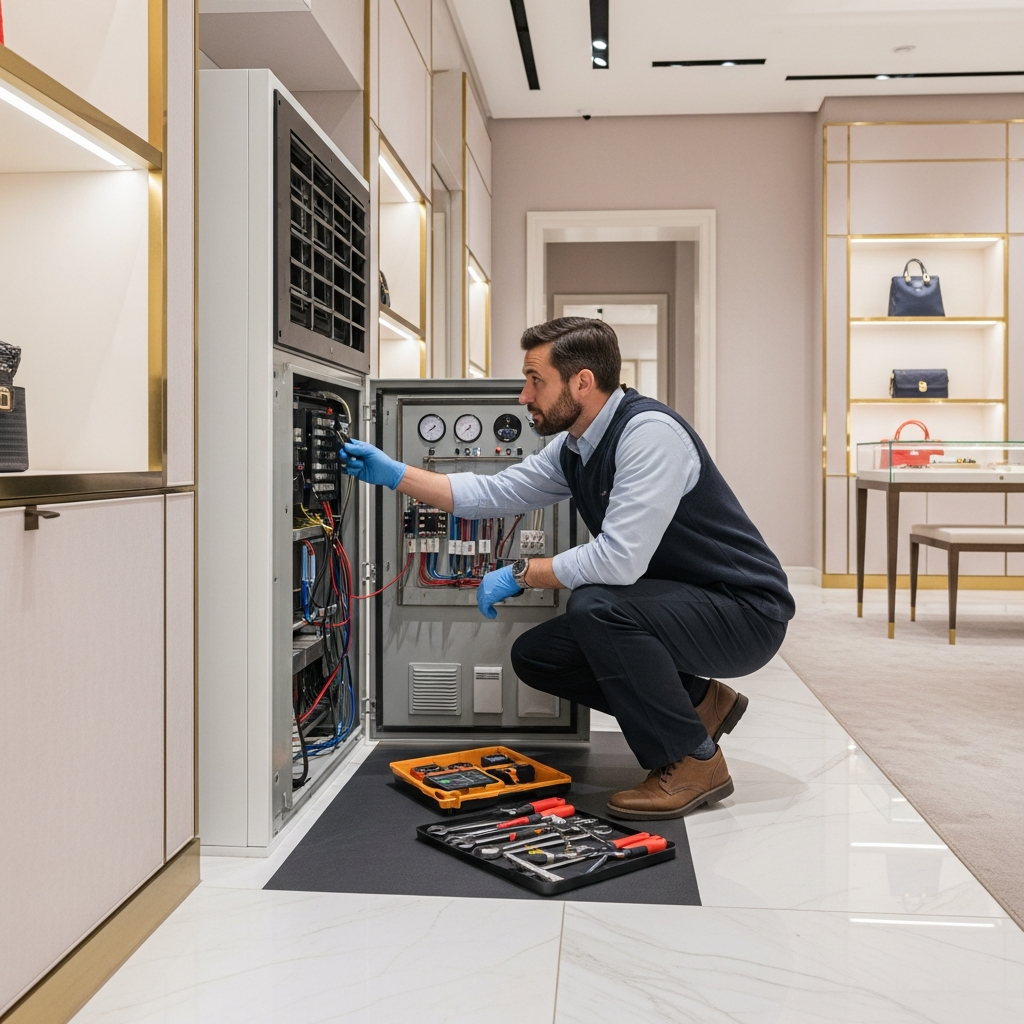
In this city, access matters. We coordinate with security, rooftop access protocols, and loading dock schedules so service never feels intrusive. If your space requires low-profile arrival or off-hour work, we plan accordingly. Tools are staged to avoid clutter, protective mats keep floors pristine, and communication is clear so you know who is on site and for how long. Professional maintenance respects your brand at every touchpoint, from the first phone call to the last wiped panel.
We also think in terms of resilience. If your building uses multiple packaged units, we can rotate runtime across equipment so no single unit bears the brunt of workload. If you have redundancy, we test it. If you rely on critical zones—server rooms, treatment suites, private conference centers—we verify that their cooling is stable under simulated stress so you can proceed with confidence even on peak days.
Lifecycle Planning Without Surprises
Maintenance is how you avoid surprises, but it is also how you forecast the future. During visits, we note components that are aging toward replacement, discuss refrigerant considerations with legacy equipment, and explore retrofit options that can elevate comfort without wholesale disruption. Perhaps that is an economizer rehab that restores free cooling on cool evenings, or a fan array upgrade that introduces redundancy and quieter operation, or a controls refresh that gives you transparency from your phone. Each step is considered against your brand, your lease horizon, and your building’s realities.
For owners and property managers, this visibility informs capital planning. For tenants, it protects your occupant experience and minimizes the chance that a single point of failure becomes a public problem. In Beverly Hills, where expectations are high and tolerance for disruption is low, that foresight is invaluable.
Frequently Asked Questions
How often should commercial AC systems in Beverly Hills receive maintenance?
Most commercial systems benefit from a minimum of two comprehensive maintenance visits per year—typically a spring visit ahead of sustained heat and a late-summer or early-fall check to confirm stable performance. High-traffic or high-load environments, such as restaurants and retail with extended hours, may warrant quarterly attention. The correct cadence depends on your building’s usage, equipment type, and cleanliness.
What signs indicate that my commercial AC needs service sooner than scheduled?
Rising energy consumption without a change in occupancy, new hot or cold spots, unusual noises at startup or shutdown, and musty odors from supply vents are early warnings. Drips at ceiling diffusers or evidence of water near air handlers suggest condensate issues that should be addressed immediately to prevent damage. If staff notice more frequent thermostat adjustments, that is another clue that something has drifted.
Can maintenance really prevent downtime during peak business hours?
Yes. Thoughtful maintenance reduces the frequency of unplanned failures by addressing wear, cleaning heat-transfer surfaces, and catching electrical drift in capacitors and contactors. It also establishes performance baselines, making it easier to spot trends before they become urgent. When combined with smart scheduling and readily available critical spares, it dramatically lowers the risk of disruptions.
Do you work around discreet access needs and off-hour requirements?
We regularly plan maintenance for early mornings, evenings, or weekends and coordinate with building security and management. Our approach emphasizes minimal visibility, clean work practices, and thorough communication so your environment remains composed and undisturbed.
What indoor air quality steps fit commercial spaces here?
Start with correctly sized filtration changed at measured intervals, verified outdoor air rates, and clean condensate paths. Where appropriate, UV treatment at the coil can suppress biofilm on wet surfaces, and targeted ventilation adjustments can address occupancy peaks without over-ventilating at all times. The right plan is always tailored to your space’s pressure relationships and equipment capacity.
Are control upgrades worthwhile for older packaged units?
Often, yes. Even when mechanical components have years left, modern controls improve staging, scheduling, and visibility. That translates to fewer temperature swings, reduced run hours, and better coordination with your operational rhythms. Controls work best when paired with a strong maintenance foundation that keeps sensors honest and airside components clean.
Ready to Protect Comfort and Reputation
Your building’s air is part of your signature. If you are ready to tune that signature—quiet, consistent, and refreshingly effortless—we would be honored to help. Let us align a maintenance plan with your calendar, your brand standards, and your tenants’ needs. Reach out today to schedule expert air conditioning maintenance and move into the season with confidence, clarity, and a system that simply performs.