
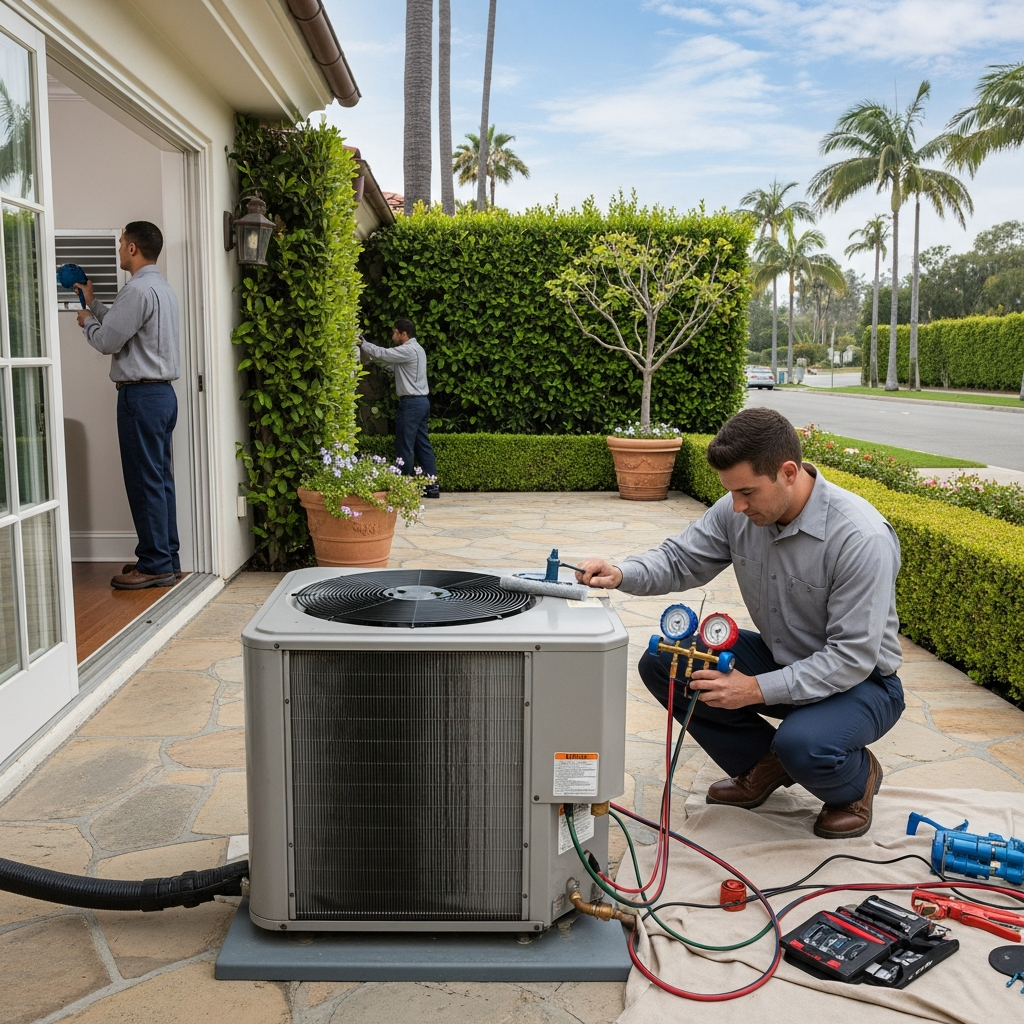
Understanding What “Average” Really Means for AC Maintenance in Beverly Hills
When neighbors in Beverly Hills chat about air conditioning, the word “average” gets tossed around a lot—average performance, average lifespan, average investment to keep everything running. But in our hills and flats, where microclimates shift from breezy canyon evenings to sun-drenched afternoons on palm-lined streets, the idea of an average air conditioning maintenance cost is more of a moving target than a fixed point. The local environment, home architecture, and personal comfort expectations all shape what a maintenance visit looks like and what it includes. Before you try to pin down a single figure, it helps to understand the full picture of how quality care is structured here and why that matters far more than a single number.
In the introduction to this conversation, I always like to focus on value and reliability. Maintenance isn’t just a tune-up; it’s a plan to keep cool air steady when the first heat wave hits the Westside and traffic on Sunset has you longing for a perfectly chilled living room. If you’re exploring options for scheduling and scope, take a moment to look into air maintenance resources that explain what a complete visit should include and how it aligns with your home’s needs. With the right approach, you replace guesswork with a calm, predictable rhythm that protects comfort quietly in the background.
Why Beverly Hills Homes Don’t Fit a One-Size-Fits-All Model
It helps to start with the homes themselves. A 1920s Spanish Revival off Canon Drive behaves differently in summer than a glass-forward contemporary perched above Benedict Canyon. The volume of interior space, quality of insulation, window placement, and how sun tracks across patios or lawns all nudge a system to work a little harder or a little smarter. Add to that the reality that some properties have equipment on flat roofs while others hide condensers behind hedged courtyards, and you quickly see how accessibility alone can change the time and detail required for a thorough visit. When people try to compare what friends paid for maintenance, they’re often comparing apples to pomegranates—beautiful, but not the same fruit.
What a Thoughtful Maintenance Visit Actually Includes
To make sense of averages, you have to unpack the work itself. A solid visit doesn’t just check a box; it follows a sequence. Airflow readings tell you how efficiently your system breathes; coil inspections and cleanings preserve the heat exchange that makes cooling possible; drain line checks protect ceilings and floors from condensation mischief; and electrical testing confirms that the smallest connectors are doing their part under summer load. A conscientious technician will also evaluate thermostat calibration, observe startup behavior, and look for early indicators of wear that can be corrected long before a July afternoon spotlight turns small issues into sweltering emergencies. This depth of attention—rather than a quick wipe-and-go—drives long-term stability.
Seasonality, Microclimates, and the Beverly Hills Rhythm
We have our own seasonal beat. The marine layer may linger in the morning, but afternoons press hot air into the flats and up the hills. That rhythm means maintenance timing here is about anticipation. Many homeowners prefer a spring visit to get ahead of heat waves; others choose a late-summer check to evaluate peak-season performance and finish strong. In the canyons, evening temperature differentials can introduce unique compressor demands, while homes on the flats manage longer, steadier cycles. Even a few degrees’ difference at dusk can change how filters load, how coils behave, and how long a fan ought to run to manage humidity. All of these micro-variables inform what a thorough visit should target.
System Type, Age, and the Scope of Care
Central split systems, ducted heat pumps, and ductless mini-splits each ask for different attention. Older equipment may call for gentler cleaning methods and additional electrical checks, while newer variable-speed systems reward careful calibration and software or control updates. Ductless systems can provide excellent zoning but need precise cleaning around indoor heads to maintain quiet, efficient operation. Age itself is not destiny; plenty of well-maintained systems outlast expectations because someone cared enough to keep details in line. When we talk about the “average,” we’re talking about a bell curve shaped by these variables—type, age, accessibility, and desired performance.
Home Design Details that Shape the Visit
Design elements amplify or ease maintenance. If your property features tall ceilings with dramatic clerestory windows, your technician will be especially mindful of airflow balancing. If attic access is tight, time on site increases simply to reach the equipment safely. Homes with specialty finishes often require extra care to protect surfaces during service. Landscaping also plays a role; lush hedges are beautiful, but they can reduce outdoor unit clearance and trap heat if not trimmed. It’s these practical details—reachable panels, clear work areas, safe ladder positions—that don’t appear on a brochure but absolutely influence how maintenance is delivered in the real world.
Indoor Air Quality and the Hidden Work of Cleanliness
Filters are your first line of defense, but the story doesn’t end there. In periods of higher outdoor particulates—think construction dust from a nearby renovation or seasonal smoke from regional wildfires—filters load faster and coils need gentler, more frequent attention. Drain pans can also collect debris that encourages odors if not cleared. Inside the ductwork, buildup can begin to pinch airflow, which raises static pressure and makes the blower earn every cubic foot it moves. In Beverly Hills, where doors to patios and gardens open often, we invite the outdoors in—wonderful for entertaining, but it asks that your maintenance plan respects real living patterns rather than textbook assumptions.
Warranties, Documentation, and Peace of Mind
Another piece of the average puzzle is paperwork. Many equipment warranties prefer or require documented maintenance. That log of visits, observations, and corrective steps becomes a quiet ally if you ever need to make a claim or sell your home. Buyers are increasingly savvy about mechanical systems; a well-kept file of maintenance records helps them feel confident that comfort has been cared for, not just enjoyed. It’s not glamorous, but documentation is one of those steady practices that transforms maintenance from a transaction into a strategy.
How to Compare Proposals Without Getting Lost
When homeowners compare proposals, descriptions can be vague or overly technical. The key is to focus on scope. What exactly will be inspected, measured, cleaned, and adjusted? Will the technician check refrigerant conditions, confirm airflow targets, and test safety components? Is there time allocated to discuss findings with you? A clear scope keeps expectations aligned. If you find yourself juggling options, pause and center the conversation on outcomes: quieter operation, improved cooling consistency, fewer surprises during heat waves. That outcomes-first lens makes comparisons simpler and highlights expertise over buzzwords.
Somewhere around the midpoint of your planning, it’s smart to revisit the basics and confirm you’re aligned with a provider who sees maintenance as more than a quick seasonal ritual. If you need a straightforward place to evaluate the fundamentals, a resource focused on comprehensive air maintenance can help you visualize what a well-rounded visit looks like from arrival to wrap-up. The more you know what to expect, the easier it becomes to recognize true thoroughness when you see it.
Timing and Communication Matter as Much as Tools
In a city where schedules can be as layered as hillside lots, communication is a quiet differentiator. Clear appointment windows, text updates, and a walk-through at the end of the visit change the entire experience. Timing also intersects with neighborhood considerations—certain streets are easier to access at specific times of day, and some properties share private drives that require courteous coordination. A technician who understands these realities shows up prepared not just with gauges and meters, but with an appreciation for how service happens gracefully in Beverly Hills.
Energy Awareness Without the Jargon
Efficiency talk can wander into a forest of acronyms, but maintenance keeps it human. A clean system moves air with less effort, and correct refrigerant conditions let components work as a team rather than as rivals. That alignment shows up in quieter rooms, steadier temperatures, and a gentle nudge toward more responsible energy use. There’s a subtle pleasure in hearing your system start softly and settle into a calm rhythm during the afternoon—less drama, more comfort. When you fold that into a year-round pattern, you discover that maintenance is simply a quiet habit that rewards you day after day.
Older Systems: Respect, Not Resignation
Many Beverly Hills homes carry a heritage of craftsmanship that extends to their mechanical spaces. If your system isn’t the newest on the block, thoughtful maintenance respects its design while keeping performance honest. That can mean noting components that are trending toward retirement and supporting them until a replacement timeline makes sense for your life. The point isn’t to patch forever; it’s to ensure you enjoy reliable comfort and make major decisions on your terms. Proper care gives you information and options, not pressure.
When Architecture Sets the Bar Higher
Open-plan great rooms, expansive glass, and multi-story volumes ask more of climate control. In these homes, maintenance that includes deeper airflow diagnostics and fine-tuned fan speeds can calm hot spots without overcooling the rest of the space. If you’ve ever noticed a room that lags behind the others on a summer afternoon, that’s the perfect cue to bring it up during a maintenance visit. Smart technicians appreciate the interplay between architecture and comfort, and they’ll translate observations into adjustments you can feel.
The Human Side: How You Use the Home
We often talk about equipment, but your routines matter too. If you entertain often, your system handles more door openings, body heat, and cooking loads. If part of your home doubles as a workspace, you may prefer tighter temperature control during mid-day hours. Communicating these preferences turns an ordinary maintenance visit into a personalized calibration. Comfort isn’t just a number on a thermostat; it’s how your living room feels at the end of a day, how your bedroom welcomes you at night, and how your guests linger happily without wondering where the nearest fan is.
A Practical Path to Predictability
So where do you land after all this? You land on a rhythm: plan service ahead of heat, choose a scope that aligns with your system and home design, and keep simple documentation. Engage a provider who arrives curious—someone who asks about your rooms, your routines, and your expectations. Maintenance becomes a language you both speak: here’s where air slows, here’s where coils shine, here’s where a quiet tweak will pay dividends during the next Santa Ana event. That’s the real “average” in Beverly Hills—steady, thoughtful care that feels almost invisible because it works so well.
Frequently Asked Questions
Q: Why do maintenance quotes vary so much from home to home in Beverly Hills?
A: Properties here are wonderfully diverse. Differences in equipment type, accessibility, home volume, insulation quality, and even landscaping can change the time and detail required for a thorough visit. When you compare proposals, focus on scope and outcomes rather than assuming every home needs the same checklist.
Q: How often should I schedule maintenance for reliable comfort?
A: Most homeowners prefer a consistent seasonal cadence—often before the first real heat—so the system is prepared for long afternoon cycles. If you have unique demands, like frequent entertaining or sensitive finishes that require tighter humidity control, you may benefit from more attentive check-ins.
Q: Does the brand of my system change what maintenance should include?
A: The fundamentals are universal: airflow, cleanliness, electrical integrity, and refrigerant conditions. Certain brands and models invite specific checks or software updates, but the core of a great visit is the same—measure, adjust, and document with care.
Q: Is maintenance still worthwhile if I’m planning to replace the system soon?
A: Yes. Thoughtful care keeps the current system reliable while you plan, and it provides the performance data that helps you select the right replacement on your timeline. It also safeguards interiors by reducing the risk of preventable leaks or shutdowns in the interim.
Q: What should I expect during a well-executed visit?
A: Expect clear communication at arrival, careful protective steps around your home, a methodical sequence of inspections and cleanings, and a friendly review of findings before the technician leaves. You should walk away knowing what was done and why it matters.
Q: Can I do anything between visits to support my system?
A: Absolutely. Keep outdoor areas around condensers clear, replace or clean filters as recommended for your setup, and pay attention to any unusual sounds or hot spots. Share those observations during your visit so adjustments can be targeted and effective.
Q: Will a single visit solve uneven cooling in large, open rooms?
A: Often, yes—especially if the solution is airflow balancing or fan-speed tuning. Some homes benefit from incremental steps across a couple of visits, particularly when observations in different weather conditions inform the best long-term adjustments.
Q: How do I know if the work performed was truly thorough?
A: You’ll feel it and you’ll see it in documentation. Quieter operation, steadier temperatures, and a clear summary of measurements and actions are good signs. When a provider takes time to connect the dots between data and comfort, you’re in capable hands.
Ready for Reliable Comfort in Beverly Hills?
If you’re ready to turn the idea of “average” into a personalized plan that suits your home and routine, start with a conversation that centers on thoroughness and outcomes. Explore the essentials of comprehensive air maintenance, ask focused questions about scope, and schedule service before the next warm spell rolls across the flats and up the canyons. With the right partner, your AC fades into the background—reliable, quiet, and exactly where you need it when the afternoon sun leans west.