
When your air conditioning hesitates on a warm Beverly Hills afternoon, a calm, methodical approach is the quickest path back to comfort. Troubleshooting isn’t guesswork; it’s a sequence—start with the simple checks that solve a surprising number of issues, then move carefully toward deeper diagnostics. Homes here are wonderfully diverse, from classic estates to hillside moderns, and that variety shapes how systems are installed and how they behave under stress. As local technicians, we’ve learned to read the clues—the sound of a fan that starts but the condenser doesn’t, a thermostat that lowers the set point but doesn’t call correctly, or a quiet indoor unit that’s actually waiting for a full condensate pan to clear. If you want a practical overview grounded in our neighborhood’s realities, you can begin with this local guide: keyword.
The first step is always to listen and observe. If the air feels warmer than usual, ask what changed: Did the thermostat settings get bumped? Are supply registers blocked by a new furniture layout? Has the filter been in place longer than planned? Simple, reversible factors like these are at the root of many calls, and they deserve attention before moving on. A clean filter and free-flowing returns give the system a fair chance to do its work. If nothing obvious stands out, the next question is whether the thermostat is communicating. A blank screen, erratic readings, or a program that’s out of sync with your schedule can mimic a bigger failure. Resetting gently or switching to a basic hold can be a temporary test while you continue observing.
Power is the next checkpoint. In many Beverly Hills homes, equipment is located in attics, utility rooms, or rooftops with dedicated disconnects. If a breaker has tripped, it’s a clue worth noting, not necessarily an invitation to reset repeatedly. One reset is reasonable; repeated trips suggest a deeper issue that deserves a professional look. Likewise, an outdoor unit that’s quiet while the indoor fan runs may indicate a control, capacitor, or contactor issue. Avoid removing panels—the safest path is to observe, note the behavior, and call for help with those details in hand.
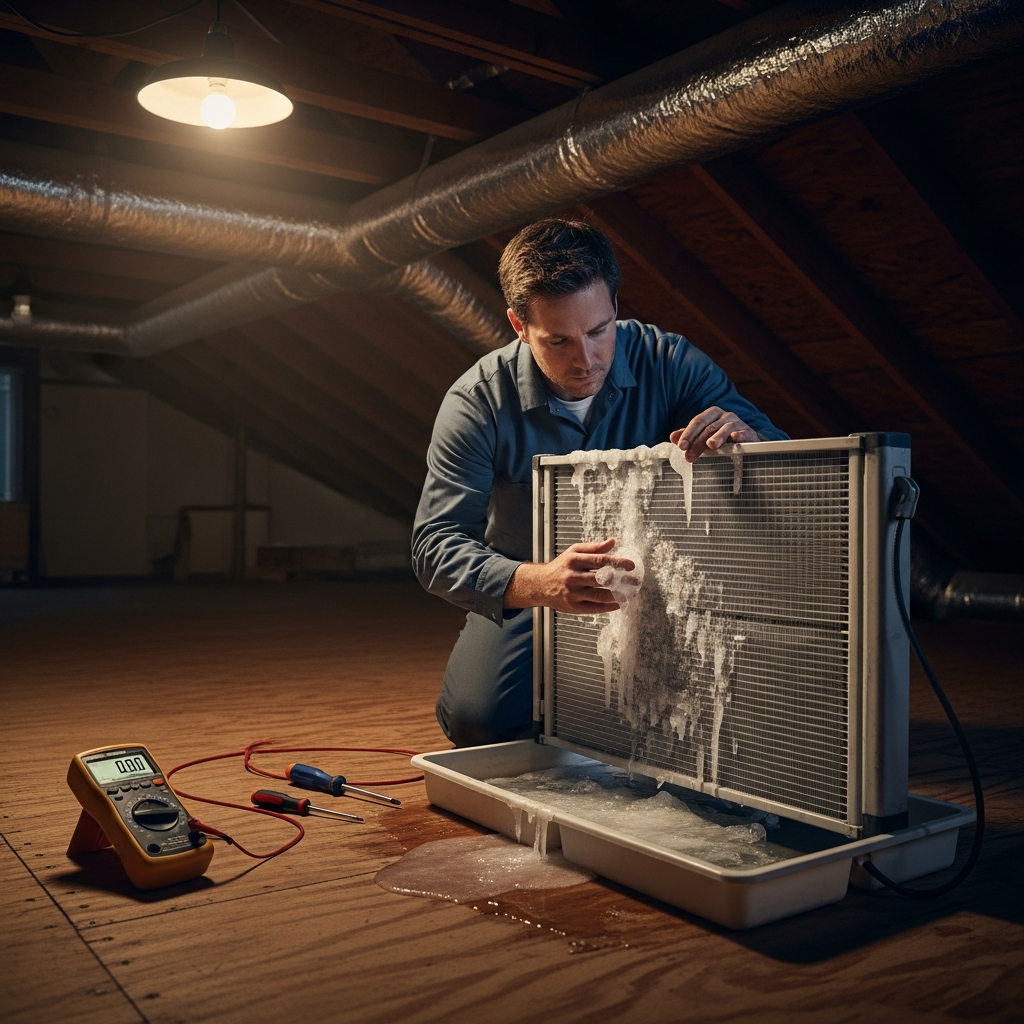
Water is a common messenger. If your indoor unit is paired with a safety float switch, a clogged condensate drain can stop cooling to prevent a spill. You may notice the fan stop abruptly or the thermostat go blank. During troubleshooting, look for signs of moisture near the air handler and listen for a wet gurgle. Powering the system off at the thermostat prevents further accumulation while you arrange a visit to clear the line and reset the switch properly. This is a simple fix once diagnosed and a great reminder of why routine drain maintenance is invaluable in our climate.
Ice is another tell. If you notice frost on the indoor coil or refrigerant lines, there’s an airflow or refrigerant-side issue that calls for a pause. Turn the system off and let it thaw completely; running it while iced can damage the compressor. During a service visit, we’ll verify filter and coil condition, fan performance, and refrigerant charge within specifications. It’s tempting to focus immediately on the refrigerant, but many icing cases are rooted in airflow restrictions—something we can address quickly with the right steps.
Room-by-room clues that speed up solutions
As you move through the home, pay attention to room behaviors. If one bedroom is always warm, check for a closed or obstructed register. In open-plan homes with large glass exposures, late-afternoon hotspots can overwhelm a mispositioned diffuser; a small balancing change can make a noticeable difference. If sound is your clue—a humming outdoor unit or a clicking indoor relay—note whether it’s constant or tied to start-up. Details like these allow us to arrive with a head start on the likely suspects.
Controls deserve a closer look as well. Smart thermostats can be brilliant, but a misapplied setting or an overlooked update can lead to confusion. Temporarily switching to a simple cooling mode with a fixed set point helps isolate whether the system responds reliably to a basic call. If it does, we can refine the advanced features later. If it doesn’t, we’ve ruled out a layer of complexity and can focus on the equipment.
Outdoors, confirm that the unit has breathing room. Landscaping is beautiful here, but shrubs too close to the condenser choke airflow. Keep a respectful perimeter and clear away lint and leaves. Listen as it starts: does the fan spin confidently, or does it struggle? A fan that hesitates may point us toward a capacitor or motor issue, both of which are straightforward to address once diagnosed.
In multi-level or hillside homes, equipment access is sometimes the hidden challenge. Rooftop units require safe, timed access, and attics can turn hot quickly in summer. If you call for service, mentioning access details—gates, parking, stairs—helps us plan the visit efficiently. That thoughtful note from you shortens the time between hello and solution.
Midway through many troubleshooting calls, we return to the basics of airflow and drains. That’s because the majority of operational problems trace back to those two fundamentals. Even in the most luxurious homes, a neglected filter or a silent clog can steal performance quietly for weeks. If you’re setting up your own maintenance rhythm, a quick local reference like this keyword offers a helpful framework, and we can tailor it to your property’s particulars.
When to pause and call a professional
There’s a clear line between homeowner-friendly checks and technician territory. Resetting a tripped breaker once, confirming thermostat settings, replacing a filter, and checking for blocked registers are reasonable starter steps. If breakers keep tripping, if you suspect a refrigerant issue, or if you see ice or water, it’s time to pause. Specialized tools and safety practices are essential for electrical and refrigerant work, and a careful diagnostic saves time by addressing the root cause rather than chasing symptoms.
A good technician doesn’t just fix the immediate fault; they also check for the conditions that allowed it to develop. If a contactor failed, we look for heat or debris that accelerated wear. If a drain clogged, we evaluate slope, trap configuration, and biocide strategy. The point is to return your system to a clean baseline so it can run reliably through the hottest weeks without nagging issues.
And because Beverly Hills homes are distinctive, we bring a conservation mindset to every call. In older properties, we protect finishes and keep penetrations minimal. In modern homes, we coordinate carefully around glass, stone, and custom cabinetry. Clear communication with homeowners and building staff ensures we move efficiently and leave no trace beyond restored comfort.
Frequently asked questions
Why is one room always warmer than the rest?
Persistent warm spots usually trace back to diffuser placement, duct balance, or solar gain. We evaluate all three and make targeted adjustments—sometimes as simple as repositioning a register vane or tuning airflow to that zone—to even out temperatures.
My thermostat is on but the air is warm—what should I check first?
Confirm the mode is set to cool, the set point is below room temperature, and the fan is on auto. Inspect the filter, verify that supply and return paths are clear, and listen for the outdoor unit. If the outdoor unit is silent, avoid opening panels and give us a call with those observations.
What does it mean if I see ice on the refrigerant lines?
Ice signals an airflow restriction or a refrigerant-side issue. Turn the system off to allow a full thaw, then schedule a diagnostic. We’ll check filters, coils, fans, and charge within specifications to correct the cause before restarting.
Why did my system suddenly shut off on a hot day?
A safety device may have intervened. A full condensate pan can trip a float switch, or an electrical protection circuit may have activated. Turning the thermostat off prevents further stress while we identify the root cause and restore safe operation.
Can I clear a clogged condensate drain myself?
Light maintenance like ensuring the drain access is unobstructed is fine, but aggressive clearing can cause spills or damage. We use controlled methods to flush and verify slope, then test safety switches to confirm reliable operation.
How do landscaping and outdoor placement affect performance?
Outdoor units need clear airflow. Dense shrubs and tight enclosures trap heat and reduce efficiency. We maintain a breathing perimeter, keep coils clean, and evaluate reflections from walls that may amplify noise or heat.
What’s the safest way to handle a tripped breaker?
After one reset, if the breaker trips again, stop and call. Repeated resets can mask a problem and lead to more extensive repairs. We’ll trace the cause—whether electrical, mechanical, or control-related—and correct it safely.
Do smart thermostats complicate troubleshooting?
They can add layers, but we simplify by testing in a basic cooling mode first. If the system responds reliably, we refine smart features next. If not, we focus on equipment. Clear sequence, clear answers.
Let’s bring your cool back with confidence
If your system isn’t acting like itself, we’ll guide you from first observation to full resolution with steady, practical steps. We’ll protect your home, explain what we find, and leave your AC running smoothly. To begin the conversation or explore local best practices, visit this nearby resource: keyword. We’re ready when you are.