
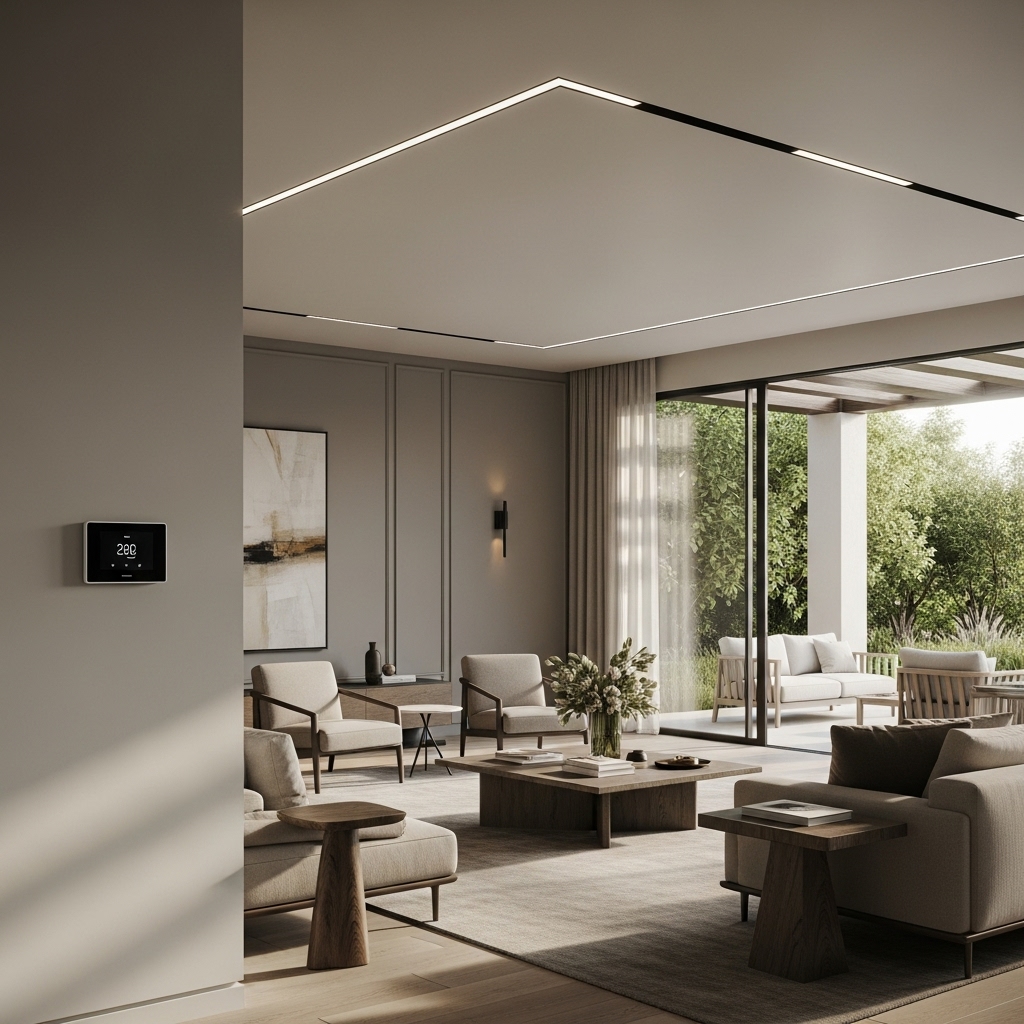
Walk through Beverly Hills today and you will feel the city’s layered character: a canopy of mature trees, sunlit boulevards, canyon breezes, and architectural styles that span a century of taste. Inside these homes, a quieter revolution is underway. The latest trends in air conditioning are reshaping how comfort is delivered, how spaces are designed, and how homeowners interact with their environment. What used to be a simple thermostat and a single-speed unit has become a nuanced ecosystem that learns, adapts, and integrates with the aesthetics and rhythms of daily life.
As a local observer of renovations and new builds, I see patterns that reflect our neighborhood’s priorities: discretion, efficiency, health, and seamless control. These themes appear in hillside estates with complex zoning, in classic flats where preservation matters, and in contemporary residences where walls of glass demand precise climate strategies. Trends are not about novelty for its own sake; they are the practical translation of what homeowners need in a city that moves gracefully through long, sun-warmed seasons.
Variable-speed everything
The era of on-or-off cooling is behind us. Variable-speed compressors and air handlers are now common, modulating to match actual load minute by minute. The experience is smoother: fewer temperature swings, quieter operation, and less energy wasted. Homeowners notice this most in large rooms with uneven solar gain, where older systems would lurch to life and overshoot. With variable speed, comfort feels continuous, and the system’s presence fades into the background.
Heat pumps as the year-round standard
Heat pumps have matured into a default choice for many Beverly Hills homes, delivering efficient cooling in summer and reliable warmth on cool winter mornings. The trend is about consolidation and performance: one system capable of precise conditioning all year, using electricity intelligently. For homes transitioning away from older equipment, this shift simplifies mechanical spaces, streamlines maintenance, and supports city-wide goals for cleaner energy.
Micro-zoning for complex layouts
Big footprints and multi-level plans make one-size-fits-all cooling impractical. Micro-zoning divides homes by use and exposure—day spaces, night spaces, glass-heavy rooms, and quieter interiors—so each zone receives exactly what it needs. This is especially powerful in homes with detached spaces like guest suites or studios. The trend is not just more thermostats; it is an orchestrated system that directs comfort with surgical precision.
Discreet design and architectural integration
Aesthetics drive adoption. Modern systems prioritize low-profile vents, cleverly routed ducts, and compact indoor units that visually disappear. In preserved homes, technicians are using creative pathways through existing chases and attics to avoid disrupting plaster or millwork. In minimal contemporary homes, slim registers align with lighting and trim, allowing climate control to blend into the design narrative.
Elevated indoor air quality as a baseline
Air quality has taken center stage. High-efficiency filtration, sealed duct systems, and controlled ventilation are no longer add-ons; they are standard expectations. Homeowners want protection from pollen, dust, and seasonal smoke without sacrificing quiet or efficiency. The trend leans toward systems that maintain a steady exchange of fresh air while filtering aggressively, all tuned so indoor environments feel crisp and neutral.
Smart control that is truly intuitive
We have moved beyond gimmicks. The best control systems now learn real patterns—weekday departures, weekend gatherings, evening cool-downs—and anticipate needs with minimal input. They integrate with broader home platforms without forcing you into complex menus. Voice control is a convenience; predictive scheduling and geofencing are the real magic, ensuring comfort appears exactly where and when it is wanted.
Underpinning these control layers is dependable, efficient air conditioning that can respond to commands with nuance. When the equipment and the interface align, the relationship feels effortless: you set the tone, and the home carries it forward.
Low-noise as a core feature
Quiet is a form of luxury. Manufacturers are attacking noise with variable-speed fans, improved insulation, and thoughtful cabinet design. Installers are pairing this with strategic placement and vibration isolation outdoors. Inside, diffusers and duct design reduce the sensation of airflow. The result is a home that preserves its evening hush, letting conversation and music stay center stage.
Electrification and greener refrigerants
As building codes and homeowner values evolve, electrification has become a practical and ethical choice. New systems use refrigerants with lower global warming potential and components that sip power compared to older setups. The trend marries performance with responsibility, allowing homeowners to enjoy superior comfort while aligning with broader environmental goals.
Retrofits that respect heritage
Retrofitting older homes without compromising character is an art. Slim duct systems, high-velocity options, and ductless solutions enable precise conditioning alongside curved ceilings, plaster walls, and original details. The trend is toward respectful modernization: preserving the soul of a home while elevating comfort far beyond its original capability.
Wellness-centered design
Beyond filtration, wellness includes humidity control, steady ventilation, and thermal consistency that supports sleep and cognition. Some homeowners are pairing HVAC upgrades with daylighting strategies, shades, and window films to reduce heat gain. The holistic approach makes the system feel like part of a broader wellness plan rather than an isolated appliance humming away out of sight.
Resilience for peak events
Heat waves and poor air days are becoming more frequent. Systems now prioritize the ability to pull interiors back to baseline efficiently after intense afternoons. Larger coil surfaces, modulating components, and smart staging handle the catch-up gracefully. The emphasis on resilience means homes stay pleasant even when outdoor conditions become challenging.
Data-driven commissioning and performance
Commissioning is no longer a quick checklist. Technicians increasingly rely on sensors and data logs to verify airflow, charge, and staging. This ensures the installed system performs like the brochure promised. For homeowners, the result is simple: a system that hits its marks day after day, season after season, because it was tuned with precision from the start.
Whisper-quiet indoor units for targeted comfort
In rooms where ducts are impractical or aesthetic demands are high, compact wall or ceiling units deliver quiet, precise conditioning. These units have become remarkably subtle, with sound levels that barely register and designs that recede into modern interiors. The trend gives architects flexibility to condition tricky spaces without compromise.
Integrated dehumidification and humidity targets
Even in our relatively dry climate, interior humidity fluctuates. Systems now include better dehumidification modes and sensors that make the environment feel fresher at moderate temperatures. It is the kind of improvement you notice on a foggy morning or after an evening of cooking—rooms feel balanced, not heavy.
Service visibility and predictive care
Monitoring platforms can flag anomalies early—airflow changes, temperature deltas, or extended runtimes—so small issues are addressed before they interrupt comfort. This trend supports the idea that the best service is the one you barely notice, because it prevented the problem you never experienced.
Design-led registers and returns
The days of distracting grilles are fading. Designers now specify elegant linear diffusers or paint-matched registers that disappear into ceilings and walls. Beyond looks, these components improve distribution and reduce drafts, making the system feel gentler and more consistent across each room.
Outdoor unit placement as landscape design
In dense neighborhoods and terraced lots, locating outdoor equipment requires creativity. The trend is to involve landscape and architectural teams early, integrating screens, plantings, and sound considerations so the mechanical footprint vanishes into the site. Done well, you gain performance and preserve outdoor serenity simultaneously.
What this all means for homeowners
Trends matter when they elevate daily life. The direction in Beverly Hills is clear: systems that are quieter, smarter, and more efficient while respecting architecture and supporting wellness. They are less visible and more capable, ready for the expanding role homes play as workspaces, sanctuaries, and social hubs.
Frequently Asked Questions
These answers reflect what homeowners most often ask when exploring new or upgraded systems shaped by current trends.
Do I need variable speed if my home already feels comfortable?
Variable speed improves the quality of comfort by smoothing temperature swings and reducing noise. Many homeowners do not realize what they were missing until they experience the steadier feel and quieter operation that modulation delivers.
Are heat pumps really effective during cooler mornings?
Yes. Today’s heat pumps perform efficiently in our mild winters, providing a consistent, gentle heat. You gain year-round conditioning from one platform, often with better control and lower energy use than older, separate systems.
Will micro-zoning complicate daily use?
Not when designed well. Good controls present simple scenes—morning, day, evening—with zones adjusting behind the scenes. You get targeted comfort without extra steps, and your home uses energy more intelligently.
Can I retrofit advanced systems in a preserved home?
Absolutely. Slim ducts, high-velocity solutions, and ductless options allow precise conditioning with minimal impact on historic details. Early planning ensures routes and registers respect the home’s character.
How important is indoor air quality in these trends?
It is foundational. Filtration, ventilation, and humidity control are integral, not optional. The goal is cleaner, fresher air that supports sleep, focus, and the long-term preservation of interiors.
If you want your home to embody these advances—quiet, adaptive, and beautifully integrated—start a conversation about modern air conditioning that fits your architecture and lifestyle. With the right plan, the technology will fade and what remains is effortless comfort, day after day, season after season.