
Condo living in Beverly Hills brings a welcome blend of convenience and privacy, with elevator rides to quiet hallways and sunlit balconies that look toward palms and hills. That serenity depends on thoughtful building systems, and none works harder in summer than the air conditioner tucked onto a balcony, roof, or mechanical closet. Keeping it reliable requires a maintenance approach tuned to the realities of multi-unit life. When you prioritize routine air conditioning maintenance, you prevent the small condo-specific issues that can grow into real disruptions for you and your neighbors.
Access and scheduling within building rhythms
Unlike single-family homes, condos ask you to think not only about your schedule but also about the building’s. Managers may require advance notice for roof access, certain hours for water testing, or elevator reservations for moving tools and equipment. Good maintenance anticipates those logistics so technicians arrive with permissions in place and materials on hand. The payoff is a visit that feels seamless rather than improvised, minimizing the time doors are open and ensuring hallways remain as tranquil as you found them.
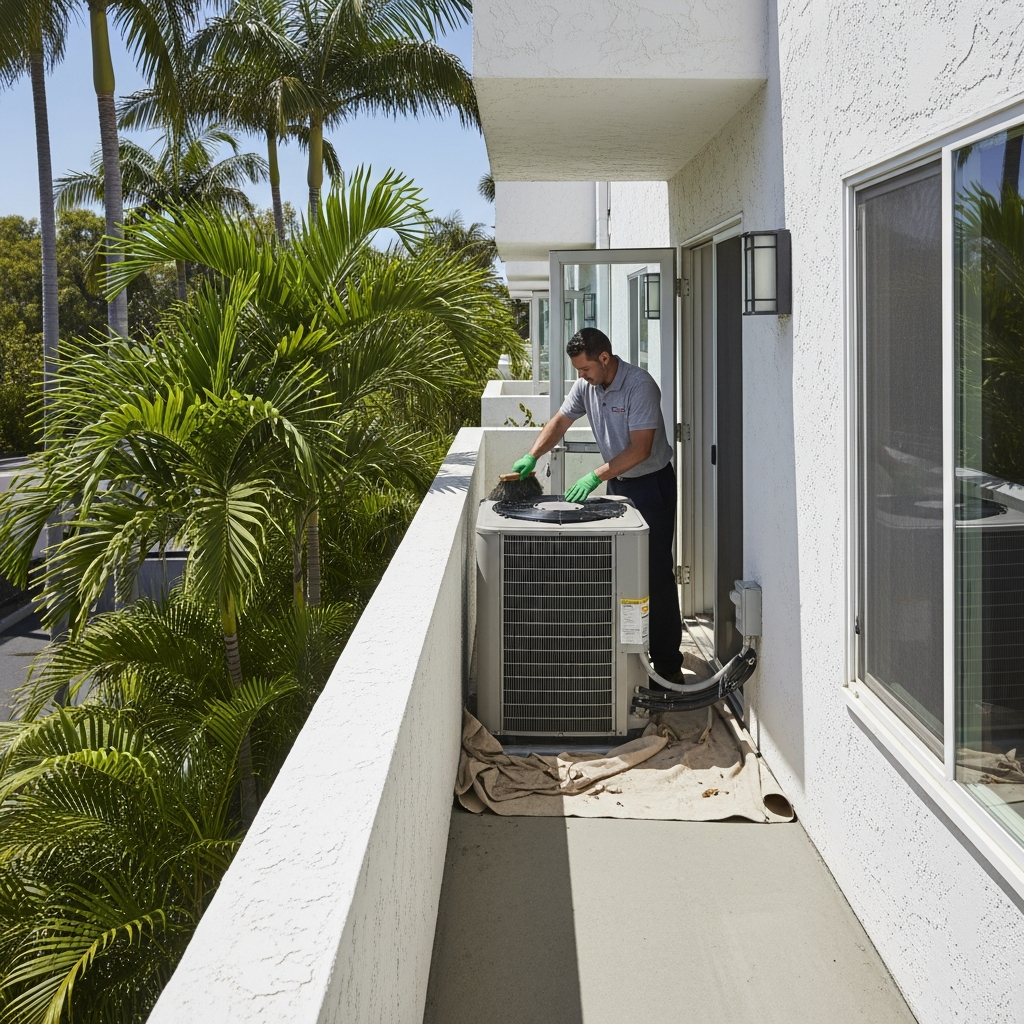
In many buildings, equipment placement complicates access. Outdoor units may sit on narrow balconies, rooftops reached by locked stairwells, or courtyards with security gates. Indoor air handlers can be tucked into ceiling cavities, laundry closets, or soffits. Maintenance that respects the space—shoe covers, drop cloths, careful tool use—preserves finishes and neighborly goodwill while still reaching every component that needs attention.
Noise etiquette and acoustic tuning
Shared walls sharpen everyone’s sensitivity to sound. What might pass unnoticed in a detached home becomes a rhythm you and a neighbor both hear. Maintenance steps that reduce noise carry extra value in a condo: balancing blower wheels after cleaning, securing panels, isolating vibration, and ensuring the outdoor unit’s fan moves without wobble. Indoors, confirming duct connections and damper positions can quiet whooshing at supply vents, bringing the background hush that elevates daily life.
Good technicians listen. A faint rattle from a ceiling return, a pulsing hum from a balcony condenser, a rustle at a bathroom exhaust—each is a clue. Addressing them keeps the home calm and prevents minor annoyances from turning into complaints routed through building management.
Condensate management in tight spaces
Condensate lines and pans are the quiet heroes of comfort, carrying away the moisture your system gathers while cooling. In condos, where air handlers often hide above closets or in soffits, a clogged drain can send water exactly where you do not want it: onto plaster, down a wall, or, worse, into a unit below. Maintenance that primes traps, clears lines, tests float switches, and confirms secondary protection is in place is more than routine—it is building diplomacy.
The same attention applies to drain terminations. Lines that discharge into shared plumbing must be secured and pitched correctly to avoid backflow odors or slow drains. Technicians who know the building’s layout can trace and test those paths rather than assuming they are clear simply because water is not visible in a pan.
Air quality and filtration choices
Condo living concentrates people and their habits into a compact volume of air. Cooking aromas, perfumes, and outdoor particulates swirl together more readily. Maintenance helps you steer that mix toward freshness by aligning filter choice with your equipment’s capacity and your sensitivity. Higher-MERV filters capture more, but they also demand more from the blower. A good technician measures static pressure to ensure the filter you prefer does not starve airflow or create noise at registers.
During smoky or hazy periods, the same maintenance that serves a single-family home serves a condo with added urgency. Verifying duct sealing, cleaning coils, and confirming return pathways matter because every particle the filter traps is one less that lingers in a compact space. You feel the benefit most at night, when closing the door creates a bubble of calm air that helps you rest.
Balcony and rooftop realities
Outdoor units in condos live in miniature environments. A balcony unit may sit beside planters that shed leaves and pollen, under a neighbor’s grill hood, or near a decorative screen that restricts airflow more than intended. A rooftop unit may face uninterrupted sun and wind that loosen panels and fatigue insulation. Maintenance that removes debris, washes coils with the right pressure, secures access panels, and inspects insulation preserves performance and prevents heat stress that shortens component life.
Clearances matter. An attractive screen can become a choke point that causes the condenser to run hot. Technicians can advise on subtle adjustments—slightly increasing spacing, reorienting louvers—that keep design intact while restoring healthy airflow. These are the kinds of small, respectful changes that make a big difference in a shared setting.
Shared infrastructure and neighbor awareness
Not every condo has fully independent systems. Some rely on shared ventilation paths or common chiller and boiler plants with in-unit fan coils. In those buildings, maintenance extends to confirming valves are open, strainers are clear, and control signals match building schedules. When each piece plays well with the central plant, comfort becomes predictable floor to floor, and you avoid late-night calls to management when something does not respond as expected.
Even in fully independent systems, neighbor awareness matters. A refrigerant leak on your balcony is not just your problem if mist drifts downward, and a water drip from a secondary pan can mark a ceiling below. Professional maintenance minimizes these risks by catching issues early and resolving them without drama, preserving both relationships and finishes.
Efficiency without compromise
Condos pack performance into compact footprints, so efficiency helps equipment breathe easy. Maintenance that cleans coils, confirms charge, and aligns fan speeds gives you the same comfort with less effort and noise. The result is a home that reaches set point quickly and holds it softly, so you can focus on the day rather than the dial. It is a practical luxury that fits perfectly with elevator living and sunset views.
Paired with smart controls that match your routine, a tuned system avoids wasteful cycling. If the bedroom cools pre-sunrise and the living area takes over later, your thermostat and dampers can cooperate rather than compete. Maintenance that harmonizes those players reduces energy use while increasing your sense that the home understands you.
Frequently asked questions
Do condo air conditioners need different maintenance than single-family systems? The fundamentals are the same—clean coils, proper charge, healthy airflow—but condos add access logistics, noise etiquette, and tighter spaces that raise the stakes for condensate management. A technician experienced with multi-unit buildings anticipates those nuances.
How often should I schedule service in a condo? Twice a year is a smart rhythm: spring, to prepare for sustained cooling, and early fall, to reset after peak demand and check drains ahead of drier winds. Buildings with rooftop exposure or heavy summer use benefit especially from this cadence.
What can I do between visits? Replace or clean filters on time, keep balcony equipment clear of planters and furniture, and avoid blocking return grilles with art or shelving. These small habits maintain airflow and keep noise low.
What if my building uses a central plant with in-unit fan coils? Maintenance focuses on coil cleaning, valve checks, strainer cleaning, and control verification. The goal is smooth cooperation with the central system so your unit responds predictably and quietly.
How do technicians handle noise concerns with neighbors? By preventing them. Balancing and cleaning reduce turbulence, securing panels stops rattles, and careful scheduling respects quiet hours. If a sound does arise, a precise diagnosis and fix preserves goodwill on both sides of a shared wall.
Can maintenance help with odors that drift between units? It can. Verifying duct sealing, confirming positive pressure where appropriate, and ensuring returns and supplies are balanced all help. Clean coils and pans also reduce the chance that moisture becomes a carrier for unwanted scents.
When you are ready
For condo comfort that feels easy, discreet, and dependable, schedule professional air conditioning maintenance. With the right care, your system becomes as well-mannered as the building itself—quiet, efficient, and ready to keep evenings cool and mornings clear so you can enjoy the best of Beverly Hills living without interruption.