
Understanding Air Conditioning Installation Cost in Beverly Hills, California
Ask any Beverly Hills homeowner who has navigated a summer heat wave, and they will tell you: a thoughtfully designed cooling system is an investment in everyday well-being. While neighbors often swap stories about “what it took” to get their new systems up and running, a truly useful conversation about installation cost is not about numbers—it is about the factors that drive those numbers and the choices that make a system right for your particular home. From winding canyon roads to tree-shaded side streets south of Sunset, every property here carries a distinctive signature, and that signature guides the right approach to modern air conditioning.
Cost varies for reasons that are as architectural as they are mechanical. A small Spanish bungalow with thick plaster walls may require careful routing to protect finishes, while a multi-zone estate might demand complex ductwork and advanced controls to keep different wings comfortable without overworking the equipment. Installation in Beverly Hills is about fitting performance to place, and when you understand those details, you can set expectations clearly without needing to rely on generic price tags.
Load Calculations and System Sizing: The Foundation of Value
Before a single screw is turned, a proper Manual J load calculation—tailored to your square footage, insulation, window area, orientation, and local microclimate—sets the stage. Homes with long west-facing glass along a garden or pool deck will collect late-afternoon heat, while shaded canyons experience different temperature swings. The load calculation informs the system size, which affects the equipment selection and the installation complexity. An oversized unit can short cycle, reducing comfort and longevity; an undersized unit struggles on the year’s hottest days. Getting sizing right supports quieter operation, a more consistent temperature, and better humidity control.
In Beverly Hills, I also consider lifestyle and occupancy. Do you host frequently? Are there rooms that sit empty most of the week? Do you keep doors open or closed between zones? These lived patterns shape zoning choices and thermostat placement, which in turn influence material and labor scope during installation.
Ductwork, Airflow, and the Hidden Drivers of Effort
Ducts are out of sight and often out of mind, yet they can be the largest contributor to both cost and comfort. In older homes, ducts may be undersized or routed through tight chases that complicate replacement. Some mid-century designs favor concealed soffits with limited access. Correcting static pressure, sealing joints meticulously, and balancing supply and return paths all take time and skill. The payoff is quieter registers, even temperatures, and a system that breathes without strain.
When duct access is limited, alternatives such as high-velocity or ductless solutions may come into play. Each path carries distinct installation steps—specialized supply outlets, discrete line sets, or dedicated wall-mount locations—that influence the total project scope. In Beverly Hills, aesthetic considerations are paramount; we often coordinate with designers to keep grills and lines visually discreet, which can add site time but protects the home’s look and feel.
Equipment Choices and Efficiency Standards
From single-stage systems to variable-speed compressors and motors, the range of equipment affects complexity and commissioning time. Higher-efficiency systems can deliver remarkable comfort—quieter operation, steadier temperatures, and better humidity management—yet they also demand careful setup. Commissioning involves calibrating airflow, verifying refrigerant charge to manufacturer specifications, and ensuring control boards and thermostats are communicating properly. These steps are not extras; they are essential to realizing the performance you expect from the investment.
Local codes and energy standards play a role as well. Title 24 requirements influence duct sealing, airflow thresholds, and verification steps. Working with these guidelines day in and day out prepares an installer to anticipate inspection needs and streamline the path from proposal to completed job.
Access, Logistics, and Beverly Hills Realities
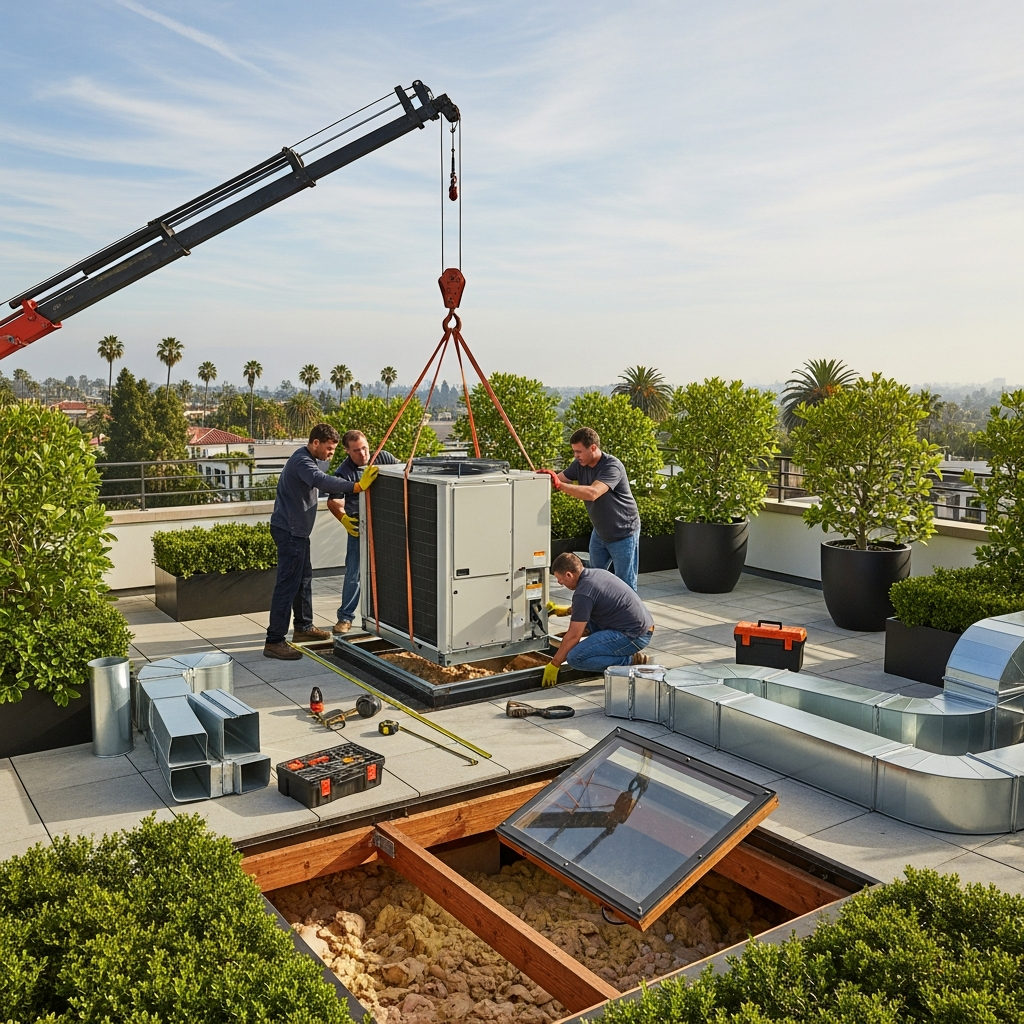
Installation in our city sometimes means navigating narrow driveways, preserving manicured hedges, arranging parking along busy corridors, and lifting equipment over structures without disturbing patios or pool decks. If a crane or specialized rigging is required to place condensers or air handlers, coordination and safety planning come first. When work occurs in occupied homes, we structure daily start and stop times to respect family routines and quiet hours, and we prioritize dust protection, floor protection, and clean staging for materials.
For multi-family residences and condominiums, adding a new system or replacing an existing one often involves building management approvals and hallway or elevator protections. Clear communication with concierge and maintenance staff reduces friction, and familiarity with these processes prevents delays that can quietly add to overall project time.
Thermostats, Controls, and Zoning Strategy
In Beverly Hills properties—where lifestyle often includes flexible schedules and distinct living spaces—zoning can be a powerful comfort tool. Properly located thermostats with remote sensors help create an even envelope of cool air without over-conditioning unused rooms. When integrated with smart controls, the system adapts to your day: a morning cool-down in the kitchen and family room, a gentle afternoon in the office, a quiet evening in the primary suite. Designing and wiring these controls during installation takes thoughtful planning, which adds steps but yields a home that feels intuitively comfortable.
Commissioning smart controls also includes network integration and fine-tuning schedules, which requires an unhurried approach. That time is part of the installation journey in high-end residences, where the goal is seamless performance rather than a hurried handoff.
Indoor Air Quality Enhancements
Many Beverly Hills homeowners pair new systems with filtration or purification upgrades. High-MERV filtration, dedicated return paths in bedrooms, or IAQ accessories designed to reduce particulates and allergens can subtly reshape the duct layout and air handler placement. While these features may add to project scope, they also deliver noticeable everyday benefits—cleaner air, quieter operation, and registers that distribute comfort more gently across rooms.
Dehumidification and ventilation components also belong in the conversation. Even in our relatively dry climate, shoulder seasons and certain microclimates create moments when humidity control improves comfort significantly. Ventilation strategies help retain fresh air without sacrificing efficiency, especially in tightly sealed homes where stale air can build.
Historic Character, Modern Comfort
Preserving original character while adding modern cooling is a Beverly Hills specialty. Historic homes, carefully maintained, require minimally invasive routes for ducts and lines, discreet registers that complement existing trim, and a steady hand for patch and paint around any necessary access points. This respect for original craftsmanship may lengthen the project timeline, yet it protects the very charm that makes the home special. When you factor installation cost in such residences, include the craft of concealment and restoration—an invisible art that, when done right, leaves no sign of the work itself.
For mid-century residences with low-slope roofs and tight mechanical spaces, thoughtful equipment selection keeps profiles low and sound levels hushed. Here, cost reflects solutions tailored for silence and subtlety rather than one-size-fits-all components.
Permitting, Inspections, and Smooth Handoffs
City permitting and final inspections are integral steps, not hurdles. A local installer familiar with Beverly Hills procedures can schedule efficiently, prepare clean documentation, and meet inspectors with confidence. This fluency helps avoid last-minute corrections that might extend timelines. During the final walkthrough, I provide system documentation, demonstrate controls, and confirm that each space achieves the intended comfort, from upstairs bedrooms to a quiet reading nook near the garden.
Why “Cost” Should Include Comfort, Quiet, and Longevity
Installation value is measured not only on day one but on day one hundred and day one thousand. A system that starts softly in the morning, holds steady at midday, and hums quietly through the night, all while respecting your electric goals, pays you back in daily satisfaction. Good duct design, balanced airflow, and calibrated controls make the home feel like itself—only calmer and more comfortable when the weather presses down.
In the middle of planning, when decisions stack up, it helps to revisit your core goals: a restful bedroom, a cool, lively kitchen on entertaining days, and a home that feels cohesive from one end to the other. Reliable air conditioning begins with those goals, and installation costs reflect how attentively they are met.
Frequently Asked Questions
What factors most influence installation cost in Beverly Hills? Access, duct condition, equipment type, zoning complexity, IAQ add-ons, and the need to preserve finishes all play major roles. Historic homes and tight mechanical spaces often require more planning and careful workmanship.
Do I need new ducts with a new system? Not always, but ducts should be evaluated for size, condition, and layout. Undersized or leaking ducts can undermine the best equipment. A balanced approach may include selective replacement, sealing, or redesign in key areas.
How long does installation typically take? Project duration depends on scope. Straightforward replacements may be completed quickly, while multi-zone homes with duct revisions and control integration require more time. Clear daily schedules and clean site management help life continue smoothly during the work.
Will installation be disruptive? With proper preparation—floor protection, dust control, and respectful crew conduct—disruption can be kept minimal. We plan routes for materials, protect finishes, and coordinate with household routines to reduce noise and clutter.
Can I improve indoor air quality during installation? Yes. Upgrading filtration, adding dedicated returns, and integrating IAQ accessories are common during new installs. These choices can reduce dust and allergens and make the home feel fresher day to day.
How do I choose between equipment options? Let your comfort goals drive the decision. Variable-speed systems often deliver the most refined comfort, while simpler systems can suit smaller spaces or specific constraints. A thorough load calculation and a candid discussion of priorities guide the choice.
Will smart controls help manage comfort across large homes? Properly placed thermostats and remote sensors, paired with a clear zoning plan, make a significant difference. Smart controls support schedules that reflect real life, not just theoretical occupancy.
Ready to Plan an Installation You Will Love?
If you are exploring a new system for a Beverly Hills home—whether you are renovating, replacing, or upgrading—let’s begin with a conversation about your spaces, lifestyle, and comfort goals. Thoughtful air conditioning design and installation will help your home feel cool, quiet, and beautifully balanced for years to come. Reach out when you are ready to talk through options without pressure, just clarity.