
Understanding the real drivers behind installation cost in Beverly Hills
Talking about the investment required for air conditioning installation in Beverly Hills means looking beyond the equipment box and into the life the system must support. A quiet primary suite, a sun-drenched family room, a gallery that stays consistently cool through an evening event—each space places unique demands on design, labor, and coordination. That is why the most accurate picture of cost is built on a thoughtful site visit and a design conversation. We evaluate architecture, insulation, window exposure, desired sound levels, and how you like to live from morning through night. With that understanding, we shape an installation plan that balances performance, aesthetics, and long-term reliability. From the earliest conversation, we also consider how your existing air conditioning infrastructure can be reused or reimagined to deliver better comfort without unnecessary disruption.
Beverly Hills offers microclimates that influence design more than many realize. Homes closer to the Flats enjoy different evening temperatures than those perched higher in the Hills. Sun angles change dramatically between canyon-facing and street-facing elevations. These subtleties affect sizing, duct paths, and where condensers can live discreetly without compromising airflow or the garden’s tranquility. Accounting for them early prevents surprises later.
Architecture, aesthetics, and the path of least intrusion
In many homes here, the hidden work matters most. Running ducts through finished spaces must be artful to preserve ceiling lines and avoid visible soffits. When ceilings are sacred, we consider slim high-wall air handlers or low-profile ducted units tucked above closets, delivering quiet cooling through sleek grilles. The goal is a seamless result that looks as though the home was always meant to be this comfortable.
Beyond placement, the choice of equipment and configuration is driven by the character of the home. Variable-capacity systems can whisper at low speeds most of the time, ramping only when the afternoon sun leans in. Zoned systems can keep guest suites perfectly comfortable even when they are used intermittently. For historic properties, vibration isolation matters as much as airflow—preserving plaster, stone, and finely crafted millwork while keeping sound in the background.
Ductwork realities: reuse, refresh, or redesign
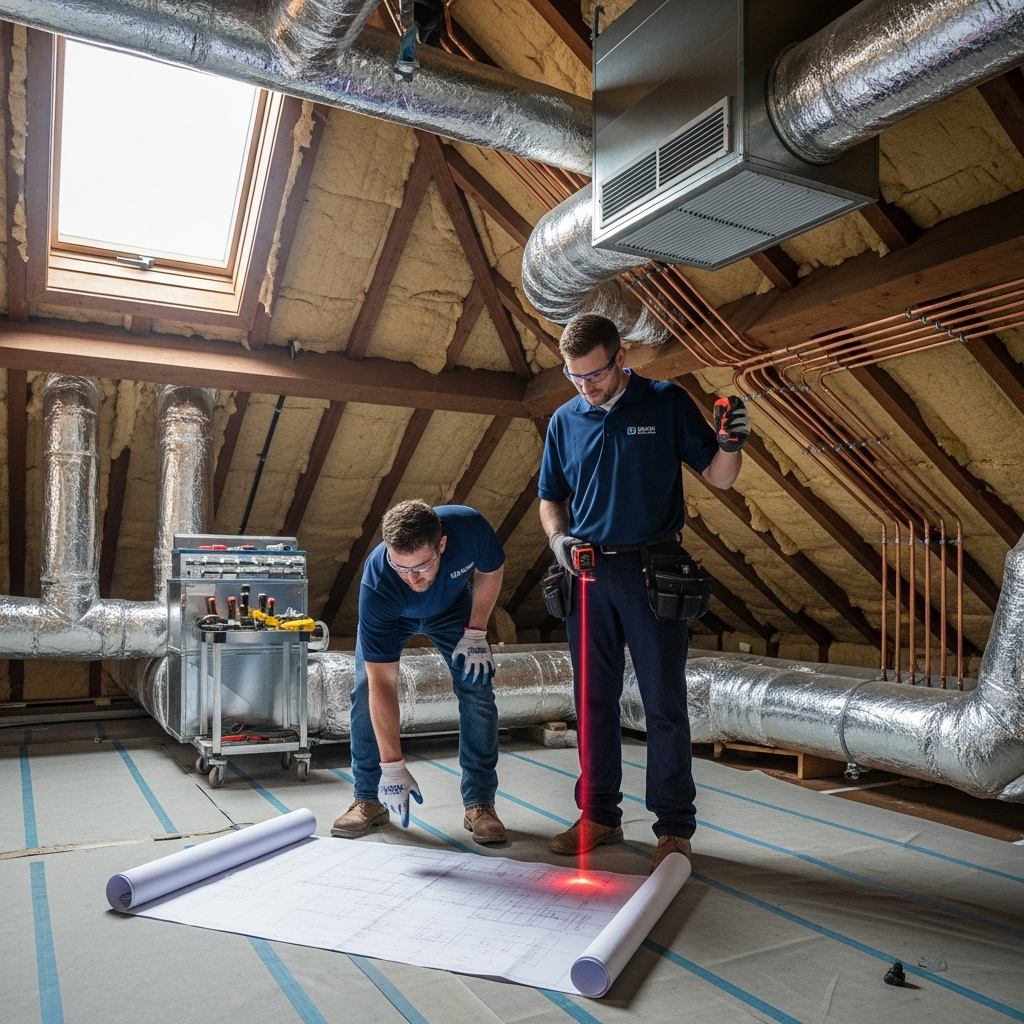
Existing ducts can be a gift or a hindrance. We test them for leakage, check their sizing against current needs, and listen for telltale noise that signals turbulence. Sometimes a careful reseal and a few redesigned transitions unlock excellent performance. Other times, a fresh layout is the right answer—one that respects structure, hides deftly, and moves air with the least resistance. This is where the conversation about cost becomes tangible: efficient duct design reduces energy use, noise, and wear on equipment, which is an investment that returns comfort every day.
Supply and return placement is equally crucial. A gorgeous room can feel unbalanced if supply air throws directly at seating or if return air pulls too aggressively past a favorite reading chair. Adjusting grille locations, diffuser styles, and throw patterns helps shape the experience in a way measurable tests can’t capture alone. Installation that pays attention to these details feels luxurious long after the last ladder leaves the house.
Outdoor placement and the art of quiet
Where condensers sit affects everything from sound to service access. In Beverly Hills, landscaping is an extension of the home, so we site equipment with care. Units need breathing room without becoming a visual feature. They should be reachable for maintenance without stepping into a flower bed. We consider prevailing breezes, reflective surfaces that could amplify sound, and how nighttime operation might carry in a courtyard. Thoughtful placement coupled with isolation pads and vibration attenuation keeps performance high and presence low.
Controls, zoning, and everyday elegance
Controls are the face of the system in your daily life. A cohesive control plan can elegantly orchestrate comfort across floors and rooms, especially when the home hosts events, welcomes guests, or shifts from busy weekdays to relaxed weekends. We map sensor locations to avoid solar impact from skylights and place thermostats where they read the lived reality of a room. Zoning allows you to fine-tune spaces like a home office or gym without overcooling rooms that don’t need it in the moment. This is where good design translates directly into perceived value, because the system simply feels smart, calm, and responsive.
For many clients, integrating with other home systems is part of the brief. We coordinate with lighting and shade controls so the home’s envelope works with the HVAC, not against it. With this integration, late-afternoon cooling demands flatten, evening gatherings stay comfortable, and overnight temperatures settle in gently. The effect is subtle but powerful—your home feels composed at all hours.
Permits, access, and project logistics
Beverly Hills has well-defined expectations for work quality and neighborhood impact. We plan for permitting, inspections, and coordination with building management or homeowners associations when needed. Access routes are mapped to protect finishes and maintain household routines, including discreet scheduling that avoids the busiest parts of your day. Behind the scenes, we pre-stage materials, confirm electrical requirements, and line up trades so installation flows smoothly and quietly.
In multistory homes or those with limited mechanical space, staging becomes a design challenge of its own. Crane access, curbside placement, and temporary protections are arranged with precision to minimize footprint and time on site. These steps are part of the true cost of an installation done properly: the orchestration that lets a complex project feel simple from your perspective.
Mid-project transparency and craftsmanship
Once work begins, clear updates keep the experience calm. We walk you through milestones, invite questions, and present any discoveries candidly, along with solutions that preserve both schedule and vision. Our craftspeople treat attics, closets, and equipment rooms like gallery spaces, because that is the level of respect every corner of your home deserves. When a detail calls for a custom transition or a refined grille, we make it happen, not as an upsell, but as the right answer for the space.
Long-term value and the feel of a well-tuned system
The true return on investment reveals itself in daily life. An installation that was sized and balanced with care cools evenly, controls humidity gracefully, and sounds like silence. It cooperates with shades and daylight. It holds steady during a heatwave without calling attention to itself. This reliability is not accidental—it is the result of matching equipment to the envelope, mastering airflow, and anticipating how the home breathes through the year. When you step from your landscaped terrace into a living room that feels just right, the system has done its job beautifully.
Maintenance completes the value picture. We document the system thoroughly during commissioning, establishing reference points for temperatures, pressures, and sound. Seasonal visits compare current readings to those baselines so we can act before you ever feel a change. Good maintenance maintains the elegance of the installation indefinitely, ensuring that your investment continues to perform quietly and confidently.
Frequently Asked Questions
What factors most influence installation cost?
Architecture, ductwork condition, desired sound levels, zoning complexity, and the precision of finish work. Access, permitting, and integration with other home systems also contribute. A careful site assessment turns these variables into a clear, tailored plan.
Can existing ducts be reused?
Often, yes. We test and evaluate each run, sealing and redesigning transitions where needed. When ducts can be refreshed rather than rebuilt, we do so without compromising performance, and we explain why each decision supports comfort.
Will the installation disrupt my home?
We orchestrate work to be as quiet and contained as possible, using protective coverings, tidy staging, and clear timelines. When a task must be more involved, we schedule it to respect your priorities and keep daily life smooth.
How do you ensure the system is the right size?
We perform a detailed load analysis, then test our assumptions against how the home actually behaves—sun exposure, room usage, and airflow realities. The result is equipment that runs in its sweet spot, quietly and efficiently.
What does commissioning include?
We verify airflow, confirm refrigerant targets, calibrate controls, and document baseline readings for future maintenance. Commissioning is the moment an installation becomes a living, breathing system tuned to your home.
Take the next step with confidence
If you are considering a new system or a thoughtful upgrade, we would be glad to map the path with you. We will listen carefully, design with your home’s character in mind, and deliver a result that feels effortless every day. For expert planning, design, and installation guidance for your home’s air conditioning, reach out and let’s begin a conversation tailored to your goals.