
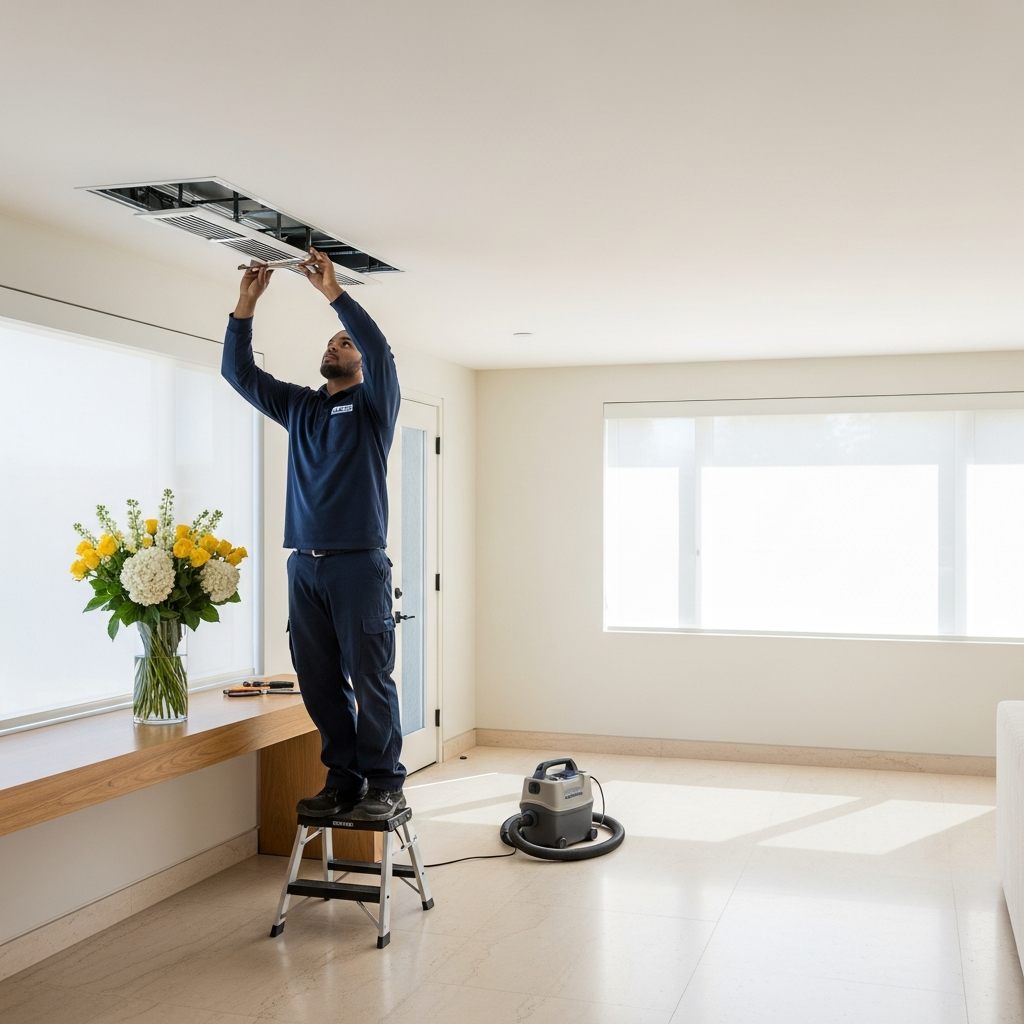
Step into almost any home in Beverly Hills and you can feel the difference the moment the door closes. The quiet hum of a well-tuned HVAC system, the even temperature that makes limestone floors comfortable in bare feet, and the clean, neutral scent that never competes with fresh flowers on the counter—these are the subtle luxuries we sometimes take for granted. Yet behind those details is a network of supply and return pathways working around the clock. When those air ducts are clean, the results are felt in every room and in every breath. Right at the outset, it’s worth acknowledging that scheduling thoughtful, routine air duct cleaning is one of the most efficient ways to preserve the comfort and calm that Beverly Hills homeowners prize.
The local context: Beverly Hills air is not the same as everywhere else
People often picture Beverly Hills as a calm, leafy enclave insulated from the rest of Los Angeles. In many ways, that’s true. But our air story is more intricate. Between canyons that funnel wind, seasonal pollen bursts from jacarandas and other ornamentals, and the occasional intrusion of wildfire smoke from the north or east, particles find their way into even the most meticulously sealed homes. Add in the dust from constant remodeling and landscaping—inevitable in a city where homes are cherished and frequently improved—and ducts tend to collect a patchwork of fine debris. A regular cleaning regimen is less about a dramatic one-time fix and more about stewardship of your home’s breathing passages, the quiet corridors that set the tone for indoor living.
Immediate benefits you can feel and measure
There is a tactile difference when ducts are freshly cleaned. Airflow feels smoother and more balanced, which subtly stabilizes temperatures from room to room. You may notice the HVAC ramps up less abruptly, which is easier on the equipment and kinder to your ears. For sensitive noses, odors that were hard to place—an intermittent mustiness around a guest room register or a faint dusty scent after the system starts—often fade. These sensory improvements align with practical outcomes as well. Filters stay cleaner longer, coils collect fewer particulates, and the system’s static pressure can drop closer to design specifications, reducing strain on blowers and motors. In an environment where finishes and furnishings are high-end, it’s reassuring to know the lungs of the home are working cleanly in the background.
Cleaner ducts, clearer air: a note on wellness
While it’s wise to avoid big promises about health, it’s equally true that life is gentler when the air carries less dust. Families with pets frequently report that dander no longer accumulates as quickly on dark wood floors and lacquered surfaces after a professional cleaning. Those who are pollen-sensitive often feel mornings are easier during high pollen periods because the system is not recirculating yesterday’s load of settled particles. In the wake of regional smoke events, a sensitive nose can tell when the telltale ashy tang has finally left the building. These aren’t abstract benefits; they’re daily comforts that add up to a calmer routine, the kind that keeps energy focused on living rather than on small nuisances.
Energy efficiency that shows up in everyday rhythms
We tend to talk about energy savings in terms of bills, but the day-to-day experience is just as telling. After a thorough duct cleaning, you may notice the system cycles feel more decisive—reaching set points without extended run times or unnecessary short cycling. That’s a sign of airflow efficiency returning to form. Over time, less resistance in the ducts translates into lower mechanical stress, which can extend the service life of components. In areas like Trousdale Estates, where modernist architecture often relies on carefully balanced, low-profile diffusers, even minor reductions in duct resistance can make a perceptible difference in comfort and acoustics.
Quiet systems protect tranquility
Beverly Hills homes are symphonies of quiet. From layered drapery to acoustically treated media rooms, it all favors a peaceful background. Dirty ducts push systems to work harder, which can add turbulence noise at registers or a throaty quality to returns. After a cleaning, the softened character of airflow often speaks volumes. It’s not that noise vanishes, but rather the system returns to a refined hush better suited to the home’s interior design and lifestyle.
Preserving finishes and furnishings
Dust is more than a nuisance; it’s a slow, abrasive force. In homes with custom millwork, specialty stone, and curated art, the rate at which dust resettles matters. Cleaner ducts reduce the circulation of fine particulate that tends to find its way onto piano lids, matte lacquer credenzas, and the tops of framed artwork. Over months and years, fewer micro-abrasive particles in the air can mean less frequent, less aggressive cleaning of delicate surfaces. That’s a quiet benefit, but it is meaningful in homes where materials are chosen with intention.
Odor control that feels like a fresh start
Odors can be elusive. A home can be spotless and still carry a persistent note that seems to originate from nowhere. Ducts can harbor traces from cooking, pets, seasonal humidity, or even the faint residue of nearby smoke events. When ducts are cleaned correctly—with proper containment, negative pressure, and source removal—the air regains a neutral baseline much closer to what you experience when you step into a newly finished space. Once that neutral baseline is restored, the fragrances you do choose—fresh citrus in the kitchen, a favorite candle in the library—have room to shine without muddy undertones.
Renovations, additions, and post-construction dust
Beverly Hills sees a steady stream of high-quality renovations, from discreet bathroom expansions to whole-home reinventions. Even with the best dust control practices, ultra-fine particles escape. These fines tend to accumulate in return ducts and settle on the first few feet of supply trunk lines and branches. A professional post-construction cleaning can reset the system. Homeowners often schedule it as the capstone of a project, right after final paint touch-ups and before furnishings arrive, ensuring the HVAC doesn’t carry construction residue into the fresh interior.
A note on indoor humidity and comfort
Southern California is usually kind to indoor humidity levels, but we still see those rare damp winter weeks and the occasional summer day when marine air lingers. When ducts are clean, airflow is more predictable, which helps the system dehumidify and condition air as designed. In spaces like wine tasting rooms, piano rooms, or home theaters—areas where temperature and humidity feel amplified—minor improvements in airflow quality can translate to noticeable comfort gains and steadier conditions.
The professional process, demystified
A proper duct cleaning is a thoughtfully staged sequence rather than a single machine visit. Technicians begin with a careful walk-through, noting access points, register types, and any signs of moisture or damage. Protection of finishes comes first; the path from entry to equipment is shielded, and registers are removed with attention to surrounding paint and plaster. The system is placed under negative pressure using equipment sized to the home, and each branch is agitated—gently but thoroughly—so debris is captured rather than dispersed. Returns receive special care, since they see the most dust load. Coils and blower compartments are inspected, and filters are replaced or re-seated so the air path is optimized. The result is not only cleaner ducts but a tuned, integrated system.
Privacy, scheduling, and working with your home’s rhythm
One of the overlooked benefits of routine service is the confidence that comes with familiarity. Crews who work frequently in Beverly Hills understand discrete scheduling, gate and parking etiquette, and the importance of leaving a site as pristine as they found it. For many homeowners, this allows duct cleaning to recede into the background—a quiet appointment slotted between school drop-offs and a dinner reservation—yet it still delivers the cumulative benefits of healthier airflow and a calmer home.
Mid-year check-ins and why they matter
Even if you don’t commit to a full cleaning every year, a mid-year assessment can be surprisingly valuable. Inspecting a return plenum, reviewing filter condition, and scanning for any signs of past moisture can prevent problems from growing. Mid-year is also a good time to re-evaluate filtration choices, particularly if you’ve recently introduced a new rug collection, adopted a pet, or finished a room refresh that brought new textiles into the home. If the assessment points to a need, scheduling targeted professional air duct cleaning at that moment captures maximum benefit with minimal disruption.
Neighborhood nuances from flats to canyons
Homes south of Sunset often experience different airflow patterns than those nestled in Benedict or Coldwater Canyons. In the flats, landscaping dust and street-level particulates can dominate. In the canyons, wind-driven debris and the occasional whiff of wildfire smoke can leave their mark. Recognizing these patterns helps prioritize which returns and supplies deserve extra attention and which seasons are best for service. This local sensibility—treated as a practical lens rather than a marketing line—makes maintenance feel less like a chore and more like tuned care for a beloved space.
Longevity for your HVAC investment
A clean duct system acts like a safeguard for the heart of your HVAC: the blower, coils, and controls. Reduced particulate travel means fewer opportunities for buildup on coil fins and blower blades. That improved cleanliness maintains heat exchange efficiency and airflow characteristics much closer to design. Over many years, the cumulative effect can be significant—fewer nuisance service calls, a calmer acoustic profile, and a system that responds predictably when you set a temperature before guests arrive for a weekend dinner.
What you can do between professional cleanings
Between full-service cleanings, a measured routine keeps the system in good order. Gentle, regular vacuuming of registers using a brush attachment prevents local dust from being pulled into the duct throat. Staying on schedule with filter changes is crucial; if you prefer higher-efficiency filters, make sure the system is designed for the additional resistance. After outdoor smoke events or a particularly dusty gardening project, it’s wise to perform a quick visual check of returns and consider a filter swap to capture any early influx of particulates. These small acts support the deeper resets that a professional service provides.
Setting expectations: what a good result looks like
After a proper cleaning, the greatest compliment is that the system becomes once again invisible. Odors settle into neutrality. Dusting routines relax. The air regains a polished clarity, especially noticeable when sunlight cuts across a room and you see fewer particles suspended in the beam. If you keep a mental map of warm and cool spots, you may find the differences soften. And perhaps most tangibly, you’ll sense that the home is easier to prepare for guests, because the baseline is already composed and comfortable.
FAQs
How often should Beverly Hills homeowners schedule duct cleaning? Frequency depends on lifestyle and environment. Many homes thrive on a cadence of every two to three years, while homes with pets, frequent renovations, or sensitivity to pollen and smoke often benefit from annual or 18-month intervals.
Will duct cleaning help with allergy symptoms? While it is not a medical treatment, removing accumulated dust, dander, and pollen from the air path can reduce the irritant load indoors, which many residents experience as easier mornings and calmer sinuses during peak pollen periods.
Is it messy or disruptive? A well-run service protects finishes, contains dust with negative pressure, and leaves spaces as clean—or cleaner—than before arrival. Most projects complete in a single day for typical homes, with larger estates taking longer by design.
Should we clean ducts after a renovation even if rooms were sealed? Yes. Even excellent containment allows some ultra-fine particles to escape. Post-construction cleaning resets the system so new furnishings and finishes aren’t immediately exposed to that residual dust.
Do we need sanitizing treatments, or is source removal enough? Source removal—the thorough extraction of debris under controlled negative pressure—is the foundation. Additional treatments are considered case by case, typically when there has been a moisture event or an odor concern that merits targeted remediation.
Will cleaning improve energy efficiency? Reduced duct resistance and cleaner components can help your system operate closer to design intent, which often shows up as steadier temperatures, calmer acoustics, and more decisive cycles.
What about older homes with delicate registers and plaster? Experienced technicians treat registers like fixtures, carefully removing, cleaning, and re-seating them while protecting surrounding surfaces. The path from entry to equipment is shielded to honor the home’s finishes.
Ready to breathe easier at home?
If you’re picturing that effortless clarity when sunlight spills across your living room and the air simply feels right, it may be time to schedule a visit. Thoughtful, well-executed service restores the quiet luxury your home was designed to deliver. To start the conversation and set a time that respects your schedule, book your air duct cleaning today and feel the difference each day thereafter.