Walk into any well-run office in Beverly Hills and you will notice an effortless sense of calm: steady temperatures, air that feels neutral rather than perfumed, and a hum from the HVAC system that you barely register. This is not an accident. In commercial spaces—whether on Wilshire, little side streets between Santa Monica and Brighton, or nested above boutiques—the systems behind the scenes determine how teams feel and how clients perceive your brand. Commercial air duct cleaning is part of that quiet success. As someone who has worked alongside property managers and tenants from creative studios to medical suites, I have seen how a thoughtful, professional approach transforms not just airflow, but the workday itself. When you partner with the right provider for air duct cleaning in Beverly Hills, you support health, productivity, and the kind of polish that defines business here.
Office buildings in our city are diverse. Some are mid-century structures with updated mechanicals; others are newer constructions with modern controls. Many include retail or restaurant spaces at street level, with offices above. These mixed uses introduce unique airflow patterns and, sometimes, unexpected odor migration or fine particulates traveling through common areas. The right cleaning strategy takes this complexity into account and treats the building as a single ecosystem.
Why Indoor Air Quality Is a Business Asset
In offices, air quality directly influences how people feel and perform. When supply and return paths carry a film of dust or fine residue from construction down the block, occupants may experience subtle irritations—tired eyes, scratchy throats, or a sense that the room never quite feels fresh. Over time, these minor discomforts can add up, affecting focus and morale. Clients, too, notice the difference between an environment that smells neutral and one that carries faint, stale notes. Professional duct cleaning removes the reservoirs where particles settle and where odors can linger, restoring a balanced baseline that supports comfort and concentration.
There is also a maintenance logic at play. Clear pathways allow filters to perform predictably, help air distribute evenly across zones, and reduce the frequency of dust settling on desks, equipment, and product displays. For property managers, that means fewer calls about hot or cold spots and less reactive scrambling. For tenants, it means a space that consistently expresses your brand’s standard of care.
Understanding Commercial Systems in Beverly Hills
Most local offices rely on packaged rooftop units, split systems serving defined zones, or more complex central plants feeding variable air volume boxes. Each arrangement has its own risks for accumulation. Long horizontal runs above drop ceilings collect fine material over time, while returns at tenant entrances may gather street-level dust carried in with foot traffic. In mixed-use buildings, odor management becomes a priority, especially if salon, spa, or restaurant tenants share walls or shafts with professional suites.
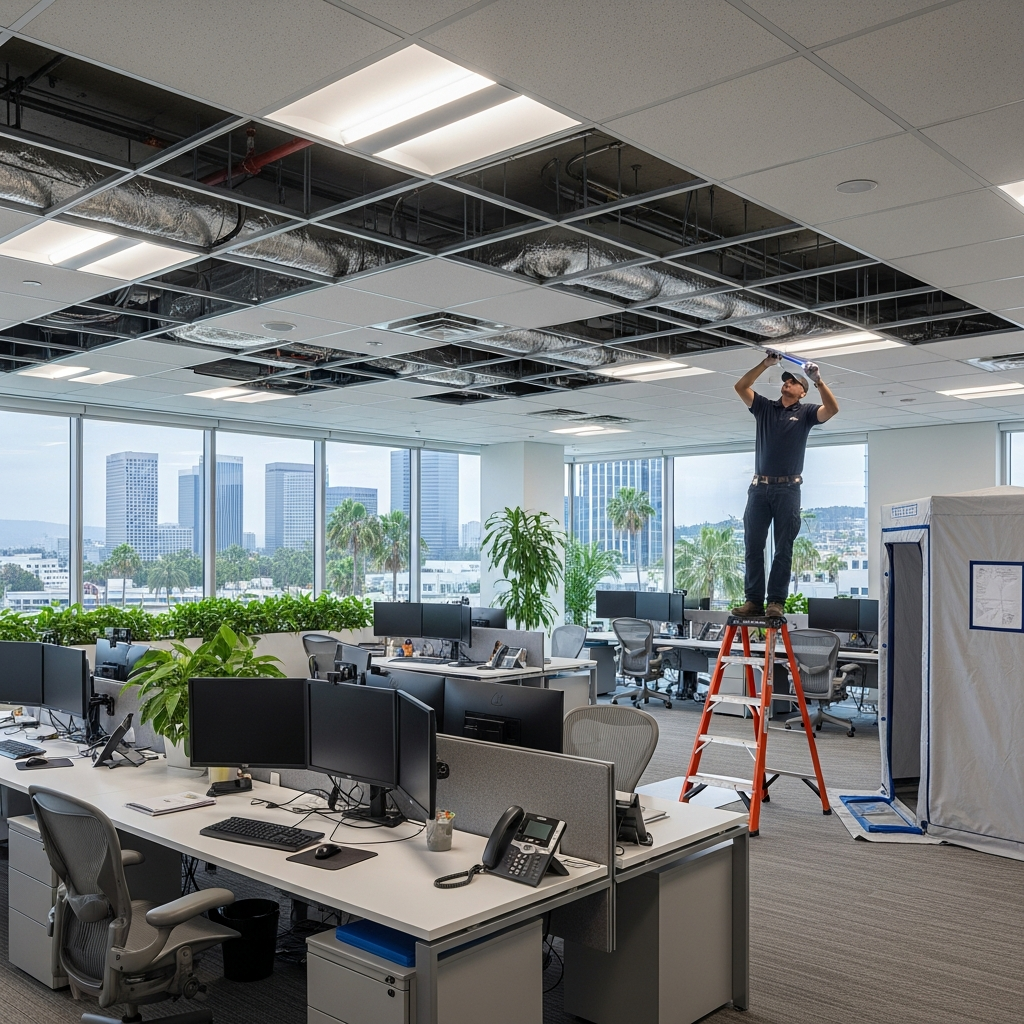
A skilled provider reads this landscape quickly. They identify access points, plan how to stabilize negative pressure without interrupting adjacent spaces, and coordinate with building operations to sequence the work outside of peak hours. Their approach respects not only the ducts but also the daily flow of people and business.
Planning Around Tenants and Schedules
Commercial work succeeds when it disappears into the background. That starts with planning. Property managers and office administrators value providers who meet on-site in advance, propose a clear sequence, and align hours with building policies. After-hours or weekend appointments often make sense, and experienced crews arrive prepared: security badges arranged, loading dock access confirmed, and a plan for elevator use that minimizes interference with cleaning crews or late-working staff.
Clear signage and friendly coordination matter inside. Teams place subtle notices where work occurs, maintain tidy paths, and keep noise levels measured. Technicians understand that even a small interruption can derail a meeting or patient visit, so they move with intention and respect.
Methodical, Documented Cleaning
Inside the ducts, technique mirrors the best residential practices but at a larger scale. Containment and negative pressure are non-negotiable. With those in place, technicians proceed zone by zone, removing registers, agitating debris with appropriate tools, and capturing loosened material efficiently. Returns, trunk lines, and plenums receive the same disciplined attention. When conditions warrant it, technicians may discuss sealing minor gaps to discourage future infiltration of dust or odors.
Documentation is a key deliverable in commercial settings. Property managers appreciate concise reports with representative before-and-after images, notes on conditions, and practical recommendations. This record supports compliance needs, informs future maintenance cycles, and helps answer tenant questions with clarity. In medical or high-profile professional suites, it may also be used as part of wellness or environmental quality communications.
Addressing Odors and Special Sensitivities
Odor control in commercial buildings demands nuance. The goal is a quiet neutrality that respects the varied activities inside. Professional duct cleaning helps by removing particulate reservoirs, but the best providers also look upstream and downstream—checking for small air leaks that draw in scents from adjacent spaces and validating that supply and return balance is not encouraging recirculation of localized smells. Where tenants include wellness practices or medical services, planning may include added precautions, like timing work to avoid patient hours and ensuring stronger containment around sensitive zones.
Shops and client-facing studios care about first impressions. Even a faint stale note at the entrance can color the experience. A targeted cleaning around primary entries and common areas, combined with a whole-zone reset, brings the crisp calm that makes visitors comfortable and employees proud of their workspace.
Coordination with Building Operations
In Beverly Hills, many buildings have layered management: owners, property managers, on-site engineers, and security personnel. The best providers respect this structure and communicate accordingly. They provide certificates of insurance promptly, share safety plans, and conduct pre- and post-walkthroughs so everyone understands the scope and the result. They also remain responsive when tenants raise questions, translating technical findings into clear, actionable notes.
Loading docks, freight elevators, and roof access become choreography in their own right. Teams who handle them smoothly keep the building calm. That professionalism reflects well on management and reassures tenants that maintenance is both proactive and respectful.
Mid-Project Check-Ins and Flexibility
Because businesses move fast, mid-project check-ins are essential. A lead technician or project manager will share midday updates: which zones are complete, what findings emerged, and whether any small adjustments to the plan will improve outcomes. If a tenant schedules an impromptu client event, the team can pivot to finish critical areas first. This agility—without abandoning discipline—is why companies trust established partners for professional air duct cleaning across multiple suites or floors.
Flexibility also shows up in the tools chosen. Some runs respond best to specific agitation styles, and certain registers need delicate handling to avoid cosmetic impact. The crew adapts while keeping the central commitments intact: containment, capture, and respect for surroundings.
Life After a Commercial Cleaning
The benefits arrive quietly but persistently. Staff comment that the air feels lighter; desks collect less dust between regular cleanings; and temperature swings across zones moderate. For property managers, fewer comfort complaints and a clear report translate to calmer days and more confident planning. Tenants who once kept windows open out of habit may find they prefer the steady neutrality that follows a thorough reset.
Maintenance is easier to schedule once you have a solid baseline. Filter changes align more predictably with usage, and housekeeping routines become more effective. When you bring new tenants into a space, you can present a recent documentation packet that signals a standard of care from day one.
A Day on Wilshire: A Composite Example
Consider a mid-rise on Wilshire with a ground-floor café and designer showrooms, plus two floors of professional offices above. Subtle coffee aromas had been greeting visitors in the lobby, and dust seemed to settle faster than expected on display surfaces in the showrooms. A coordinated cleaning took place over a weekend. The crew arrived with clear access instructions, staged containment, and stabilized negative pressure. They moved suite by suite, documenting, cleaning, and checking small transitions where older sheet metal met newer flex runs. By Monday morning, the lobby air felt neutral, the showrooms looked and smelled calmer, and staff noticed fewer hot-and-cold complaints as the day progressed. The property manager now had a concise report to share with stakeholders, plus a practical plan for keeping the gains.
FAQ
How do office layouts affect the approach to duct cleaning?
Open-plan spaces, private suites, and mixed-use floors each present different airflow patterns and access points. A thoughtful provider tailors containment, staging, and sequencing to match how people move and where particulate tends to collect.
Will the work interfere with business hours?
It does not have to. Many projects are scheduled after hours or on weekends. When daytime work is necessary, crews minimize noise, maintain tidy paths, and coordinate with tenants to avoid key meetings or appointments.
How is progress documented?
Concise reports with representative images and notes provide a clear record of what was done and why. This documentation supports property management, tenant communication, and long-term planning.
Can cleaning help with odors from adjacent tenants?
Yes. Source removal reduces reservoirs where scents linger, and careful inspection can identify small leaks that pull air from neighboring spaces. Balancing supply and return also limits recirculation of localized odors.
What should property managers prepare in advance?
Coordinate building access, share any security or elevator requirements, and provide a floor plan if available. Noting sensitive zones—medical, wellness, or client presentation areas—helps the team plan additional precautions.
How often should offices consider scheduling?
Frequency depends on building use, tenant mix, and nearby activity. A provider who understands Beverly Hills’ patterns will help set a practical rhythm aligned with your property’s realities.
If your office is ready for steadier comfort, clearer air, and documentation that supports the standard you set for your brand, partner with a team that works at the pace of business and the level of polish Beverly Hills expects. Book coordinated, detail-first Beverly Hills air duct cleaning and give employees, clients, and stakeholders an environment that performs as beautifully as it looks.