
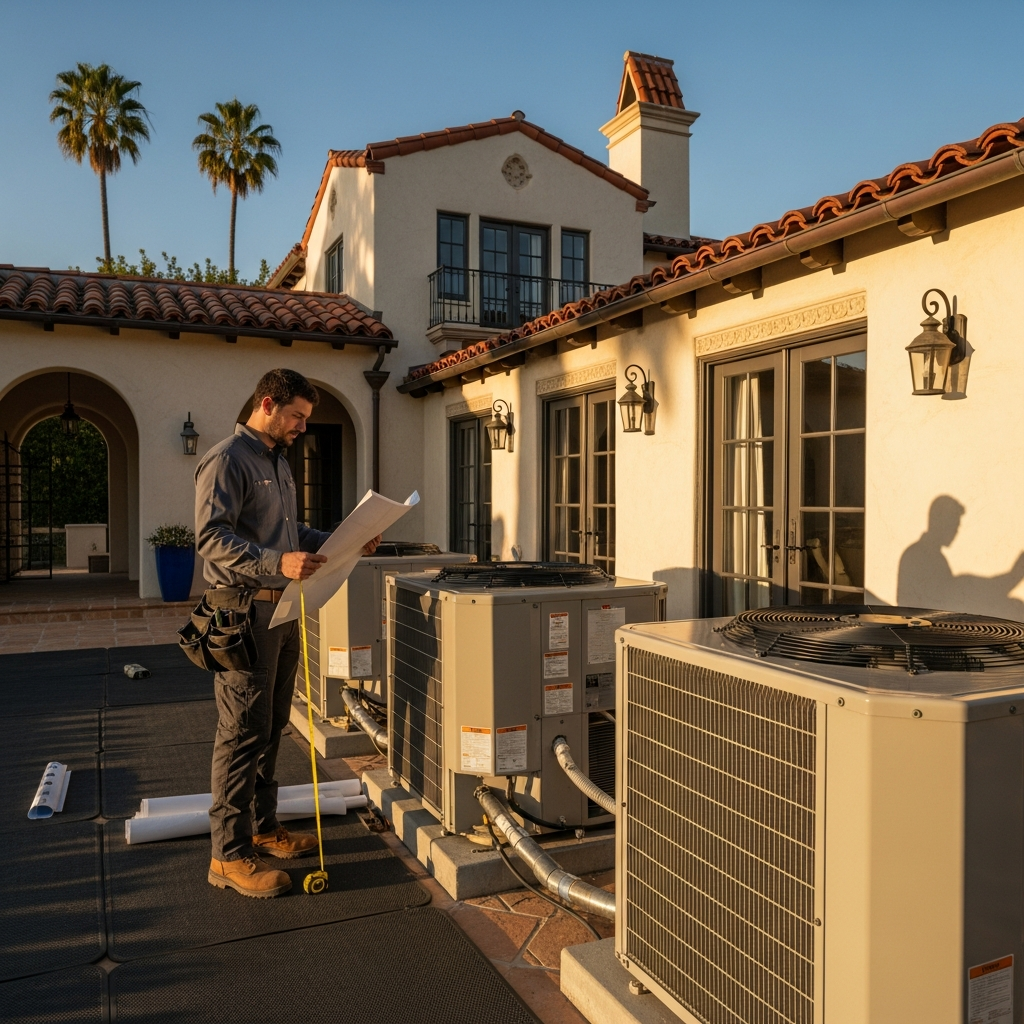
Standing on a shaded street in Beverly Hills on a warm afternoon, you quickly appreciate how much the right cooling system shapes daily life in our canyons, flats, and landscaped estates. Conversations about what an air conditioning project will ultimately require often begin with a single word—cost—but here in Beverly Hills, the true story behind a successful installation is far richer than a number on a page. It is a blend of careful design, attention to architectural detail, and the realities of local codes and climate. From Spanish Revival homes with thick stucco walls to glassy Mid-Century gems perched above the city, each property tells its own story, and that story is what guides a thoughtful plan for air conditioning installation.
In our community, there is no one-size-fits-all approach. What people often label as “cost” is really the sum of decisions about equipment style, duct strategy, placement, electrical readiness, and the care taken to protect finishes and landscaping. The investment you make is directly tied to how well your system is designed to harmonize with the home you love. When neighbors share their experience, you will hear less about a transaction and more about how well their home now feels at three in the afternoon on a July day—and just as importantly, how quiet the system runs at two in the morning.
How Beverly Hills Architecture Shapes the Installation Plan
Architecture is the compass for a successful AC design in Beverly Hills. Historic Mediterranean residences with plaster and clay tile roofs often reward a low-visibility approach that preserves façades and accommodates tight attic spaces. Mid-Century properties invite different thinking—zoned duct runs, discreet ceiling registers aligned with beams, and slim, inverter-driven condensers tucked behind hedges or screens. Newer builds may feature vast glass expanses and complex volumes, prompting a design that balances shading, internal heat gains, and quiet, high-efficiency air handlers set to maintain an even temperature from gallery to great room.
A true load calculation is the starting line. The orientation of the home, solar exposure, insulation levels, and window performance each influence sizing. Rather than relying on rules of thumb, seasoned local professionals pair data with experience: they know how the late-afternoon sun touches a north-of-Sunset lot differently than a flat near Wilshire, and how canyon breezes can lull a space into comfort until a still, warm evening demands more from the system.
Ductwork, Air Distribution, and the Sound of Silence
Comfort is as much about how the air travels as it is about how cold the air gets. In many Beverly Hills homes, the challenge is threading new or improved ductwork through narrow chases and delicate finishes. Properly sized and sealed ducts, lined where appropriate for acoustics, help the system whisper rather than roar. Supply and return placement protect the look of a room and the flow of air; a vent placed with the eye of a designer can blend into a coffered ceiling while quietly managing temperature, humidity, and fresh air requirements.
Zoning is another art. Multi-level homes benefit from partitioned control, allowing bedrooms to rest cool without overconditioning living spaces. The goal is steady comfort with minimal swings, and that’s the promise of modern variable-speed systems: they don’t simply blast on and off, they settle into a rhythm that matches what the house needs from hour to hour.
Equipment Choices and Aesthetic Considerations
Beverly Hills favors solutions that marry performance with discretion. Inverter-driven condensers and thoughtfully placed air handlers can deliver powerful, even cooling while blending with the landscape. Rooftop placements may call for engineered stands, vibration isolation, and carefully planned crane lifts timed to minimize neighborhood disruption. Ground-level placements work well when screened, considering setback requirements, neighbor sightlines, and the elegant outdoor environments that define so many properties here.
Inside, filtration and air quality matter. Many homeowners integrate higher-efficiency filters and dedicated fresh-air strategies to reduce particulates and wildfire smoke impacts, all designed to maintain quiet operation and protect fine interiors from dust. The beauty of a successful plan is that guests sense comfort without seeing what makes it possible.
Permits, Codes, and Inspections—The Local Rhythm
Within the City of Beverly Hills, plan review and inspections are part of the rhythm of a responsible installation. Title 24 energy standards, refrigerant handling rules, and duct sealing thresholds shape the specification and the final sign-off. Coordination with building officials happens alongside coordination with the household calendar, property managers, or HOA guidelines. When done well, these steps aren’t an obstacle; they are a safeguard that ensures long-term performance and peace of mind.
The path through permitting also intersects with site logistics: parking constraints on narrow streets, hours for deliveries, and protection for walkways and landscaping. A team experienced with local expectations can stage equipment with minimal impact, protect floors and stairs, and communicate clearly with neighbors and security staff. This attention becomes part of the ultimate value you experience once the system turns on.
Electrical Readiness and Smart Controls
Another piece of the puzzle is electrical capacity and clean wiring. Some homes glide through with panels and circuits ready to support new equipment; others benefit from updates to accommodate variable-speed systems and smart thermostats. Modern controls allow for fine-tuned schedules, remote access, and integration with home automation. In day-to-day life, the right control strategy prevents overcooling, reduces noise, and keeps comfort consistent while you move from gym to office to screening room.
Smart zoning and sensors can go further, learning how sunlight and occupancy patterns shift during the day. With these tools, the system can anticipate rather than react, smoothing out peaks and creating that feeling of effortless comfort that is the signature of a well-executed design and installation. Midway through planning, many homeowners revisit earlier assumptions and adjust the scope once they see how these pieces fit together—another reason the conversation about air conditioning installation is best approached as a design process rather than a single line item.
Protecting Finishes, Privacy, and Daily Life During the Work
The work itself is an orchestration. Protective coverings, clean pathways, and respectful scheduling are essential. On properties with sensitive finishes, you will see careful containment of dust and daily clean-up that returns living areas to calm by evening. In larger estates, multiple teams may coordinate to route ducts above art walls, preserve millwork, and bring in air handlers without disturbing curated spaces. Where privacy is a priority, crews are briefed on protocol, arrivals are coordinated, and communication is routed through a single point of contact.
Neighbors notice when a project is managed with grace. Discreet staging, attention to noise windows, and clear signage keep the experience aligned with neighborhood expectations. These “soft” elements don’t fit neatly into a line on a proposal, yet they are the hallmarks of installation work done to Beverly Hills standards.
What “Value” Feels Like After the Switch-On
When the system first hums to life, value is instantly tangible: the temperature settles, the background sound recedes, and the home feels balanced in every room. At night, bedrooms rest at the set point without drafty blasts or erratic cycling. During a daytime gathering, the system stays quiet while holding steady even as doors open and close. Over the seasons, you notice cleaner air, fewer hot spots, and thermostats that rarely need touching.
From there, routine maintenance—filter changes, coil cleaning, and a yearly check of refrigerant and electrical components—keeps everything tuned. The same team that designed and installed offers continuity, understanding the house and its rhythms. That continuity is part of the long arc of value: quiet reliability rather than short-lived fixes.
Timing Your Project and Planning Ahead
Many households aim to complete installations during shoulder seasons to minimize disruption, but a truly prepared team can deliver with care even in peak periods. Planning early allows for thoughtful design decisions, timely permitting, and coordination with other work such as painting, roofing, or landscape updates. By approaching the installation as a tailored project rather than a commodity, you position your home for years of confident comfort.
FAQ
How do I know what size system my home needs?
A proper load calculation evaluates orientation, insulation, windows, occupancy, and internal heat gains. In Beverly Hills, hillside shade, canyon breezes, and unique architectural features make this step essential. The goal is a system that runs steadily and quietly, not one that turns on and off in abrupt bursts.
Can a new system be discreet enough for a historic or design-forward property?
Yes. With careful equipment selection, duct design, and register placement, modern systems can blend into historic and contemporary settings. Screening, strategic placement, and sound attenuation help preserve exteriors and interiors while delivering excellent performance.
What should I expect during permitting and inspections?
Expect plan review consistent with California energy standards and local rules. An experienced team will coordinate documentation, schedule inspections, and communicate timing so the process supports rather than disrupts daily life. The result is a system that meets code and performs as designed.
Are heat pumps a good fit for Beverly Hills?
Modern heat pumps are exceptionally capable for our climate, offering efficient cooling and comfortable heating with variable-speed operation. They pair well with zoning and smart controls and can deliver the quiet, steady comfort many homeowners prefer.
How can I reduce noise from outdoor and indoor units?
Equipment selection matters, but so do placement, isolation pads, duct design, and air handler configuration. The quietest systems combine low-vibration components with carefully routed ducts and registers sized for low-velocity airflow.
What maintenance keeps a new system performing its best?
Regular filter changes, coil cleaning, and scheduled checkups maintain airflow and efficiency. Attention to duct integrity, condensate management, and control calibration keeps day-to-day operation smooth and quiet.
Ready to Enjoy Quiet, Confident Comfort
If you are planning a project in the canyons or the flats, a conversation with a local specialist can transform a list of equipment into a plan that respects your home and your routine. To begin a thoughtful, design-first approach to air conditioning installation, reach out and let a Beverly Hills team translate your goals into day-to-day comfort you will feel in every room.