
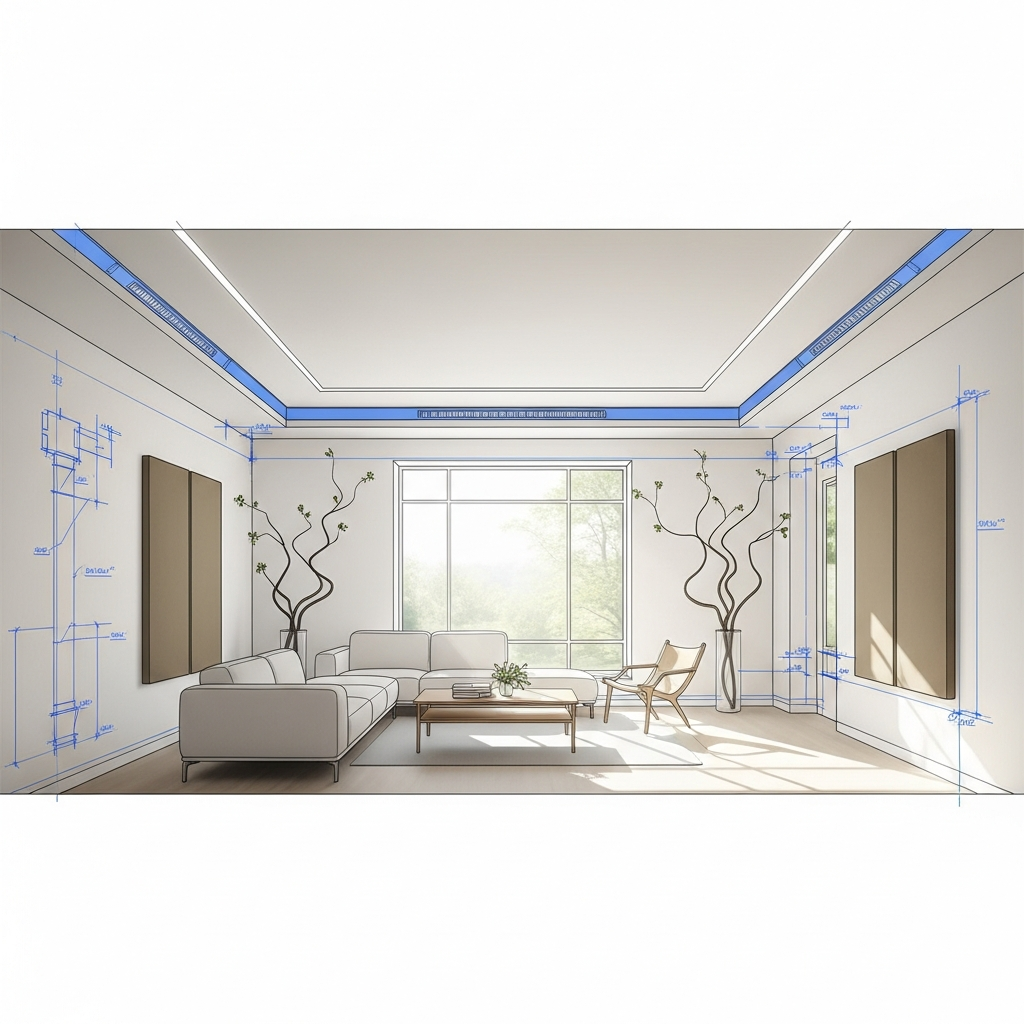
The New Era of Duct Design in Beverly Hills
Drive from the palm-lined Flats up into the winding streets of Coldwater and Franklin Canyons and you’ll notice a truth about Beverly Hills homes: no two are alike. Our architecture ranges from storied estates to crisply modern pavilions, and that diversity is pushing duct design into a renaissance. Today’s duct replacement projects are less about swapping parts and more about tailoring airflow to architecture, lifestyle, and the local environment. The trends redefining our approach prioritize air quality, quiet operation, energy-smart routing, and future flexibility—all while respecting the aesthetics that make these homes special.
As someone who spends as much time mapping air pathways as admiring crown molding, I’ve watched a handful of innovations change the way Beverly Hills residents experience indoor comfort. These aren’t fads; they’re practical shifts that solve persistent problems like uneven rooms, noisy supplies, and dust migration, while preparing homes for cleaner, smarter HVAC equipment.
Trend: Precision Airflow and Right-Sized Returns
One of the most transformative moves in recent years is the focus on return air design. Beverly Hills homes with beautiful but complex layouts often suffer from starved returns that force systems to work harder than necessary. Modern replacements place returns with purpose, matching them to supply volumes so rooms breathe naturally. The goal is smooth pressure balance, which keeps doors from slamming, eliminates whistling at undercut thresholds, and stabilizes temperatures no matter how the sun is tracking across your lot.
This trend also favors clear pathways. Instead of long, convoluted return runs, we plan shorter, straighter routes that reduce resistance and noise. It’s the backbone of quiet performance and sets the stage for premium filtration that doesn’t choke the system.
Trend: Low-Leakage Duct Assemblies
Another defining shift is the near-obsessive pursuit of airtight connections. Decades ago, tape alone was common; today, we rely on mastic sealants and mechanically fastened joints that hold up over time. In practice, this means less attic or crawlspace air sneaking into the system and more conditioned air reaching the rooms you occupy. Homeowners quickly notice cleaner surfaces, fewer dust bunnies collecting along baseboards, and a general sense that the home stays fresher between cleanings.
Low-leakage assemblies also enable the system to operate closer to its sweet spot, reducing runtime and wear. It’s a foundational trend because it supports every other performance goal, from filtration to comfort to sound.
Trend: Thoughtful Use of Rigid and Flexible Ducts
The old argument of metal versus flex has matured into a hybrid approach. We increasingly specify rigid metal trunks for durability and consistent internal dimensions, then transition to carefully supported flexible branches that provide quiet delivery to individual rooms. The key is craftsmanship—support spacing that prevents sagging, gentle radius bends, and insulation that stays intact as seasons change. When executed well, this combination gives you the best of both worlds: efficient main arteries and whisper-quiet terminals.
For Beverly Hills’ mid-century and contemporary homes with open ceilings, we’ll often conceal trunks within new soffits or chase spaces during renovation, keeping lines clean while preserving performance.
Trend: Sound as a Design Criterion
We’re not just aiming for cold or warm air; we’re designing for silence. Register velocity, elbow selection, and the way we couple ducts to air handlers all affect acoustics. Clients are asking for systems they don’t have to hear, particularly in primary suites, home offices, and nurseries. The trend has us modeling throw and diffusion so air is felt but not heard, choosing registers that minimize hiss, and isolating vibration at key points. Once you experience a truly quiet system, there’s no going back.
Sound-sensitive design dovetails with daylighting and interior finishes. Hard surfaces can amplify noise, so duct replacement now considers the room’s acoustic character alongside airflow demands, striking a balance between performance and serenity.
Trend: Filtration-Ready Duct Layouts
Wildfire seasons and increased awareness of indoor air quality have spurred a trend toward duct plans that support higher-efficiency filtration without suffocating airflow. That means return plenums with sufficient surface area, accessible filter cabinets, and static pressure targets that keep variable-speed blowers in their ideal operating range. The payoff is tangible—cleaner, crisper air with fewer particulates, less dust migration, and better protection for family members with sensitivities.
This approach pairs beautifully with sealed ducts, creating a distribution network that defends your interiors from attic or crawlspace air while keeping maintenance simple and effective.
Trend: Zoning that Follows Lifestyle, Not Just Floor Plans
Zoning used to be a binary concept—upstairs versus downstairs. In Beverly Hills, lifestyle drives zoning more than ever. We’re seeing dedicated conditioning for home offices that run hot with equipment, guest suites that sit idle most weeks, and gyms that need extra supply during workouts but quiet delivery the rest of the time. Duct replacement enables this nuance with properly balanced branches, thoughtful return placement, and smart dampers that respond to real use patterns.
The result feels personal. Spaces that once battled for airflow now operate in harmony, and the system’s modulation reflects your daily rhythm rather than a rigid architectural split.
Trend: Future-Proofing for High-Efficiency Equipment
As variable-speed heat pumps and advanced air handlers become more common, ducts have to match their capabilities. That means ensuring return and supply sizing support low-torque, continuous operation and that leakage is minimized so the equipment can hold setpoints without drama. We’re also planning access for future additions—like dedicated fresh air intakes or energy recovery ventilators—so that upgrades slide in without tearing apart finished spaces.
Future-proofing is about choices now that prevent headaches later. Replace ducts with tomorrow’s equipment in mind and you extend the life of your entire HVAC ecosystem.
Trend: Aesthetics Integrated From the Start
Registers and diffusers are no longer afterthoughts. Designers and homeowners want clean lines, balanced sightlines, and hardware that complements the room. Duct replacement increasingly includes a design review of grille locations and styles, ensuring that performance and aesthetics arrive hand in hand. In historic homes, we source period-appropriate options that nod to the original detailing; in modern spaces, we favor minimal linear diffusers that disappear into the architecture.
By planning aesthetic outcomes alongside technical goals, we avoid the compromises that once led to awkward placements or distracting hardware.
Trend: Data-Driven Commissioning
The final trend is what ties everything together: thorough testing and balancing. We verify CFM at registers, measure static pressure, and confirm that duct losses are within target. This data-driven handoff ensures the new network is doing what we promised. Homeowners feel it when rooms harmonize and when the thermostat becomes a set-it-and-forget-it control instead of a daily task.
In Beverly Hills, where craftsmanship and accountability matter, this step transforms duct replacement from an upgrade into a performance guarantee.
How These Trends Play Out in Real Homes
Consider a classic Beverly Hills Spanish with thick plaster walls and a layout that has grown over decades through additions. The old ducts meandered around obstacles, leaving the new family room starved for air and the original bedrooms drafty. The replacement plan introduced a central metal trunk, short flex branches with proper support, and a new return in the family room that balanced the space. With sealing and better insulation, dust settled less often, and the home became noticeably quieter. The homeowners didn’t have to learn any new habits; the house simply felt tuned for the first time.
Now think of a low-slung mid-century perched above the Flats. The shallow attic made insulation and support tricky. The new design embraced straighter runs, increased return area to lower static pressure, and linear diffusers that complemented the architecture. The result was whisper-quiet performance and even temperatures without cluttering the clean interior lines.
The Midpoint Moment: Fine-Tuning for Lifestyle
Midway through an installation, we review airflow room by room with the homeowner. This is when we confirm preferences, check comfort in spaces with special needs, and adjust diffuser choices if necessary. It’s also the perfect time to discuss how duct replacement can anticipate upcoming changes—like transforming a guest room into a nursery or converting a garage into a studio—so the system stays relevant as your life evolves.
What to Ask When Considering the Latest Duct Trends
When planning a project, ask your contractor how returns will be sized and located to match supplies, what sealing methods they use, and how they’ll document performance at handoff. Inquire about noise mitigation strategies, filtration support, and aesthetic coordination. The answers will reveal whether the plan follows today’s best practices or relies on yesterday’s habits.
Most importantly, insist on a conversation about how you use the home throughout the day and across the seasons. Trends are only valuable when they translate into daily comfort and simplicity for your household.
Frequently Asked Questions
What makes these trends different from traditional ductwork approaches?
They’re holistic. Instead of treating ducts as a set of pipes, we treat them as a tuned system that balances airflow, sound, filtration, and aesthetics. The approach is more deliberate and data-driven, with performance verified at the end.
Do these trends require changing my HVAC equipment?
No. While they align beautifully with modern variable-speed systems, many of the benefits—like reduced leakage, better returns, and improved acoustics—stand on their own and enhance the performance of existing equipment.
Will trend-forward ducts be visible?
Not if you don’t want them to be. A key part of the movement is integrating ducts and registers into the architecture, from period-appropriate grilles in historic homes to minimalist diffusers in contemporary spaces.
How do these trends handle wildfire smoke and seasonal allergens?
Filtration-ready layouts and tight ducts protect indoor air by preventing unconditioned infiltration and enabling higher-efficiency filters. In homes where fresh air strategies are appropriate, we plan for those connections without compromising performance.
Are the new assemblies durable?
Yes. Hybrid systems with rigid trunks and supported flex branches, sealed with mastic and fasteners, are built for longevity. Proper insulation and support spacing prevent sagging and airflow loss over time.
How do I know my contractor follows these best practices?
Ask to see commissioning data—CFM at key registers, static pressure measurements, and documentation of leakage control. A contractor working to modern standards will be proud to share the metrics behind the comfort you feel.
Envision a Home That Breathes With You
The duct trends shaping Beverly Hills homes elevate comfort from a background expectation to a lived experience—quiet mornings, crisp air, and rooms that feel beautifully balanced. If you’re planning an upgrade or renovation, there’s never been a better time to rethink your air pathways with equal parts engineering and design. When you’re ready to explore the possibilities, connect with a local team that understands the character of our neighborhoods and the nuance of our climate. Begin by considering how duct replacement can make your home feel as exceptional as it looks, today and for years to come.