
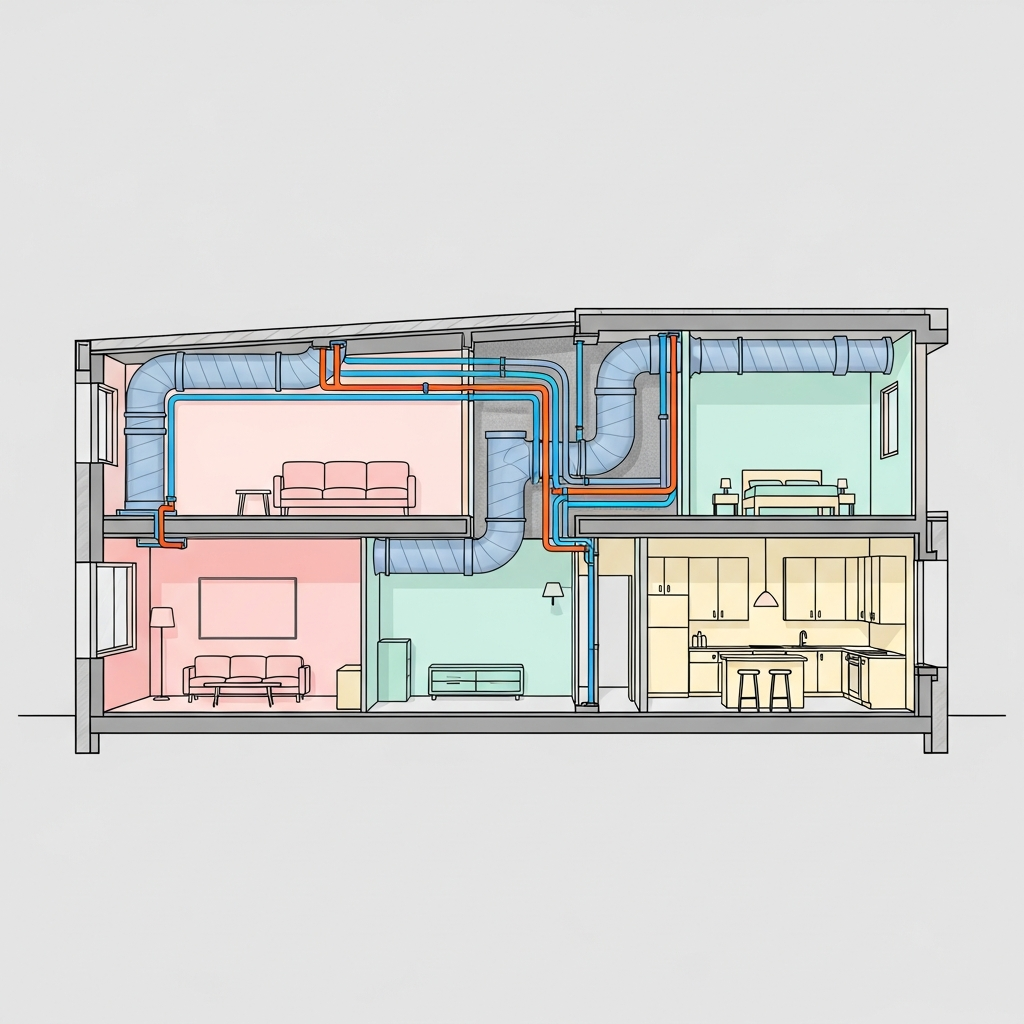
Why Your Ducts Deserve Center Stage in Beverly Hills
In Beverly Hills, we prize homes that feel as good as they look. Crisp morning air drifting down from Benedict Canyon, bright afternoon sun over sweeping lawns, and cool evening breezes off the coast create a microclimate that’s wonderfully livable—if your HVAC system is truly tuned to the house. That tuning starts with the ductwork, the hidden network that determines how effectively conditioned air reaches every corner. For many properties here, duct replacement is the difference between a system that struggles and a home that quietly maintains comfort, cleanliness, and balance day after day.
As a local HVAC professional, I often meet homeowners who have upgraded equipment but kept legacy ducts. The result can be disappointing: a high-efficiency unit forced to push through leaky, undersized, or convoluted runs. You wouldn’t install a new engine without addressing the transmission; ducts are that vital link. When we design and install new ductwork calibrated to your home’s layout and your equipment’s airflow requirements, the effect is immediate—rooms synchronize, the system breathes easier, and everyday life becomes more comfortable.
Local Architecture Shapes Duct Decisions
Beverly Hills homes aren’t cookie-cutter. We work in pre-war estates with plaster walls and narrow chases, 1950s and 60s mid-century gems with low rooflines, and newer builds with expansive glazing and high ceilings. Each style presents unique ducting considerations. In older homes, we often discover ducts squeezed through inconvenient spaces, with multiple tight transitions that generate noise and restrict airflow. In flat-roof mid-century properties, attics can be shallow and hot, challenging insulation and support. Newer homes sometimes have sprawling footprints that demand thoughtful trunk routing to maintain even temperatures across wings.
Replacing ducts allows us to solve those long-standing compromises. We can reroute to avoid bottle-necks, expand returns to reduce static pressure, and insulate appropriately for attic conditions. Even the selection of register sizes and placements changes with architecture; older homes may benefit from discrete, period-appropriate grilles, while contemporary interiors call for linear diffusers that blend seamlessly into clean lines.
Comfort, Measured in the Quiet Moments
Comfort is easiest to appreciate in the quiet moments: the nursery that finally holds a steady temperature at night, the home office that doesn’t overheat by mid-afternoon, the family room that no longer feels drafty when the air handler ramps up. These outcomes stem from matching duct capacity and layout to how you actually live in the space. With replacement, we review load characteristics by room, consider sun exposure and window size, and plan duct routes that reduce resistance while delivering the right amount of air precisely where it’s needed.
The behavioral change you may notice is subtle but powerful—you stop thinking about the thermostat. The home feels naturally consistent, so you’re not chasing comfort with frequent adjustments. That ease is a direct sign that ducts and equipment have found their balance.
Air Quality That Keeps Up With Your Standards
We live with seasonal pollen, coastal moisture that can migrate inland, and occasional smoke events that test even the tightest homes. Ducts that leak or pull air from unconditioned spaces make these days more challenging. Replacement lets us build a sealed, intentional system that partners with higher-grade filtration and, when appropriate, fresh air strategies. With cleaner delivery pathways and strong return design, your HVAC becomes an ally in maintaining indoor air quality that matches your expectations for the rest of the home.
Clean ducts also protect interiors. Less dust circulating means floors, furniture, and finishes stay pristine longer. When your supply air is clean and your returns are sized correctly, you reduce the burden of everyday particulates that settle where you least want them.
Efficiency Is Not Just About the Unit
It’s easy to assume efficiency lives in the outdoor condenser or the indoor air handler. In reality, ducts make or break performance. Even modest leakage can undermine the system, sending conditioned air into attics or crawl spaces while the living areas wait. We routinely see older ducts that shed significant airflow at joints, poorly sealed plenums, and return paths that are too restrictive. When you replace ducts, you reset these variables. We aim for low-leakage assemblies, smooth transitions, and well-supported runs that maintain shape and internal diameter over time.
The upshot is straightforward: shorter runtime for the same comfort level, less stress on components, and a system that operates within its ideal performance window. You get the benefit of equipment efficiency without asking it to compensate for the hidden inefficiencies upstream.
Noises Fade, Spaces Feel Calmer
Many homeowners accept mechanical noises as a fact of life—the whoosh at certain registers, a rattle in the ceiling, or a thump when the system starts. These are usually symptoms of poor duct design. With replacement, we smooth airflow, size supplies and returns correctly, and isolate components so vibration doesn’t telegraph into the living space. Register velocity comes down, turbulence is reduced, and that background hush you associate with a truly dialed-in home emerges.
This isn’t just about acoustics; it’s an indicator of system health. When a system is quiet, it’s typically running with less resistance and greater stability. Quiet becomes a proxy for quality.
Better Zoning, Better Living
Homes in Beverly Hills often include guest quarters, media rooms, and upstairs retreats that don’t require constant conditioning. Smart zoning makes all the difference, and it starts with ducts designed to serve distinct areas without robbing Peter to pay Paul. Replacement lets us create balanced branches and returns for each zone, pairing them with intelligent dampers and controls. The result is targeted comfort and a system that modulates output to demand rather than blasting air indiscriminately.
For households with varying schedules, this is transformative. Morning routines can focus conditioning on bedrooms and bathrooms, while afternoons emphasize living and work spaces, all flowing from ducts that were built with zoning in mind.
When Renovations Reveal an Opportunity
Kitchen remodels, window upgrades, or primary suite reconfigurations open walls and expose routing that is otherwise hidden. This is the ideal time to correct long-standing duct issues. We collaborate with designers and contractors to run cleaner paths, conceal ducts within new soffits, and plan register locations that serve the refreshed layout. Pairing duct replacement with other improvements amplifies the outcome—you protect your investment in finishes by ensuring the climate around them is stable, quiet, and clean.
We also anticipate future updates. If you’re considering new equipment down the line, we’ll confirm return sizing and supply capacity that can comfortably support variable-speed systems, advanced filtration, or fresh air integration. Think of ducts as infrastructure that should be built once and built right.
A Mid-Project Checkpoint That Pays Off
Halfway through most installations, we test airflow and static pressure, adjust supports, and confirm register throw. This is often when homeowners begin to visualize the daily comfort ahead. It’s also a good moment to revisit questions about specific rooms, like a gym that runs warm or a home theater that needs quiet delivery. That iterative approach is one of the reasons duct replacement feels like a custom solution rather than a commodity task—the system is shaped to your routines.
What About Maintenance?
New ducts don’t eliminate maintenance, but they make it more effective. With tighter assemblies and better access, filters do their job, returns stay cleaner, and seasonal checkups become straightforward. We’ll outline simple homeowner tasks—like keeping supply registers clear and noting any sudden changes in airflow—while handling the technical testing that ensures long-term performance. The goal is a system that stays steady with minimal fuss.
Frequently Asked Questions
How can I tell if my ducts are the weak link?
Rooms with persistent temperature differences, loud or whistling vents, visible kinks or crushed sections in the attic, and dustier-than-usual interiors are clues. A professional airflow test can quickly reveal losses and restrictions that point to replacement as the smart move.
Will new ducts help during wildfire smoke events?
Yes. Tight, well-sealed ducts reduce infiltration from unconditioned spaces, and proper return sizing supports higher-efficiency filtration that captures more particulates. The combination significantly improves indoor air quality when outdoor conditions are challenging.
Do I need to replace all the ducts or just parts?
It depends on system condition and goals. Sometimes targeted replacements address the worst restrictions or leaks, but many older systems benefit from a comprehensive plan that resets performance and prepares for future equipment updates. We assess each home individually.
How long does a typical replacement take?
Project length varies with home size and complexity. We map out a schedule in advance, coordinate with other trades if you’re renovating, and maintain tidy work areas. Most homeowners are pleasantly surprised at how smoothly the process integrates into daily life.
Will replacement change how the vents look?
It can improve them. We choose registers and diffusers that align with your interior design and ensure placement supports both performance and aesthetics. Many clients appreciate the opportunity to correct past visual compromises.
Can ducts affect humidity?
Indirectly, yes. Proper airflow and return design help your equipment manage latent load more effectively, contributing to a more balanced indoor environment. While ducts don’t add moisture control on their own, they’re essential partners to equipment that does.
Is there a best season to replace ducts?
We work year-round, but many homeowners schedule during shoulder seasons to avoid peak heating or cooling demand. If you’re renovating, the best time is when walls or ceilings are open, allowing the cleanest routing and the least disruption.
Ready for a Home That Feels Effortless?
If your home looks impeccable but doesn’t always feel that way, the answer may lie behind the walls and above the ceiling. Thoughtful duct replacement brings your equipment, floor plan, and daily routines into alignment—delivering steadier temperatures, cleaner air, and quieter living. When you’re ready to experience the difference, start a conversation with a local team that understands the nuances of our neighborhoods and architecture. Explore how duct replacement can elevate your everyday comfort and help your home perform as beautifully as it appears.