
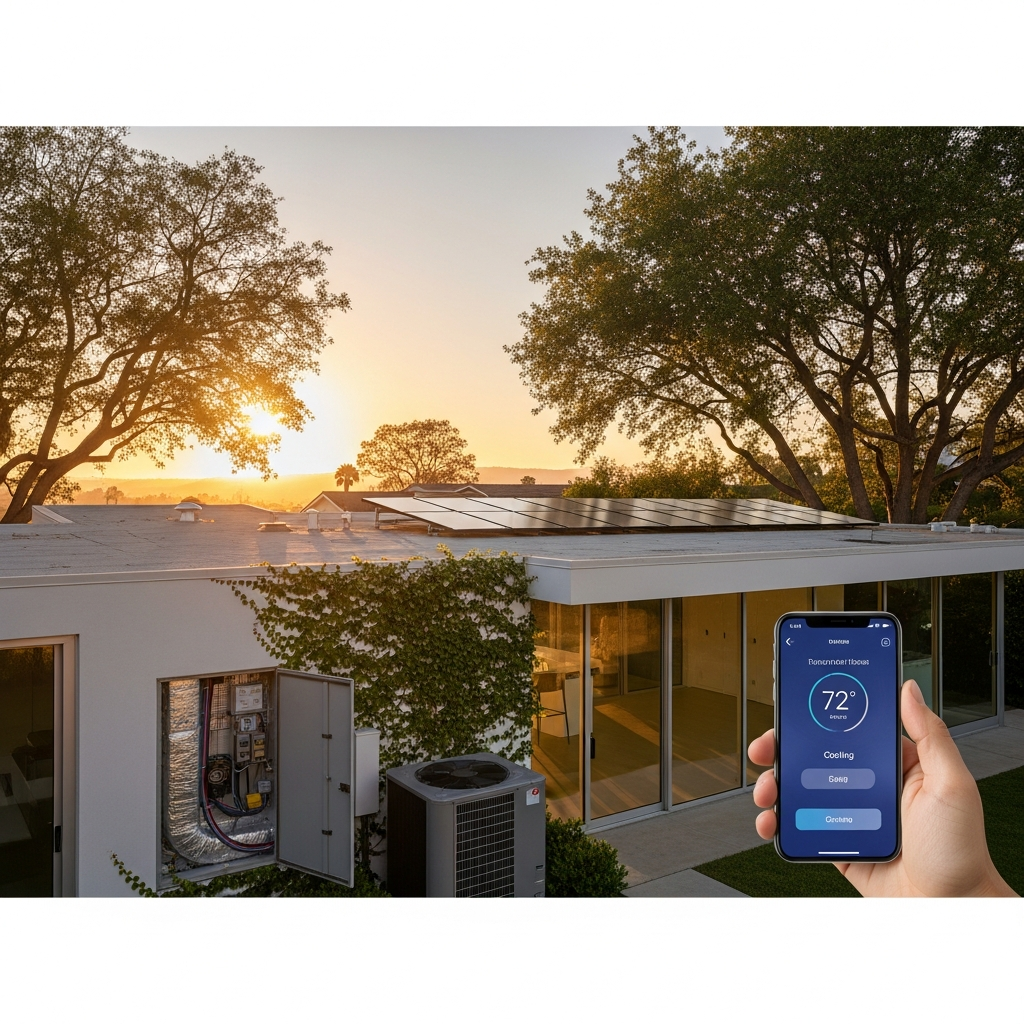
Comfort and Responsibility in Beverly Hills
Beverly Hills is synonymous with beauty and ease, and that extends to the way our homes feel the moment we step inside. Yet behind every cool, quiet room is a set of choices that carry environmental consequences. Thoughtful homeowners increasingly ask how to enjoy steady comfort while minimizing impact—how to keep interiors serene without placing unnecessary strain on the grid or on the air we all share. The conversation is not about sacrifice; it is about precision. With modern air conditioning strategies, you can align comfort with stewardship and make decisions that are good for your home, your neighborhood, and the wider region.
Environmental performance is a system story: architecture, insulation, duct integrity, equipment efficiency, controls, and daily habits working together. In Beverly Hills, microclimates add nuance. A home shaded by mature ficus and olive trees has a very different cooling profile than a glass-forward pavilion in Trousdale. The aim is to tailor each element so the system runs gently and predictably, meeting needs without overshooting. When done well, you experience quieter rooms, steadier temperatures, and a clear conscience about the resources your comfort requires.
Energy Use and the Grid
Cooling is a significant slice of residential electricity use during warm months. Peak loads build in late afternoon, exactly when west-facing rooms need help. Grid-friendly operation spreads demand, reducing stress on infrastructure and lowering the risk of interruptions. Variable-speed equipment that modulates output excels here, maintaining comfort with longer, lower-power cycles rather than spikes. Smart controls pre-cool in the late morning when demand is lighter, so you glide through the evening without sudden, high-wattage bursts.
Geofencing and occupancy-aware schedules prevent cooling empty spaces. In larger estates, zoning keeps rarely used rooms from being conditioned all day, while ensuring that primary living areas remain pristine. These are not austerity measures; they are refinements that make the home feel better while aligning your usage with community needs.
Equipment Efficiency and Commissioning
High-efficiency systems matter, but their real-world performance depends on commissioning. In Beverly Hills, where design and construction quality are high, it is tempting to assume that new equipment automatically performs at its rating. Without proper airflow, refrigerant charge, and control programming, even the best units underdeliver. Commissioning is the bridge between specification and reality, ensuring that variable-capacity compressors operate in their sweet spots and that fans move exactly the air the ducts were designed to carry.
Right-sizing is equally important. Oversized equipment short cycles, elevating humidity and noise while wasting energy. A thoughtful load calculation that accounts for glazing, shading, insulation quality, and occupancy patterns allows equipment to run steadily and efficiently. The environmental dividend is immediate: fewer starts and stops, lower peak draw, and components that last longer because they are not constantly fighting physics.
Ducts, Envelope, and the Art of Not Wasting
Duct leakage and poor insulation send cooled air into attics and crawl spaces, which is both wasteful and avoidable. In older homes that evolved through additions, duct paths may be longer and more contorted than ideal. Sealing joints, re-supporting sags, and insulating where needed deliver outsized gains. This is invisible work with visible results: rooms feel even, the system quiets, and your meter spins more slowly.
The building envelope—windows, doors, roofing, and wall assemblies—sets the baseline for how hard the system must work. Window films, high-quality weatherstripping, and carefully planned shading reduce heat gain without altering the character of a historic facade. In a mid-century glass house, transparent, spectrally selective films preserve views while cutting solar load dramatically. These targeted improvements complement efficient cooling, shrinking the energy needed to achieve the same comfort.
Refrigerants and Responsible Transitions
Refrigerants have evolved, and with them, the environmental profile of cooling. Older systems may still rely on legacy refrigerants with higher global warming potential. When replacement time arrives, selecting equipment that uses lower-impact refrigerants is a straightforward way to reduce your footprint for years to come. Proper handling and recovery during service and end-of-life are non-negotiable—skilled technicians capture and recycle refrigerants rather than allowing them to escape, protecting the atmosphere while keeping your project fully compliant.
Care extends to maintenance. Clean coils, correct charge, and verified leak-free connections ensure refrigerants do only what they are meant to do: move heat efficiently. In Beverly Hills, where systems often sit in conditioned mechanical rooms or discreet outdoor alcoves, good access and conscientious service make leak prevention practical as well as ethical.
Smart Controls and Behavioral Design
Technology supports sustainability when it is tuned to real life. Adaptive recovery, remote sensors, and geofencing let the system anticipate needs rather than chase them. If you tend to entertain on weekends, gentle pre-cool strategies keep living areas steady without overshooting. If weekdays find the house quiet by mid-morning, setpoints can relax while the system circulates just enough to maintain air quality and protect finishes.
Behavioral design is the soft side of sustainability. Seamless shade controls that drop automatically before the sun hits make “the right thing” the easy thing. Clear reminders to replace filters after smoky days keep airflow efficient. The goal is to encode good habits into the home so comfort and conservation feel like a single action rather than competing choices.
Landscaping, Noise, and Community
Environmental impact includes how your home relates to neighbors and the shared soundscape. Quiet equipment protects the serenity of enclosed courtyards and hillside terraces where sound can carry in unexpected ways. Proper placement and isolation reduce low-frequency hum that travels farther than you would think on still nights. Landscaping that screens equipment should preserve airflow; suffocated condensers run hotter, use more energy, and wear out sooner.
Water-smart plantings can also help. Strategically placed shade trees cool west walls and cut roof temperatures, easing indoor loads. In Beverly Hills, where outdoor living spaces are treasured, comfort strategies that serve both indoors and outdoors create a holistic, beautiful effect.
Electrification and the Bigger Picture
Many homeowners are exploring broader electrification—pairing efficient heat pumps with solar and battery storage. While every property is unique, the direction is clear: highly efficient, variable-speed systems that can both heat and cool reduce on-site combustion and open pathways to cleaner operation as the grid gets greener. Smart load management coordinates HVAC with EV charging and household appliances, spreading demand to align with production and storage. The takeaway is not a mandate but an opportunity: each upgrade places the home on a trajectory toward lower carbon without asking you to compromise on daily comfort.
The benefits compound. A tight envelope and well-commissioned ductwork allow a heat pump to run in its most efficient ranges. Smart controls shift operation slightly earlier or later in the day to avoid peak grid stress. Over time, these optimizations feel less like management and more like the natural behavior of a home that knows how to care for itself and its surroundings.
Resilience: Comfort When Conditions Are Tough
Environmental impact and resilience share a border. Systems that run steadily and avoid peaks are less vulnerable to brownouts and deliver comfort longer during interruptions. If you pair efficient cooling with thoughtful shading and a modest battery backup, your home can maintain a safe, comfortable interior even when the neighborhood rides through a heat wave. That stability protects health and preserves the home’s finishes, avoiding the resource cost of repairs later.
Simple choices matter here too. Keep spare filters for smoky days, and schedule maintenance before extreme seasons. Verify that equipment restarts gracefully after brief outages and that software settings persist. A resilient home is an environmentally considerate one, because it avoids emergency behavior that draws disproportionate energy at exactly the wrong times.
Choosing Materials and Methods that Last
Durability is a sustainability strategy. Long-lived equipment that operates within its design envelope has a smaller life-cycle footprint than gear that fails early from chronic strain. Selecting components with serviceable parts, maintaining manufacturer clearances, and preserving access for technicians all contribute to longevity. Avoiding unnecessary replacements means avoiding the embedded energy and materials in new equipment, as well as the disposal impacts of the old.
Thoughtful installers in Beverly Hills plan for the full arc of a system’s life: how coils will be cleaned, how drains will be cleared, how air handlers can be reached without disturbing finished spaces. When maintenance is easy, it happens on time; when it is an ordeal, it gets deferred. Ease is green.
Frequently Asked Questions
What is the single biggest step I can take to reduce environmental impact without losing comfort?
Commission your existing system properly. Ensure airflow, charge, and controls are tuned to your home. Many systems deliver outsized improvements with calibration alone, cutting peaks and smoothing operation. Pair that with shading on key exposures and you will feel more comfortable while the meter slows.
Do high-efficiency filters hurt efficiency?
They can if mismatched. Choose filters that capture particulates effectively without exceeding your fan and duct capacity. The right filter is part of a system strategy that includes clean coils and sealed ducts. Done well, you get cleaner air and efficient operation together.
Is replacing older equipment always greener?
Not always. If an older system runs reliably and can be tuned to perform well, extending its life may be responsible—especially if envelope and duct improvements reduce load. When replacement is due, select right-sized, variable-speed equipment with lower-impact refrigerants, and commission it carefully to realize the promised gains.
How does landscaping affect environmental performance?
Shade trees and thoughtful plant placement reduce solar gain and protect outdoor units from direct sun, easing system load. Just maintain clearances so equipment can breathe. Avoid reflective hardscape that bounces heat into glass, and keep service paths open so maintenance stays easy and consistent.
Can smart thermostats really lower environmental impact?
Yes—when they are aligned with shading and real occupancy. Adaptive recovery, geofencing, and remote sensors cut waste by anticipating needs and avoiding unnecessary peaks. The effect is a smoother load profile and a home that feels effortlessly comfortable.
Stewardship here is not about saying no to comfort; it is about saying yes with intention. If you are ready to align quiet luxury with environmental responsibility, speak with a local team that understands how architecture, controls, and commissioning work together. Begin your plan today, and discover how refined air conditioning can deliver comfort you love with an impact you feel good about.