
Retrofitting Older Homes with Air Conditioning in Beverly Hills
According to historical preservation surveys, over forty percent of residential properties in designated local historic districts retain their original architectural footprints, meaning their structural framing was never designed to accommodate modern mechanical systems. For properties built during the Golden Age of Southern California architecture, updating these spaces requires a delicate balance between preserving historic charm and introducing modern climate control. Homeowners looking to preserve their plaster walls, original woodwork, and low-profile rooflines must approach retrofitting older homes with air conditioning as a specialized architectural puzzle rather than a simple equipment replacement.
What are the primary structural obstacles when retrofitting older homes with air conditioning?
Older estates often feature balloon framing, solid masonry exterior walls, and plaster finished interior walls instead of modern drywall. These construction techniques leave virtually no wall cavities or ceiling joist spaces to run standard sheet metal ductwork. Trying to force a traditional ducted system into these spaces can result in dropped ceilings that ruin historic crown molding or require bulkheads that alter the proportions of classic rooms.
Additionally, older framing often lacks the load-bearing capacity to support heavy indoor air handlers in attic spaces without structural reinforcement. When planning a beverly hills ac installation, we carefully assess how the weight of modern equipment will interact with your home’s historic framing. Navigating these structural realities requires specialized installation strategies that route refrigeration lines and compact ducting through unused spaces like closets, crawlspaces, or utility chasis, preserving the architectural integrity of your living areas.
How does the Beverly Hills climate affect historic HVAC retrofits?
The climate in our region presents a distinct combination of warm, dry summer days and cool, damp coastal nights. While newer homes rely on heavy thermal insulation and airtight construction to manage these temperature swings, historic properties depend on natural ventilation, high ceilings, and thick plaster walls to regulate heat. Introducing modern air conditioning to this dynamic changes how moisture moves through the building envelope.
Without careful planning, cooling a historic home can lead to condensation forming behind plaster walls or within crawlspaces, potentially damaging plaster lath or original timber over time. Selecting the right system size is crucial. A system that is too large will cool the home too quickly without running long enough to manage humidity, leaving the indoor air feeling damp and clammy. Balancing these factors requires a system configured specifically for the thermal performance of older plaster and stone structures.
If you want it handled correctly the first time, consider professional our services in Beverly Hills.
Which air conditioning systems work best for historic properties?
Homeowners are no longer limited to choosing between bulky window units and invasive, traditional ducted systems. Several modern technologies are specifically designed to deliver efficient climate control with minimal structural impact:
- Ductless Mini-Split Systems: These systems use small, individual indoor air handlers mounted on walls or recessed into ceilings, connected to an outdoor condenser by small copper pipes. This setup completely eliminates the need for ductwork, making it ideal for preserving historic walls.
- High-Velocity, Small-Duct Systems: These systems use flexible, insulated tubes that are only two inches in diameter. These small tubes can easily be snaked through existing wall cavities, floor joists, and closets, delivering cool air through small, paintable round outlets that blend seamlessly into plaster walls.
- Multi-Zone Variable Refrigerant Flow (VRF): This option allows you to customize the climate in different rooms independently, keeping unused guest wings at moderate temperatures while ensuring active living spaces remain comfortable. Learn more about customized temperature management in our guide to beverly hills home comfort zoning.
Can you install modern AC without damaging historic lath and plaster walls?
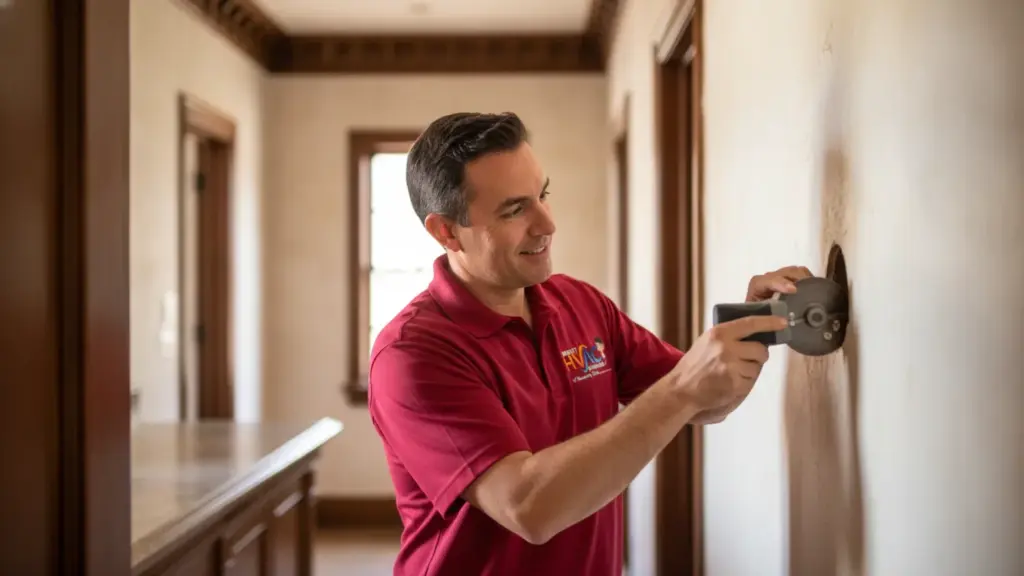
Yes, but it requires specialized tools and a patient, cautious approach. Traditional plaster is incredibly fragile; using standard drywall saws or vibrating power tools can cause the plaster keys behind the wall to break, leading to sagging, cracking, or complete structural failure of the wall surface.
To prevent this, technicians must use specialized diamond-grit hole saws, hand tools, and temporary reinforcing backing plates to make precise, clean cuts. High-velocity systems are particularly helpful here because their flexible, small-diameter ducts can be routed through crawlspaces and closets, reducing the need to cut into visible lath and plaster. For rooms where cutting into walls is not an option, ductless units can be configured with line sets routed along the exterior of the home, hidden behind downspouts or architectural details, keeping the indoor plaster completely untouched.
Many Beverly Hills homeowners rely on expert our services in Beverly Hills for exactly this.
How do local historic preservation guidelines impact HVAC upgrades?
Properties designated as historic landmarks or located within local historic overlay zones must comply with strict preservation guidelines. These guidelines are designed to protect the character-defining elements of your home, which typically includes the exterior facade, original windows, and visible rooflines.
For example, placing a modern, noisy outdoor condenser unit where it is visible from the street is often prohibited. Instead, the unit must be placed in a screened backyard area or disguised with approved landscaping. Additionally, cutting visible vents into historic exterior masonry or altering decorative roof eaves to install line sets will require formal review and approval. Because of these strict requirements, understanding local codes is an essential first step. You can read more about navigating the local approval process in our guide on hvac permit requirements beverly hills.
What are the acoustic considerations when cooling a historic home?
Historic homes often feature hard interior surfaces like original hardwood floors, tall plaster ceilings, and large single-pane windows. While these elements are beautiful, they also reflect sound, meaning any hum or vibration from a modern air conditioner can echo and amplify throughout your home.
Ready for the next step? Learn how our services services in Beverly Hills can help and reach out to the team.
To maintain a quiet, peaceful indoor environment, the equipment you choose must operate with minimal noise. Ductless systems and high-velocity systems are designed to be incredibly quiet, often running at decibel levels that are barely audible to the human ear. Choosing variable-speed compressor technology also helps, as it allows the system to run consistently at lower, quieter speeds rather than cycling loudly on and off. For a deeper look at keeping your home quiet, explore our article on the quietest air conditioners beverly hills.
How does upgrading a historic home’s AC affect its overall indoor comfort?
While the physical installation requires careful planning, the benefits of a modern HVAC system go far beyond simple temperature control. Older homes often collect dust, pollen, and outdoor allergens due to natural air drafts around original windows and doors. Retrofitting your home with a modern air system allows you to introduce high-efficiency filtration, helping to clean the indoor air.
Additionally, modern systems provide consistent, gentle air circulation that prevents hot and cold spots in rooms with high ceilings. By choosing a system designed to work with your home’s unique layout, you can enjoy modern comfort and cleaner indoor air while preserving the historic character that makes your property special. Once your system is installed, maintaining this balance requires simple, ongoing care, which you can learn about in our guide to post ac installation care beverly hills.
Are you ready to discuss retrofitting options for your home?
Preserving the unique architecture of an older estate while upgrading its comfort requires specialized expertise, careful planning, and a deep respect for historic craftsmanship. The team at Smart HVAC System of Beverly Hills specializes in custom solutions that respect your property’s history while providing modern, reliable cooling. Contact us today to schedule an in-home consultation, and let us help you find the perfect, low-impact system for your home.