In Beverly Hills, commercial spaces are more than addresses; they are experiences. Whether it is a boutique on Brighton Way, a medical office near Wilshire, a gallery just off Canon, or a legacy firm overlooking Beverly Gardens Park, comfort frames every guest interaction and staff moment. That comfort depends on a commercial HVAC system that operates quietly, predictably, and efficiently through long days and varied occupancy. The discipline that keeps it all humming is thoughtful, locally attuned commercial air conditioning maintenance, delivered on a cadence that suits your hours and your building’s unique architecture.
Having maintained rooftop package units, VRF systems, split systems tucked into tight mechanical rooms, and specialized cooling for server closets in Beverly Hills, the lesson is consistent: maintenance is an operational strategy, not a line item. It safeguards the guest experience, supports staff productivity, and protects high-value interiors and equipment from the slow creep of heat and humidity. Executed well, maintenance fades into the background, letting your space take center stage while your system stays efficient and dependable.
Commercial properties in our city come with distinct demands. Retail expects brisk cooling that never intrudes on design aesthetics. Medical and wellness spaces prioritize quiet stability and precise temperature control. Offices require balanced airflow and smarter scheduling to match staggered work patterns. Restaurants contend with heat loads that surge and settle throughout the day. Each use-case asks the HVAC system to flex, and that flexibility is only truly reliable when the fundamentals—airflow, refrigerant balance, electrical integrity, and controls—are verified and tuned on a regular basis.
The Commercial Maintenance Framework
We begin with a site-specific plan. That means walking the property, listening to your operations team, mapping tenant hours, understanding delivery and cleaning windows, and reviewing any prior service logs. For multi-tenant buildings along Wilshire or South Beverly Drive, we coordinate with property management so maintenance slots dovetail with occupant schedules and elevator access. In restaurants, we plan around prep times and service peaks. In boutiques, we schedule before opening or after close to preserve the guest experience.
On equipment, the basics are non-negotiable. Filters are checked and replaced to match airflow needs and indoor air quality goals. Coils are cleaned, drain pans are cleared, and drain lines are treated so condensate flows reliably. We test capacitors, contactors, sensors, and motor amperage to spot wear before it becomes a call-out. On VRF and inverter-driven systems, we inspect communication wiring, confirm firmware versions, and verify that indoor units are staging and modulating as intended. Ductwork is assessed with an eye toward balance and insulation integrity, especially across long runs that cross rooftop plains under direct sun.
Rooftops, Access, and Discretion
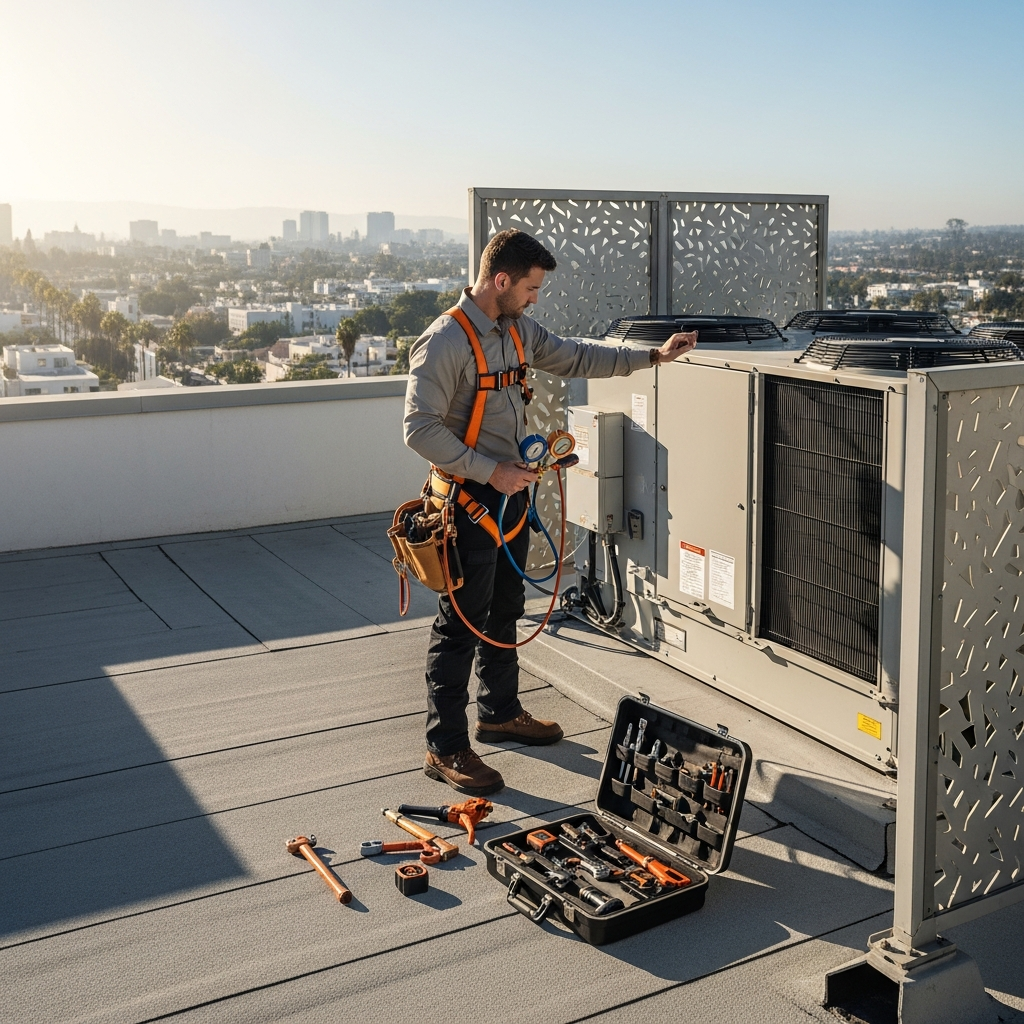
Rooftop package units are common in Beverly Hills commercial buildings. Safe access and conscientious work matter. We arrive with the right fall protection, coordinate with building engineers, and complete tasks without disrupting neighbors or revealing interior operations. That means staging tools discreetly, managing rinse water responsibly during coil cleaning, and keeping panels secured so wind does not rattle your skyline. When units sit behind architectural screens, we ensure those screens allow proper airflow and that fasteners are tight to prevent drone-like resonance on breezy afternoons.
Controls, BMS, and Schedules That Fit Your Day
Controls are the brain of a commercial HVAC system. During maintenance, we review BMS settings where applicable, confirm start/stop times, assess temperature setbacks, and analyze trend logs for hints of drift or inefficiency. In offices with hybrid schedules, we often discover weekday patterns that no longer match real occupancy. A few well-chosen adjustments can cut run time while improving comfort, especially in edge zones near exterior glass. In retail, we tune setpoints to align with the natural ebb and flow of foot traffic and door openings, so the system anticipates rather than reacts.
Noise and Vibration: The Subtle Guest Experience
Subtle background noise can make or break a retail moment or an executive meeting. We listen for bearing wear, fan imbalance, sheet-metal chatter, and transformer hum. Then, during maintenance, we resolve the causes: we balance fans, secure panels, add vibration isolation where warranted, and align pulleys. Duct liners and terminal unit adjustments help soften sound delivery. The result is not just a quieter system but a space where your brand message is not competing with mechanical noise.
Air Quality, Filtration, and Sensitive Uses
For medical offices, galleries, and wellness environments, clean air is part of the value proposition. We select filters that capture fine particulates while preserving design airflow. We inspect gaskets and filter tracks to prevent bypass and evaluate outside air dampers to ensure they are supplying the right volume without introducing drafts. In smoke-prone periods, we can temporarily elevate filtration and then dial back when outdoor conditions normalize, always mindful of static pressure and fan performance. Maintenance is the place where those strategic decisions are made and executed with precision.
Server Closets and Specialty Cooling
Data rooms, AV closets, and specialty refrigeration zones require unblinking reliability. During maintenance, we confirm setpoints, test alarms, verify condensate management, and simulate fault conditions where possible so you know alerts will reach you. We also identify redundancy opportunities—like staggered lead-lag programming—so a single hiccup does not take down a critical space.
Mid-Cycle Inspections for Peak Seasons
In Beverly Hills, late summer can test any system. A mid-cycle inspection often pays for itself in avoided disruptions. By scheduling a midpoint visit, your team gets a second pass at coils, controls, and balance when the heat load is real. That is also when we often recommend modest airflow adjustments or diffuser changes to support comfort near expansive glazing and sunlit atriums. Proactive, midyear preventive HVAC maintenance keeps guest areas steady and back-of-house spaces productive.
Documentation, Compliance, and Peace of Mind
We document readings, actions, and recommendations clearly after each visit. That record becomes a map of system health and a resource for capital planning. For managed properties, maintenance logs support compliance and can be shared with stakeholders to demonstrate diligence. When equipment nears end-of-life, we help you plan replacements in a window that minimizes operational impact and aligns with your budget cycle.
What Staff Can Do Between Visits
Your team’s observations are invaluable. Encourage them to note changes in sound, temperature, or humidity, especially near entrances or glass lines. Keep storage away from mechanical intakes and ensure return grills are not blocked by seasonal displays. If you host evening events, coordinate temporary setpoint tweaks so the system anticipates occupancy. These seemingly small practices help maintenance work even better.
Frequently Asked Questions
How often should a commercial space in Beverly Hills schedule maintenance?
At minimum, plan on two visits per year—pre-summer and mid-summer—for spaces with steady occupancy. Restaurants, medical offices, and boutiques with heavy door traffic or higher filtration needs often benefit from quarterly visits.
Can maintenance be done outside business hours?
Absolutely. We schedule early mornings, evenings, and weekends as needed, coordinating access with management and security so your operations are not interrupted.
Will maintenance reduce energy use without compromising comfort?
Yes. Clean coils, correct refrigerant charge, balanced airflow, and smart schedules all reduce waste. Often, carefully chosen setpoint and scheduling adjustments improve comfort while trimming runtime.
What if my building uses a BMS?
We integrate maintenance with your BMS, reviewing trends, verifying sensor accuracy, and aligning control strategies with actual occupancy and use patterns for each tenant zone.
How do you handle rooftop equipment near neighboring properties?
We work discreetly and safely, using proper access protocols, keeping tools organized, managing rinse water responsibly, and ensuring panels and screens are secured to avoid noise or debris migration.
Do you provide documentation for property managers and stakeholders?
Yes. After each visit, we deliver a clear report with readings, actions taken, and recommendations, supporting compliance, budgeting, and communication with tenants or owners.
Next Steps
Comfort in a Beverly Hills commercial space is never accidental; it is designed, maintained, and protected by a team that understands your brand and your building. If you are ready to put a smart plan in place that respects your hours and elevates the guest and staff experience, reach out today to book commercial AC maintenance with specialists who know this city block by block.