
The Art And Order Of Installing AC In Beverly Hills
Air conditioning installation in Beverly Hills is never just equipment and ducts. It is a dialogue between architecture, comfort, and the city’s standards that keep neighborhoods beautiful and quiet. From private lanes that require careful staging to hillside lots where cranes choreograph their lifts between trees and terraces, each project is a study in details. The best outcomes arise when engineering, design, and permitting move together, respecting the home’s story and the city’s expectations. I have guided many projects through this journey, and the pattern is clear: begin with an honest load calculation, plan for invisible integration, and partner with the City of Beverly Hills early so approvals and inspections are a smooth, respectful formality. The result is a system that vanishes into the life of the house, delivering comfort as if it had always been there, grounded in the fundamentals of reliable air conditioning design.
Beverly Hills homes, from their elegant Flats to their terraced viewpoints, ask HVAC systems to do more than cool. They ask for silence in the night rooms, balance between wings, and fresh air that keeps interiors feeling young. Installation becomes the craft of shaping air to match these demands while ensuring that the City’s plan checkers and inspectors see a system that honors codes and community.
Right-Sizing With Precision: Manual J, S, And D
The foundation of any superb installation is proper sizing and distribution. We begin with Manual J load calculations to quantify how the home exchanges heat with the world—through glass, walls, roofs, and infiltration. Manual S aligns those loads with equipment that can meet them gracefully, often favoring variable-capacity systems that modulate rather than lurch. Manual D designs the ductwork so air travels quietly and evenly, respecting ceiling heights, coffer patterns, and the desire for linear diffusers that disappear into architecture. This trio ensures that the installed system is not guessing; it is performing to a plan that anticipates real life.
In Beverly Hills, where glazing may stretch floor to ceiling and open rooms merge into terraces, we also account for solar exposure and microclimates. A west-facing salon needs a different strategy than a sheltered study. Zoning plans reflect that truth so each space receives just enough conditioning, no more, no less.
Architectural Integration
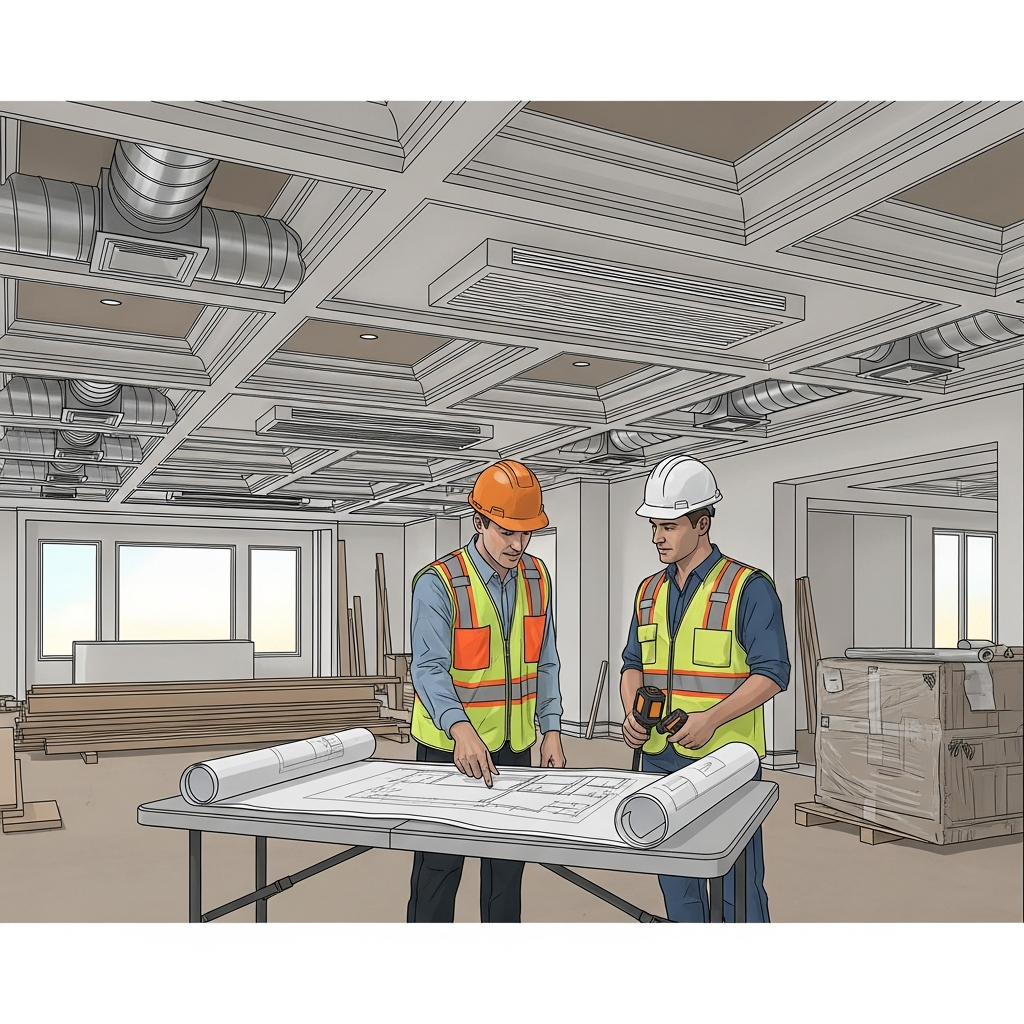
Great installations are invisible. We coordinate with architects and designers from the earliest design meetings, aligning supply runs with coffer grids, nesting returns within panel reveals, and shaping soffits that feel deliberate. In heritage homes, we preserve plaster and millwork with slim-duct or high-velocity options that whisper their presence. In contemporary estates, minimalist diffusers and concealed air handlers keep the canvas pure.
Equipment placement receives the same care. Outdoor units retreat into service courts or screened alcoves that respect property lines, setbacks, and neighbors’ peace. We consider reflections off stone and water features, prevailing breezes, and landscaping that may grow lush over time. Access for maintenance is woven into the plan so the system can be serviced discreetly without disrupting living areas.
Permits, Plan Check, And Inspections
The permitting process in Beverly Hills is structured to safeguard safety, aesthetics, and community standards. A complete submittal includes mechanical plans, load calculations, equipment specifications, and often details on noise performance and placement. Energy compliance under California’s Title 24 is documented with forms that align design intent with state requirements. When the package is clear and thorough, plan check moves efficiently, and questions become conversations rather than roadblocks.
Inspections follow the life of the project: rough-in verification of ducts and refrigerant lines, insulation checks, and final inspections that confirm operation, labeling, and access. We meet inspectors as collaborators, ready with documentation, test results, and a tidy jobsite that reflects the care invested. When everyone can see that the system is safe, efficient, and considerate of neighbors, approvals happen calmly and on schedule.
Title 24 And HERS Testing
California’s energy code shapes how we install systems, and rightly so. Duct leakage limits, verified airflow, and refrigerant charge testing ensure that efficiency on paper becomes efficiency in the real world. HERS (Home Energy Rating System) raters serve as third-party verifiers, measuring performance so that the home lives up to its design. Far from being a hurdle, this process is an ally. It encourages tight ducts, careful insulation, and systems that deliver promised comfort with fewer surprises.
For luxury homes, HERS testing dovetails with our own standards. When results confirm low leakage and balanced airflow, we know that the home will feel even from foyer to primary suite, and that quiet will be preserved because equipment is not straining to compensate for unseen losses.
Zoning And Controls
Beverly Hills living often stretches across multiple zones—public entertaining spaces, private retreats, and specialty rooms like theaters and gyms. We design zoning so these areas can be tuned independently, using variable-capacity air handlers and motorized dampers that respond to sensors with precision. Controls integrate with lighting and shades to pre-condition spaces ahead of events or to soften conditioning overnight when bedrooms take priority.
The result is an installation that behaves like a concierge: attentive, quiet, and always a step ahead. Remote access allows owners or estate managers to oversee operation discreetly, while robust local controls ensure the home stays composed even without internet access.
Noise, Vibration, And Neighborly Consideration
Silence is a hallmark of luxury, and Beverly Hills is protective of neighborhood peace. We choose condensers with excellent sound profiles, isolate vibrations with pads and hangers, and route refrigerant lines so hum does not travel into bedrooms or lounges. Placement is chosen to minimize reflections and direct sound away from neighboring properties. During installation, we schedule noisier tasks considerately and maintain a site that respects the privacy and calm of the street.
Indoors, duct design and diffuser selection maintain low velocities that feel like a soft breeze rather than a draft. The effect is a home that seems naturally cool without revealing the equipment doing the work.
Special Considerations For Hillside And Estate Lots
Hillside sites often require creative logistics. We plan crane lifts with precision, secure permits for street use if needed, and coordinate with arborists or landscape teams to protect trees and gardens. Equipment platforms are engineered to anchor confidently on slopes while remaining hidden from primary views. Service access is designed in from the start so future maintenance is safe and discreet.
Large estates sometimes benefit from redundancy—multiple smaller systems that share the load. This approach ensures that if one unit needs service, the rest of the home remains comfortable. Distribution pathways are mapped carefully, and condensate management is engineered to move water safely away from finishes and collections.
Ventilation And Air Quality
Installation is the moment to build superb indoor air quality into the home’s DNA. We specify filtration cabinets that can accept high-MERV media without choking airflow, add carbon where odors may intrude, and integrate energy recovery ventilators for fresh air that does not compromise efficiency. For spaces like wine rooms and wellness suites, we plan microclimates that protect collections and keep workouts invigorating without overcooling.
Thoughtful placement of intakes avoids drawing in driveway or grill aromas, and duct routing prevents cross-talk between rooms. The home breathes with intention, and the family breathes easier.
From Commissioning To Living Beautifully
Commissioning transforms an installation into a living system. We verify airflow to each room, confirm refrigerant charge by measurement rather than guesswork, calibrate sensors, and teach the controls how the home prefers to live. This phase is where small adjustments yield large benefits: a damper position that evens out a salon, a blower speed that makes a study feel hushed, a schedule that prepares the kitchen before breakfast. When commissioning is meticulous, move-in is memorable for the right reasons.
Documentation completes the story. Homeowners and estate managers receive a clear record of equipment, settings, and maintenance intervals, so the system remains as composed on day one thousand as it is on day one.
Working With The City As A Partner
Permitting in Beverly Hills is not a hurdle to clear but a partnership. When we present well-detailed plans, answer questions promptly, and respect inspection schedules, the process affirms that the home’s comfort will be safe, efficient, and neighborly. Inspectors see hundreds of installations; earning their confidence means future projects move even more smoothly. That reputation benefits every homeowner who wants the work done right the first time.
We also keep an eye on evolving codes and city preferences—setback interpretations, sound criteria, or documentation nuances—so your project enjoys the most current path to approval.
Midway Reflection: The Beauty Of Process
At the heart of every successful installation is a respect for process. Calculations lead design; design guides construction; commissioning proves performance; and documentation preserves it. Homes in Beverly Hills ask for this kind of diligence not because they are difficult, but because they deserve results that match their grace. When the process is honored, the outcome feels as natural as a breeze through open doors on a shaded afternoon. That is the promise of well-planned air conditioning installation and permitting done with local insight.
And then, a quiet epilogue: a home that is simply, beautifully comfortable, with systems that retreat into the background.
Frequently Asked Questions
Do I always need a permit for AC installation in Beverly Hills?
In most cases, yes. New installations, equipment replacements, and significant duct alterations typically require permits. The process protects safety, energy performance, and neighborhood standards. Submitting thorough plans and coordinating inspections keeps timelines predictable and outcomes reliable.
How long does the permitting process take?
Timelines vary with project complexity and City workload, but a complete, clear submittal moves fastest. Early coordination with your design team, prompt responses to plan check comments, and readiness for inspections all help maintain momentum from application to final sign-off.
Can equipment be hidden without hurting performance?
Yes, with planning. We design screened locations that maintain airflow clearances and service access, and we use low-profile, variable-speed condensers to reduce noise. Indoors, diffusers and returns can be integrated into architectural lines so the system performs beautifully without announcing itself.
What is commissioning, and why is it important?
Commissioning is the systematic verification and tuning of a new system. It ensures correct airflow, charge, controls, and zone behavior. Without commissioning, even premium equipment can underperform. With it, comfort feels effortless from the first day and continues that way.
How do Title 24 and HERS affect my project?
They set performance expectations—tight ducts, measured airflow, verified charge—that translate into real-world efficiency and comfort. HERS raters confirm those results, offering an independent assurance that the installation lives up to its design.
If you are planning an installation or contemplating an upgrade, let’s begin with a conversation that honors your architecture and timeline. Reach out today to plan and execute refined air conditioning installation in Beverly Hills with permitting handled smoothly, so your home lives as beautifully as it looks.