
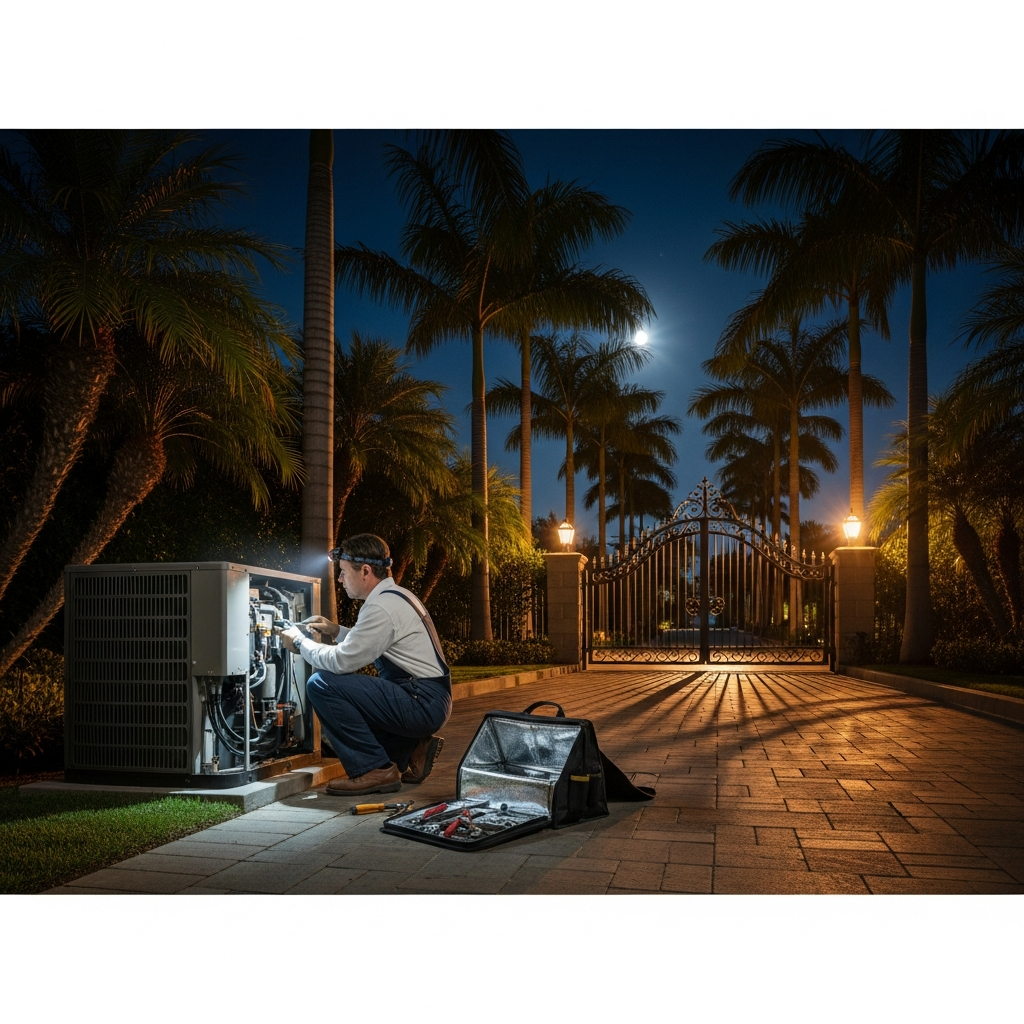
When the Beverly Hills Night Runs Warm
There is a particular quiet that settles over Beverly Hills after midnight, when the palms along Santa Monica Boulevard sway just enough to remind you that the ocean is never far. It is also, not coincidentally, when many homeowners notice their cooling struggling against a stubborn heat that lingers in canyons and low-lying flats. As a local technician who has spent countless evenings under this sky, I can tell you that late-night breakdowns tend to follow careful patterns shaped by our hills, our architecture, and our lifestyle. The question is never whether the phone will ring; it is where the call will send us next and how quickly we can have the air calm, cool, and consistent again.
In the first moments of a no-cooling emergency, your mind races: Is it the thermostat, a tripped breaker, or something more serious? The reality is that quick, informed action matters. From the impeccable estates of Trousdale to discreet guesthouses tucked along Benedict Canyon, you need a reliable plan. That is why I always encourage residents to know whom to call before trouble strikes, and to understand a few fundamentals about air conditioning performance in our distinctive microclimate.
Understanding Beverly Hills Microclimates
Cooling behavior at 2 a.m. near Coldwater Canyon does not mirror what you experience off Wilshire. The basin can trap heat even as canyon breezes nip at eaves, and these shifts show up in system diagnostics. Compressors that seem perfectly fine in the afternoon can reveal stress after sunset, when humidity nudges up and return air temperatures hover just above comfortable. In older homes, duct runs might cross a sun-warmed attic that refuses to cool until nearly dawn. That thermal lag sends mixed signals throughout the system, challenging sensors and stretching runtimes.
We also deal with Santa Ana events that reset everything you thought you knew about your home’s comfort. Those hot, dry winds can turn filters into choke points in a matter of hours. Air handlers gulp harder, static pressure rises, and weaknesses show—often in the dead of night. Having an on-call team that recognizes these patterns means a swifter diagnosis, less disruption, and a gentler path back to calm.
What Breaks After Hours—and Why
When I pull up to a driveway after midnight, I am usually bracing for one of a handful of common culprits. Capacitors give up during prolonged heat runs; contactors weld shut; float switches trip because a condensate line finally slowed to a crawl; or a blower motor, already humming louder than it should, decides tonight is the night. Thermostats can play their part too, especially smart models that have learned aggressive setback routines and then overshoot recovery at bedtime. If you couple that with years of deferred maintenance and a filter that is pushing past its service life, the dominoes fall fast.
The good news is that these failures tell a story. A system with healthy airflow is far less likely to overheat. A drain line that is flushed and protected from local dust and landscape debris will not trigger a safety switch just as guests settle in. And a properly sized condenser, matched to the realities of glazed walls and vaulted ceilings, will not spend its twilight hours chasing a setpoint it cannot reliably meet.
Discretion, Access, and Respect for Your Space
Night work in Beverly Hills requires more than technical fluency. It demands an understanding of neighborhoods, security protocols, and the way service must be delivered when the house is quiet. Gates, guards, private roads, and guesthouse entrances are familiar to those of us who work here. We coordinate with property managers, follow HOA guidelines, and move with a level of discretion that keeps your household resting while we handle the fix. Headlamps over floodlights, insulated tool bags over clattering kits, and a calm demeanor over hurried chatter—these are not luxuries; they are the standard.
Parking can be as much a technical challenge as the repair itself. Narrow hillside lanes or carefully manicured drives leave little room for error, so our crews plan access ahead of time, arriving with the right parts and minimal footprint. The aim is always the same: stabilize the system quickly, verify operation thoroughly, and leave no sign we were there beyond the welcome return of cool, even air.
Emergency Diagnostics that Respect the Clock
When every minute counts, guesswork burns time. We start with simple, high-yield checks that map to common patterns in our area. Is the thermostat calling and is the low-voltage circuit intact? Is there 24V at the contactor and line voltage at the disconnect? Are safety switches open due to a clogged drain or iced coil? We pair those basics with targeted measurements—superheat and subcool on systems where refrigerant health is suspect, static pressure readings on blowers that sound strained, and temperature splits that reveal hidden airflow restrictions behind pristine grilles.
It is tempting to treat emergencies as one-off flukes, but the best late-night service anticipates the next night too. That means tightening weak electrical connections that would otherwise drift again, calibrating thermostats to stop after-hours seesawing, and suggesting a first-light follow-up if a deeper inspection is warranted. A quiet home by sunrise is the goal; stability beyond breakfast is the measure of success.
Middle-of-the-Night Fixes and the Morning After
Many repairs are clean and definitive, even at 3 a.m. A failed capacitor replaced and properly tested brings a condenser back to life. A cleared drain and reset float switch returns the air handler to duty. A thermostat rebooted to default schedules smooths out an overly clever routine. But sometimes the best course is a safe, temporary stabilization designed to carry you through the night. In those cases, we explain what we have done, note what needs daylight attention, and schedule a morning visit to complete the job without compromising finish materials or landscaping.
It helps to reinforce a few homeowner best practices in the quiet moments after a repair. Keep doors and windows closed for an hour as the system reclaims setpoint. Resist the urge to shove the thermostat downward—every degree matters for runtime and humidity balance. And take a moment to add a calendar reminder to check your filter; in Beverly Hills, lifestyle and environment ask a lot of filtration, and regular checks are the cheapest insurance you will ever buy.
Planning Ahead for the Next Heat Wave
The rhythm of our weather suggests preparation windows. Spring offers mild evenings to test cooling modes; early fall delivers those surprise warm spells that push marginal systems over the line. Use those periods to schedule a true tune-up, not just a drive-by glance. Coil cleanliness, drain line flow, blower wheel condition, refrigerant charge verification, and control calibration are the bedrock of a system that can shrug off a midnight heat surge without complaint. This is also the right time to discuss upgrades like variable-speed air handlers that smooth out temperature swings and reduce noise, or enhanced filtration that keeps airborne dust and pollen from clogging critical pathways.
Of course, even the best-maintained system can falter, which is why many families create a simple plan: who to call, how to grant access if you are traveling, and what zones or guest quarters to prioritize until the main system is steadied. Half the stress of a late-night failure disappears when decisions are already made.
Why Local Knowledge Matters
There is a difference between understanding how a condenser works and knowing what a condenser needs to survive July in Beverly Hills. Our rooftops, for instance, are often designed to hide equipment behind screens, which can starve units of airflow if vegetation creeps too close. Our attics can run hotter than neighboring cities because of exquisite but complex rooflines. And our finishes—from Venetian plaster to bespoke millwork—require a delicate touch when accessing air handlers or return chases. Local familiarity shortens the path to resolution and protects what makes your home special.
This is where the right partner makes all the difference. When you speak with a service team, listen for signs they truly work in our neighborhoods: knowledge of common HOA rules, an instinct for parking restrictions on certain streets, a willingness to coordinate with estate managers, and a commitment to clean, quiet work. Add to that a proactive mindset—technicians who explain not just what failed, but how to prevent a repeat—and you will sleep better the next time the forecast tilts warm.
Staying Cool, Staying Ready
Think of overnight service as both a rescue and a rehearsal. The rescue is obvious: cool air returns, the home relaxes, and life resumes. The rehearsal is quieter but just as important: filters are checked more often, drains get attention before they back up, thermostats are tamed into simpler, more reliable schedules, and the conversation shifts from firefighting to foresight. That is the arc we aim for on every after-hours call.
Somewhere in the middle of all this, it helps to revisit the basics—clean power, clear airflow, solid drainage—and to have a trusted resource you can reach without thinking twice. When a discussion of settings or system capacity becomes necessary, having a single team familiar with your floor plan, your insulation, and your living patterns keeps everything efficient. It also creates continuity in the record of your equipment, making future diagnostics much faster and far more precise. If you want a straightforward primer that anchors the conversation, look no further than a local guide to air conditioning that speaks to our city’s specific demands.
Frequently Asked Questions about 24/7 AC Repair in Beverly Hills
How fast can help realistically arrive after midnight in Beverly Hills? Response times depend on location and access, but a team based nearby that understands common gate codes and neighborhood layouts can typically navigate quickly. The most effective crews also triage by issue severity, prioritizing homes with vulnerable occupants while keeping communication transparent for everyone else.
What should I check before calling for an emergency visit?
Confirm the thermostat is set to cool and that its batteries, if present, are fresh. Verify breakers and disconnects are in the correct position. If you can safely access the air handler, peek at the drain pan to see if water is present, which can indicate a tripped float switch. Do not open panels or attempt repairs; these quick checks simply ensure the basics are covered before a technician arrives.
Will the technicians be able to access a gated property at night?
Yes, experienced local teams are accustomed to coordinating with gatehouses, estate managers, or remote access systems. Providing temporary access codes or contact numbers in advance streamlines arrivals and keeps the visit discreet and efficient.
Is overnight repair more disruptive to my household?
It should not be. Properly trained crews minimize noise, use targeted lighting, and protect finishes. Many tasks occur in mechanical spaces or outdoors, and technicians can pause if a sleeping area is directly adjacent to equipment, finishing delicate work in the morning when appropriate.
Can you guarantee the issue will not return the next night?
The goal is a stable, lasting fix, but some complex issues benefit from a daylight follow-up to confirm that the system holds under different conditions. A reputable team will communicate clearly when a return visit is advisable and will document what was completed overnight.
How can I reduce the chance of needing late-night service?
Regular maintenance is the single biggest factor. Keep filters clean, schedule seasonal tune-ups, ensure outdoor units have unblocked airflow, and keep drains clear. Discuss thermostat schedules that avoid drastic temperature swings at bedtime, which can stress equipment during recovery.
What if my system uses an older refrigerant?
Technicians trained on legacy systems can stabilize performance and advise on long-term strategies that respect current regulations. In many cases, repairs are feasible; in others, planning a measured transition during cooler months is wise.
Ready for Reliable Overnight Comfort
If your home feels warmer than it should and the clock has already tipped past midnight, you do not need a lecture—you need relief. Reach out to a local team that treats your space with the same care you do, arrives prepared, and leaves you resting easier than when they came. When you are ready to talk through options, explore local expertise in air conditioning, and keep that number close at hand. The nights will get hot again; your plan will already be in place.