
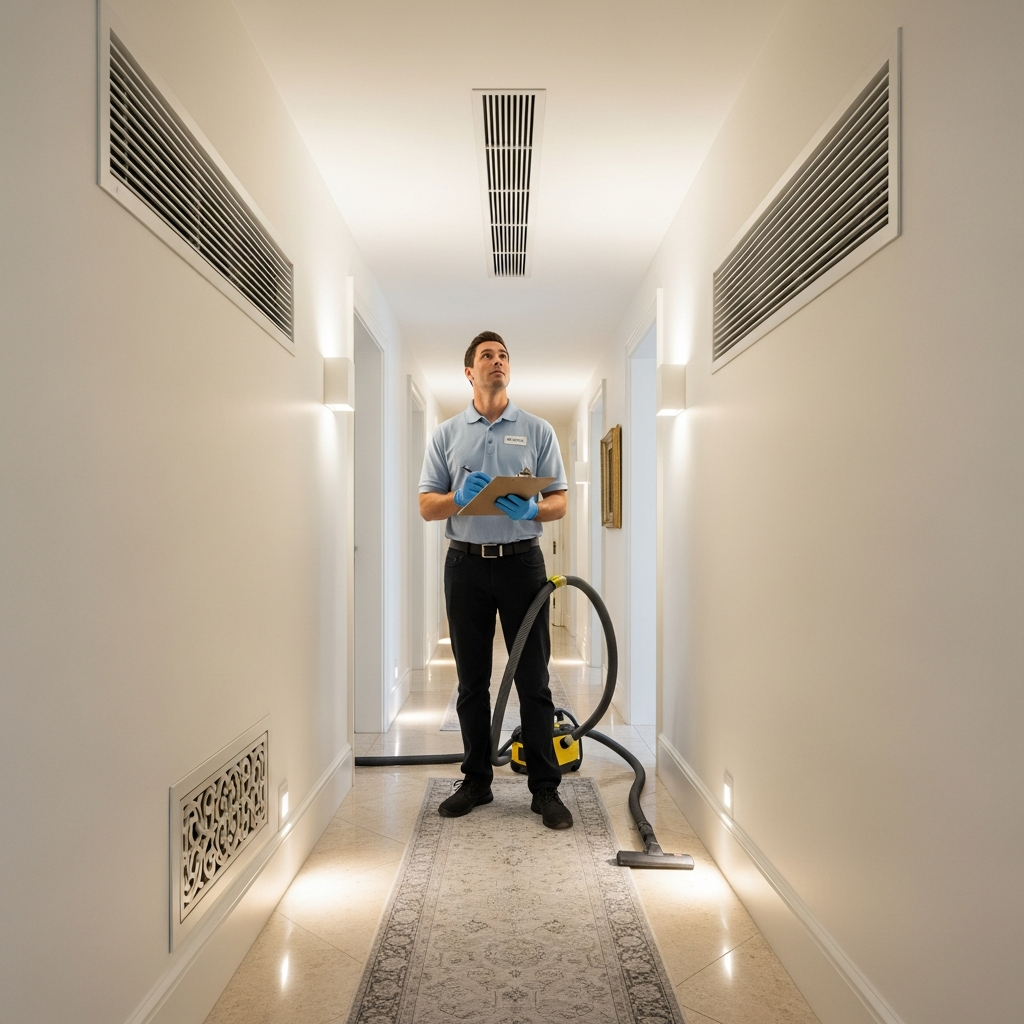
Making Sense of “Cost Per Vent” for Air Duct Cleaning in Beverly Hills
For many Beverly Hills homeowners researching duct cleaning, one phrase appears again and again: cost per vent. It sounds straightforward, but homes here rarely fit into neat formulas. A register in a canyon-side media room may connect to a long run with multiple turns, while a similar-looking grille in a powder room may serve a short, direct branch. Treating both as identical simply because they are both vents misses the real work involved. The smarter way to use a per-vent model is as a conversational starting point, then to refine scope based on layout, materials, access, and cleanliness goals. The objective is results, not arithmetic, and the best path to results is a plan informed by the home itself and by the standards Beverly Hills demands for protection and discretion. Early in that conversation, it helps to think of air duct cleaning as a custom service where each “vent” is a door to a unique stretch of ductwork.
The appeal of per-vent pricing is easy to understand. It seems to offer a clear way to compare providers and to predict the scale of a project. But the fairness of the model depends on how consistently a company defines a vent, how it counts returns versus supplies, and whether complex runs are recognized for the additional time and care they require. In Beverly Hills, where homes blend eras, additions, and specialty spaces, the label on the grille rarely tells the full story of what lies behind it.
What Does “Per Vent” Actually Include?
When a provider quotes per vent, it pays to ask what each unit encompasses. Does it include both supply and return registers? Are linear slot diffusers—or custom metal grilles with intricate patterns—counted differently than standard registers? How are double-register assemblies treated when they connect to a single boot? And importantly, where do the air handler, blower cabinet, and coils fit into the picture? Thorough cleaning addresses the pathways that air travels and the components that drive it, not just the visible endpoints. If per-vent pricing excludes key sections or treats a complex return as identical to a short branch, comparisons can quickly become apples to oranges.
Returns, in particular, often deserve more time. They draw air back from living spaces and can accumulate significant fine dust. In some homes, a single return grille opens to a large chase or cavity that requires careful sealing and targeted agitation to clean fully. A per-vent model that values this return at the same level as a short supply branch does not reflect the reality of the work. Understanding how a company approaches these differences helps you gauge how meaningful their per-vent figure really is.
Home Layout and Architectural Nuance
Beverly Hills architecture turns the idea of sameness on its head. Two homes of similar size can differ dramatically in how ducts run. High ceilings, two-story galleries, and custom soffits can create long supply paths and elevated returns that demand specialized access. Concealed registers behind paneling and within millwork add care steps during removal and reinstallation. Each nuance influences the time needed per vent and should be acknowledged in any responsible plan. When a technician counts vents, they should also be tracing how those vents connect, noting transitions, turns, and materials so the unit count is attached to meaningful understanding.
In multifamily buildings, per-vent simplicity can be especially misleading. Shared shafts, mechanical closets, and HOA schedules constrain access and can lengthen setup and containment. Elevator protection, quiet-hour rules, and loading dock coordination add time that a pure vent count won’t reveal. Here again, per-vent models should be paired with a narrative of logistics to deliver a fair and realistic path from estimate to completion.
Materials and Methods: Not All Ducts Respond the Same
The material inside the walls matters. Rigid metal trunks respond well to certain brushes and air whips, while insulated flex requires a lighter touch to preserve integrity. Lined plenums near handlers call for protection that avoids fiber release. If a provider applies one tool to every scenario, the per-vent math may look simple but the results may not be gentle or thorough. Reliable teams customize methods to the material and document what they find behind each grille so you can see how the plan evolved from the inspection.
Custom registers and linear diffusers introduce additional care requirements. Removing and reseating them with perfect alignment preserves the visual line of a room. That extra attention takes time and is part of what homeowners in Beverly Hills rightly expect. A per-vent plan that accounts for this difference, rather than treating everything the same, will yield a result that aligns better with the home’s design language.
Contamination Levels and Lifestyle
Two adjacent vents can have very different stories. A return near a high-traffic great room might collect more particulates than a supply in a quiet guest suite. Homes with pets see more dander in circulation; residences that host frequent gatherings may experience more textile fibers and aerosols migrating into returns. If a renovation wrapped recently, fine plaster dust may have migrated into trunks and branch lines. The more stubborn or adhesive the accumulation, the more deliberate the agitation and capture need to be. A per-vent model that flexes to reflect these differences is more truthful than one that assumes every opening is equal.
Seasonal and regional factors influence contamination as well. Winds can drive outdoor particulates indoors, and after regional smoke events, residues may settle in returns. When lifestyle and season align—such as a busy entertaining season followed by a windy spell—it is reasonable to expect returns and trunks to need more attention. This does not undermine the per-vent concept; it refines it, placing each vent within the lived reality of the home.
Defining Scope Beyond the Count
Per-vent pricing should be accompanied by a clear description of what happens around the vents. Are air handlers protected and cleaned as part of the work? Will before-and-after photos be captured not just at the registers but inside trunk lines? How are delicate finishes protected during access, and what is the process for reseating grilles perfectly? The scope around the count is where quality lives. Without it, a neat spreadsheet of vents cannot tell you what experience you will have or how satisfied you will feel when you breathe the results.
Adjacent tasks often emerge during inspection. Minor sealing around leaky boots can support the benefits of cleaning. If balancing adjustments would reduce room-to-room temperature swings, the provider may recommend coordination with your HVAC contractor. Dryer vent cleaning or coil cleaning may be sensible complements based on what is discovered. The key is transparency, so the per-vent foundation is connected to a plan that actually achieves your goals for comfort and cleanliness.
Logistics and Access: Hidden Multipliers
Even when the math is clear, logistics can bend the day. In estates with long driveways or tight service corridors, staging vacuum lines and containment takes thought. Reaching high returns safely may require interior scaffolding assembled with protective guards to keep walls and railings pristine. In condos, loading dock windows, elevator reservations, and noise restrictions shape the pace. These factors do not invalidate per-vent pricing; they sit alongside it, the way a soundtrack supports a film without appearing on screen.
Experienced teams anticipate these multipliers. They ask about access, parking, and house schedules during the initial call. They arrive with the right blend of equipment for tight spaces and for long reaches, and they move with calm efficiency that reduces the footprint of the work. When those logistics are acknowledged upfront, the per-vent conversation feels honest because it captures the reality of how service happens in Beverly Hills.
Using Per-Vent as a Fair Comparison Tool
To compare providers with a per-vent lens, pair the count with a narrative of how the home is built and used. Ask each company to explain how they treat returns, how they protect coils and blower cabinets, and how they document results inside trunks. Invite them to describe how they will protect finishes and reseat custom registers. The clarity of their answers will reveal the true value behind any figure. When the plan is detailed and respectful of your interiors, per-vent becomes a helpful framework rather than a rigid rule.
Midway through planning, step back and check alignment with your goals. If allergy relief is central, confirm that filtration and maintenance cadence are part of the conversation. If the aim is long-term system health and calmer airflow, make sure the scope supports that outcome. This is also a natural moment to confirm timeline and coordination with household staff or building management. Grounding the per-vent model in outcomes keeps the focus on results, not just counts and columns. And if you are ready to translate that clarity into action, there is seasoned support for air duct cleaning that respects both the math and the home.
What to Expect on Service Day
When the team arrives, they will walk the property with you, confirm the sequence of rooms, and lay protection along routes and at contact points. Registers are removed with care, sealed as needed, and cleaned section by section under negative pressure so disturbed dust is captured immediately. Agitation tools are selected for the duct materials they encounter, and air handlers are protected to prevent dislodged debris from escaping. At the end, registers are reseated precisely, pathways are cleared, and a final walkthrough confirms that surfaces look untouched and that airflow feels smoother.
Documentation closes the loop. Before-and-after images at representative vents and within trunk lines show what was achieved, while notes call out small opportunities for improvement that can be addressed over time. The home’s maintenance rhythm is then tailored to its patterns, whether that means a seasonal check-in after entertaining or a longer interval for quieter wings of the house.
FAQ: Your Questions on Per-Vent Pricing Answered
Is per-vent pricing fair for my home? It can be, if it is paired with a thoughtful definition of what “per vent” includes and an understanding of your home’s layout and usage. The fairest plans explain how returns are treated, how complex runs are handled, and what protection and documentation you can expect.
Do returns count as vents? Many providers include returns in the count, but returns often require more attention due to the way they collect fine dust. Clarify how returns are defined and valued so you are comparing like with like between companies.
What about linear diffusers and custom grilles? These elements typically require extra care in removal and reinstallation. Ask how they are counted and protected so that visual lines remain crisp after service.
How do I compare two per-vent proposals? Read beyond the figure. Look for detail about methods, protection of finishes, handling of handlers and coils, and documentation. The more complete the story, the more confidence you can have in the outcome.
Will this help with dust and allergies? Thorough cleaning often reduces circulating particulates, which many homeowners experience as less frequent dusting and fewer triggers. Pairing cleaning with appropriate filtration strengthens the benefit.
How long will it take? Duration depends on access, complexity, and baseline condition. A responsible estimate will be given after a site visit and refined if conditions discovered on the day warrant adjustments to preserve quality.
What if the technician finds something unexpected? Transparent providers pause, show you the finding, and discuss options before proceeding. This ensures the plan stays aligned with your goals and that surprises become decisions, not detours.
How often should I schedule service? Frequency is best tailored to lifestyle and environment. Homes with pets, events, or recent renovations often benefit from more regular attention than quieter residences. Filter performance and visual checks at a few registers help refine the interval.
Ready for Clarity That Respects Your Home
If you want a plan that treats per-vent pricing as the start of a thoughtful conversation rather than its end, choose a partner who will see beyond the grille. A brief consultation and a careful walkthrough can translate counts into an experience that leaves air pathways clean and your interiors pristine. Begin on your timeline and on your terms by engaging professional air duct cleaning that matches the elegance—and the realities—of Beverly Hills homes.