
Owning a home in Beverly Hills means appreciating the fine grain of daily comfort—quiet rooms, steady temperatures, and evenings that invite you to linger. When the air conditioner starts acting up, those small pleasures can evaporate quickly. The good news is that most issues have clear causes and practical paths forward. With a blend of local insight and proven technique, you can resolve problems efficiently and keep them from returning. The key is to recognize symptoms early, avoid guesses that make matters worse, and bring in focused help when the situation calls for it. If you’d like a head start on solutions tailored to our neighborhood’s homes and microclimates, consult local air conditioning experts who understand how comfort really works here.
When warm air blows from the vents
A system that runs but delivers warm air is telling a story. Start with the thermostat: it should be set to cool with a target that’s reasonable for the day. Check for a clogged filter that restricts airflow and can cause the evaporator coil to run too cold or even ice up. Outside, listen to the condenser; if the indoor fan runs but the outdoor unit is silent, a failed capacitor or contactor might be at fault, or the breaker could be tripped. If both fans run and air is moving but still warm, low refrigerant from a leak may be the culprit, or the coil could be soiled enough to hinder heat exchange. While a homeowner can handle filters and visual checks, refrigerant and electrical diagnostics belong to professionals who can measure pressures, verify charge, and resolve the underlying cause rather than the symptom.
Short cycling: frequent starts and stops
Frequent on-off cycles are inefficient and stressful for components. Thermostat placement near sunlit windows or heat-generating electronics can trick the system into reacting too quickly. An oversized unit is another classic cause; it cools the air near the thermostat rapidly without stabilizing conditions throughout the home. Restricted airflow can also push safety sensors to trip, forcing shutdowns. Solving short cycling may involve recalibrating the thermostat location, improving duct balance, or, in cases of equipment mismatch, considering capacity that better fits the home’s actual load.
Unusual noises that break the calm
Sounds communicate valuable clues. A high-pitched squeal can indicate a blower issue or bearing wear. Grinding or metal-on-metal contact suggests a fan problem that needs immediate attention to avoid collateral damage. Rattles often come from loose panels or duct joints, while a rhythmic thump could point to a fan imbalance. Outdoors, clicking without startup might mean a control trying and failing to engage a component. Recording a brief video and sharing it with your technician can shorten diagnosis. In all cases, turn the system off if the sound seems aggressive; it’s safer and usually cheaper to investigate before parts fail catastrophically.
Water where it doesn’t belong
Condensate is the quiet byproduct of cooling, and it must leave the home reliably. Algae growth can choke drain lines, traps can dry out and pull air instead of water, and secondary pans can fill if protections fail. In Beverly Hills, where air handlers often live in closets above finished floors, even a small leak can be disruptive. Early signs include gurgling sounds, musty odors, or a float switch tripping and shutting the system down. Clearing lines, verifying proper trap configuration, and testing safety switches restore confidence. A quick seasonal clear-out is a small step that prevents a large headache.
Uneven rooms and persistent hot spots
Cool, balanced rooms are the signature of a tuned system. If one room refuses to cooperate, look at airflow first. Closed doors without return paths starve a room of circulation. Registers might be blocked by furniture or rugs. Ducts can be undersized, crimped, or leaking in the attic. Sometimes, the room’s load is simply higher: west-facing windows, poor insulation, or long sun exposure. Solutions range from simple (unblocking registers, adding a return) to strategic (duct modifications, light window treatments, or, in specific cases, a supplemental ductless head for a room that pushes the limits).
Odors: what your nose knows
Musty smells often trace back to condensate or microbial growth on damp surfaces. A burning scent could be dust on a heating element during the first heat call of the season, but during cooling, it suggests electrical stress that deserves attention. Sweet or chemical odors can accompany a refrigerant leak, although in small quantities they may be subtle. Address odors promptly. Cleaning coils, confirming drainage, and inspecting electrical components typically resolves them. If the smell appears electrical or acrid, turn the system off and call for service.
Breaker trips and electrical concerns
A single breaker trip may result from a momentary surge, but repeated trips signal an underlying issue. Common causes include a failing compressor, shorted wiring at the condenser, a weak capacitor, or airflow problems that force the system to pull harder than intended. Reset a tripped breaker only once. If it trips again, leave it off and schedule service; repeated resets can worsen damage. Clear communication about when the trips occur—startup, midday heat, or late evening—helps pinpoint the fault.
Ice on refrigerant lines
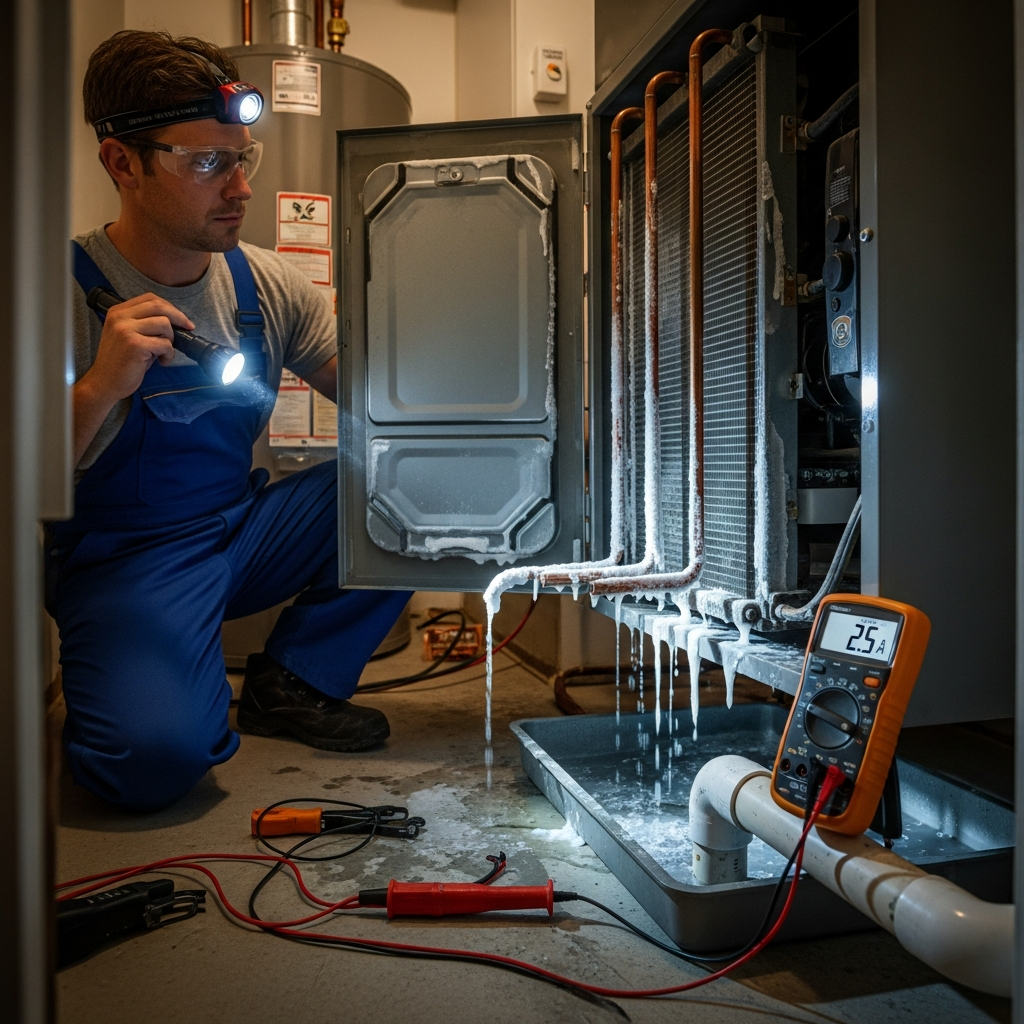
Ice forms when the evaporator coil temperature drops below freezing, which can happen with low airflow, incorrect refrigerant charge, or sensor/control issues. You might notice a drop in airflow at registers or see frost near the air handler. Switch the system to fan-only to thaw before further operation. Continuing to run an iced system can return liquid refrigerant to the compressor, which it’s not designed to handle. A professional will verify airflow, temperature drop, and charge to correct the root cause.
Thermostat troubles and control conflicts
Controls coordinate comfort, but they can also introduce confusion. Incorrect wiring, poorly placed sensors, or aggressive schedules may cause odd behavior: early shutdowns, wide temperature swings, or humidity that never feels right. Smart systems are powerful when tuned; they are frustrating when left on default settings that don’t match your home. A technician can calibrate sensors, refine schedules, and ensure accessories like dehumidification and zoning work in harmony rather than at odds.
Duct leaks: the invisible culprit
Leaky ducts waste conditioned air into attics or crawl spaces and pull hot, dusty air into the system through return leaks. Symptoms include dusty rooms, uneven temperatures, and a system that seems to run too long. Sealing critical joints and verifying returns are truly tight restores both comfort and cleanliness. In older homes, this step is often transformative.
The role of routine maintenance
Most chronic problems announce themselves in small ways before they erupt. Routine maintenance is where those clues are caught. Cleaning coils, clearing drains, testing capacitors, measuring static pressure and temperature split—these are simple steps with outsized impact. They reset the system’s baseline so you’re starting each season from a place of strength rather than chasing symptoms.
Local context: architecture, microclimates, and lifestyle
Beverly Hills architecture is varied, with tucked-away air handlers, decorative grilles, and ducts routed around aesthetics. Canyons trap heat differently than flats, and west-facing glass can create dramatic late-day loads. Add to that a lifestyle that often includes entertaining, guest rooms, and home offices. Resilient solutions honor that complexity. Sometimes the fix is a targeted duct improvement; other times it’s adjusting schedules and setpoints to match occupancy patterns so the system never feels overtaxed.
Knowing when not to DIY
While swapping a filter and clearing debris around the outdoor unit are great homeowner tasks, deeper diagnostics belong to professionals. Electrical testing, refrigerant handling, and pressure measurements require training and tools. Well-intentioned guesses—like adding refrigerant without verifying charge or repeatedly resetting breakers—can do harm. The fastest, safest path often starts with a measured evaluation rather than a leap to fix the symptom you see.
Preventive strategies that pay off
Keep a simple, recurring checklist: filters on schedule, shrubs trimmed back from the condenser, registers and returns unblocked, and a pre-season tune-up. Share any new noises, smells, or room behavior changes during maintenance visits; patterns matter. A few consistent habits reward you with a calm, predictable home even on the hottest afternoons.
Frequently asked questions
Q: Why is one room always warmer than the rest?
A: It’s often an airflow issue—blocked registers, a lack of a return path, or an undersized/long duct run. Sometimes the room’s exposure increases its load. A combination of duct adjustments and minor room-side changes typically resolves it.
Q: My AC runs but the air is barely moving. What now?
A: Check the filter first. If the filter is clean, the blower could be struggling due to dust on the coil, incorrect fan speed, or a failing motor. Turn the system off and call for evaluation if airflow doesn’t return.
Q: Is it normal to see some water near the air handler?
A: Occasional condensation is normal, but pooling water is not. It signals a clogged drain, unprimed trap, or a missing/failed safety switch. Address it quickly to avoid moisture damage.
Q: The system turns on and off rapidly. Is that harmful?
A: Yes, frequent cycling strains components and can stem from thermostat placement, equipment sizing, or duct issues. A pro can identify the root cause and smooth operation.
Q: Can strange smells indicate danger?
A: A musty odor usually points to moisture and microbial growth, while acrid or electrical smells require immediate shutdown and inspection. When in doubt, turn it off and call for help.
Q: How often should I service the system?
A: Twice a year is a strong starting point—before peak cooling and as seasons shift—supplemented by regular filter changes and quick checks after windy or dusty spells.
Restore calm to your home
Comfort returns fastest when you match clear symptoms with tested solutions and a local team that treats your home with care. If you’re ready to put lingering issues behind you and enjoy smooth, steady cooling again, schedule expert Beverly Hills air conditioning service today and feel the difference in every room.