
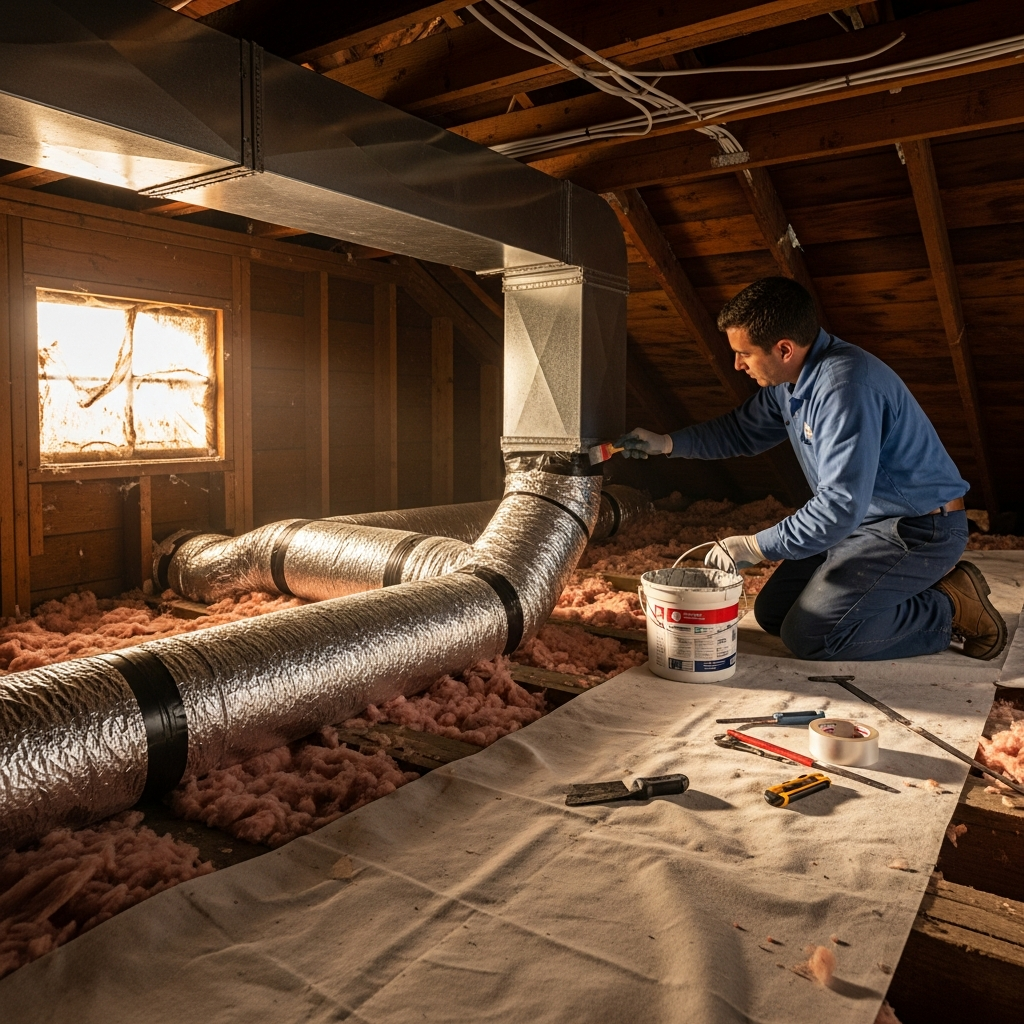
Behind the elegance of a Beverly Hills home is a quiet infrastructure that makes every season feel effortless. Ducts carry conditioned air to living spaces and return it to be treated again, shaping comfort, noise, and air quality in subtle but significant ways. When those pathways age or no longer suit the home’s current layout, homeowners often consider a comprehensive approach: refresh the ducts and elevate the sealing so the system performs as a single, well-tuned instrument. If you are beginning that exploration, a helpful starting point is to review local perspectives on duct replacement to see how design and sealing practices come together for durable, quiet results.
Duct replacement and sealing are inseparable partners. New materials and thoughtful routing create the framework for smooth airflow, while robust sealing ensures that air stays on the path from equipment to room without detours. In Beverly Hills, with its mix of mid-century modern homes, Spanish revivals, and contemporary estates, each project is shaped by architecture as much as by equipment. The aim is always the same: bring calm, even comfort to every room and keep it that way season after season.
While the mechanics are technical, the outcome is deeply personal. Families notice steadier temperatures, reduced dust, and a quieter backdrop to daily life. For those who entertain often, welcome pets, or work from home, these improvements affect how the home feels hour to hour. Sealing, in particular, is one of those behind-the-scenes practices that transforms a good installation into a lasting one.
Why Sealing Deserves Center Stage
Even the best duct layout cannot deliver its potential if joints leak or seams open over time. Proper sealing with the right materials—mastic at joints, compatible tapes on clean, prepared surfaces, and airtight connections at takeoffs and boots—prevents conditioned air from slipping into attics or crawl spaces. This protects comfort and reduces the workload on your equipment, a benefit that shows up as quiet confidence during both heating and cooling seasons.
Sealing the return side is just as important as sealing supply runs. Leaky returns can draw dust, attic air, and even odors into the system, redistributing them into living spaces. A tight return path pairs with clean filtration to produce air that feels fresher and looks cleaner in your home. If anyone in your household is sensitive to allergens, the difference can be felt quickly.
Designing New Ducts With Sealing in Mind
When planning duct replacement, design sets the trajectory. Smooth pathways, correct sizing, and minimal tight turns reduce resistance and support quiet operation. But design also shapes how easily ducts can be sealed. Straight runs with accessible joints, well-planned transitions, and sturdy supports that prevent sagging all contribute to seals that stay intact over time. In other words, sealing is not a final step; it is an integral design consideration.
Material choices play a role. Rigid metal trunks provide durable, smooth interiors for main runs. High-quality insulated flex, properly stretched and supported, brings gentle curves where needed. Each connection between materials deserves careful preparation: clean surfaces, before-and-after photos of critical joints, and time for sealants to set. The difference shows up months later when the system remains quiet and balanced without revisits for loose or whistling joints.
Beverly Hills Architecture and Access
Homes here often present a beautiful puzzle. Some have open attics where duct runs can be mapped cleanly and sealed with ease. Others rely on crawl spaces or tight chases where joints are harder to reach. In hillside properties, long elevation changes call for supports that maintain alignment and avoid strain on connections. Each of these realities affects how sealing is performed and checked. The plan adapts to the home, using access panels where sensible and staging work to protect finishes while allowing thorough sealing.
In homes with historic finishes or detailed millwork, protecting surfaces is a daily priority. Temporary coverings, careful ladder placement, and clean work habits preserve the look you cherish. Good communication about which rooms will be accessed and when makes it easier to plan around family routines and keeps the process feeling calm and predictable.
Insulation: The Partner to Sealing
Insulation on the exterior of ducts preserves temperature as air travels from equipment to room. In our climate, attics can be warm in summer and cool on winter nights. Insulation keeps supply air close to its target temperature and return air stable as it heads back to be conditioned. The result is rooms that feel right as soon as the system cycles on, without the lag or drift that comes from thermal losses along the run.
Proper insulation also protects seals. Jackets that fit well and supports that maintain shape prevent stress on joints. Where ducts pass through unconditioned spaces, continuous insulation reduces condensation risk and protects finishes and nearby materials. It is the quiet companion to sealing, working continuously in the background.
Testing, Balancing, and Verification
Verification is where the project’s promises become measurable. After installation and sealing, technicians test static pressure, measure airflow at registers, and compare results to the design intent. Any imbalance is addressed with damper adjustments or minor routing changes where possible. In some projects, a whole-system leakage test provides a snapshot of tightness—a reassuring piece of documentation that confirms air is going where it should.
This step is not just for the file. It directly affects your experience. Balanced rooms, a quiet return path, and steady pressure yield the sort of comfort you notice as you walk from one space to the next. For many homeowners, these are the most satisfying moments of the project: when the system fades into the background and the home feels uniformly inviting.
Maintenance Habits That Protect Your Investment
After the project, maintenance is pleasantly simple. Changing filters on schedule, keeping registers unobstructed, and having a technician check accessible seals during routine service keep performance steady. If your household energy use or layout changes—say, a guest room becomes a nursery or a home office—the system can be fine-tuned with small balancing adjustments. The underlying work of replacement and sealing gives you a platform that responds gracefully to evolving needs.
You may also notice cleaner surfaces and fewer dust accumulations. That is the sealing at work, preventing unfiltered air from entering the distribution path. For pet owners and those with sensitivities, this daily improvement is as meaningful as the temperature on the thermostat.
Sequencing the Project for a Calm Home
Many Beverly Hills homeowners juggle busy schedules. Sequencing the project to respect routines begins with a clear schedule and ends with consistent cleanup. Crews can isolate work areas, stage materials in a way that preserves walkways, and coordinate with other trades if openings or finish work are required. Good staging supports thorough sealing because joints are reached, cleaned, and treated without rushing or contortion.
For hillside properties or homes with limited access, thoughtful logistics—parking plans, lift coordination, and careful handling of materials—keep the project moving smoothly. A measured pace paired with precise execution is a winning combination for both performance and peace of mind.
When Replacement Meets Renovation
Duct work often coincides with broader renovations—kitchen refreshes, primary suite updates, or the addition of a home office. Coordinating duct replacement and sealing with these projects can be efficient, especially when ceilings are open or access is temporarily improved. Early collaboration with design and construction teams ensures that duct routes support the new layout and that finishing details, like grille styles, complement the overall vision.
In many projects, the subtlety of good duct design is matched by the invisibility of excellent sealing. You will not see it when the job is complete, but you will hear and feel the difference. Rooms calm down, temperatures hold, and the system breathes easily.
Working With a Local Team
A Beverly Hills-focused team brings an understanding of local codes, inspection processes, and the way our homes are built. They plan with the architecture in mind and respect finishes that tell the story of your home. Before you start conversations, it can be useful to read through local guidance on duct replacement so you can align goals and vocabulary, which leads to a more focused design discussion.
During selection, look for clarity in design drawings, a commitment to sealing details, and a plan for testing and documentation. Ask how joints will be prepared, what materials will be used, and how the team verifies results. Transparency on these points is a reliable predictor of a satisfying outcome.
Signs It Is Time to Act
Homeowners often live with subtle discomforts longer than they realize. Rooms that lag by a few degrees, a faint whistle from a return, dust that reappears shortly after cleaning—these are signals that ducts and sealing deserve attention. If you are planning a renovation, it is efficient to address ducts while access is open. If a system is aging or has a patchwork history of add-ons, a comprehensive replacement and sealing effort can reset the clock and simplify maintenance for years to come.
Trust your senses. If the home is quiet and temperatures feel even as you move from space to space, your ducts are likely doing their job well. If not, an assessment can reveal specific opportunities to improve comfort with practical, well-executed steps.
Frequently Asked Questions
These answers reflect the most common homeowner questions in Beverly Hills about duct replacement and sealing, grounded in everyday experience.
Can sealing alone solve my comfort issues?
Sometimes, especially if leakage is the primary problem and duct sizing is otherwise appropriate. However, if ducts are undersized, poorly routed, or in poor condition, sealing is only part of the solution. A combined approach often delivers the best results.
How long does a typical replacement and sealing project take?
It depends on access, home size, and the complexity of routing. Many projects are completed in days, with careful staging and daily cleanup to keep your home comfortable during the process. Your contractor will outline a schedule tailored to your needs.
Do returns need special attention during sealing?
Yes. Leaky returns can pull dust and attic air into the system. Ensuring the return path is airtight is crucial for air quality and overall comfort. This is a central focus in a well-executed project.
Will new ducts reduce noise?
Properly designed and sealed ducts typically run quieter. Smooth transitions, correct sizing, and stable static pressure all lower noise. Many homeowners notice a calmer background the first evening the system runs after completion.
Can duct replacement improve air quality?
Yes. Tight seals prevent unfiltered air from entering the distribution path, and balanced airflow helps your filtration work effectively. The result is air that feels fresher and surfaces that stay cleaner between dustings.
What should I do to maintain the results?
Replace filters on schedule, keep registers clear, and include a brief duct check in routine HVAC service visits. If room usage changes, have a technician revisit balancing. These habits protect performance and comfort over time.
If you are ready to bring quiet, steady comfort to every room with work that respects your home’s architecture and daily rhythm, connect with a Beverly Hills team that treats sealing as craftsmanship. Begin the conversation with trusted insights into duct replacement and schedule a visit that fits your calendar.