
Staying Ahead of the Curve in Beverly Hills
In Beverly Hills, California, home care is as much about foresight as it is about finish. Owners who keep their homes camera-ready also track the subtle forces that shape indoor comfort—air movement, filtration, and cleanliness. Over the past few years, I have watched a set of local trends emerge in air duct cleaning that reflect our climate, our architecture, and our expectations. These trends are not fads; they are practical responses to the way we live, entertain, and relax at home.
With homes designed to blur indoor and outdoor living, our duct systems carry a heavier-than-average workload. They deal with breeze-borne pollen, delicate finishes that show dust, and larger volumes from vaulted ceilings and open-plan rooms. As technology and methods advance, local providers are adapting approaches to keep ducts clean with less disruption and better outcomes.
Quiet, Contained Methods Take Center Stage
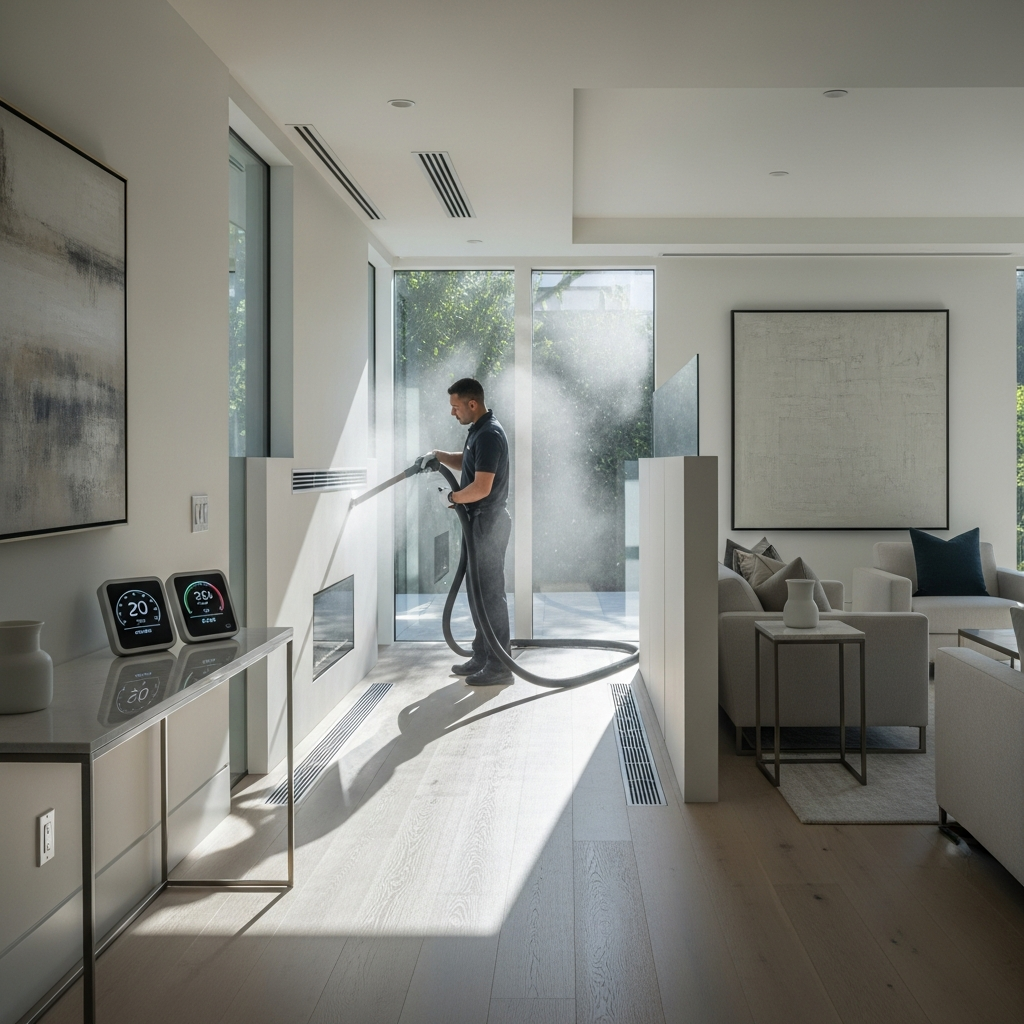
One clear trend is a move toward quieter equipment and refined containment. Rather than the clatter of older tools, technicians now use high-efficiency vacuums, soft-bristle agitation systems, and improved seals that keep the process discreet. In homes where children nap, clients take calls, or staff coordinate daily tasks, the difference is palpable. You can hold a conversation in the next room while the work proceeds, and you do not worry about dust plumes escaping into living spaces.
Containment is particularly important in residences with art pieces or fabric-rich interiors. Crews map access routes, pad corners, and use zippered barriers only where needed, so that rooms remain presentable during and immediately after service. This is not just courtesy; it is a sign of an industry maturing to meet the expectations of Beverly Hills households.
Data-Informed Scheduling
Another local trend is data-driven decision-making. Homeowners and managers increasingly use indoor air quality sensors to track particulate levels in real time. When paired with knowledge of seasonal shifts—spring blooms, autumn breezes, and the occasional wildfire haze—the data helps pinpoint when a duct cleaning will deliver maximum benefit. Rather than following a calendar alone, homes now respond to what the air is actually doing.
This approach dovetails with smarter HVAC controls. Variable-speed systems and zoned layouts offer more granular control, but they also reveal when ducts are beginning to impose friction. When fans must work harder to meet familiar setpoints, it is often a sign that dust has accumulated. Cleaning restores intended performance and can be verified by comparing pre- and post-service runtime patterns.
Better Baselines Through Filtration Pairing
Trends do not exist in isolation. Duct cleaning works best when paired with filtration that matches your lifestyle. I see many Beverly Hills homes adopting higher-efficiency media filters and sealing return paths to prevent dusty attic or crawlspace air from sneaking in. When you start with a clean duct system, a thoughtful filtration strategy keeps it that way longer and reduces the cycle of settling dust on furniture and art.
Some homeowners deploy low-speed circulation schedules to keep air moving gently through filters throughout the day. This approach is easy on equipment and keeps rooms feeling fresh. When ducts are clean, the fan does not need to overcome stubborn grit and can move air with quieter confidence.
Eco-Conscious Practices
Many residents now ask pointed questions about environmental impact. In response, providers are favoring methods that minimize chemical use, rely on high-efficiency particulate capture, and reduce waste. They are also prioritizing washable protective materials and reusable barriers to keep disposable plastics to a minimum. The result is a service that aligns with the values of homeowners who already invest in drought-tolerant landscaping, solar integration, and efficient lighting.
Eco-conscious also means right-sizing the service. In many cases, inspections reveal that certain zones need attention while others remain relatively clean. Rather than defaulting to whole-home treatment, teams now tailor the scope, focusing energy where it matters most while documenting conditions elsewhere for future planning.
Respect for Architecture and Craft
Beverly Hills is a patchwork of architectural eras: mid-century gems, Mediterranean villas, contemporary pavilions, and everything between. Duct cleaning has become more sophisticated about the built environment it serves. Technicians learn where registers hide within millwork, how to protect floating stairs during equipment moves, and how to maintain the integrity of acoustic linings or designer grilles. This respect for craft translates into safer, smoother projects and homes that look untouched when the crew packs up.
Historic properties demand care around older plaster and unique duct routes. Modern homes, with long linear diffusers and minimal detailing, call for different handling. The trend is toward specialization—providers who know neighborhoods, builders, and the idiosyncrasies of specific developments.
Seasonal Strategies and Wildfire Readiness
Local patterns influence timing. After windy spells or regional fire events, homeowners increasingly schedule an inspection, even if the house remained closed. The unseen particles drawn into returns can be stubborn. A thorough clean restores that coveted neutral scent and preps the system for a stretch of calm weather. In spring, before guests begin arriving more frequently, many households add a duct cleaning to their refresh list along with window washing and landscape tune-ups.
During wildfire season, some homes also adopt a modified fan schedule to keep air slowly circulating through filters. This approach, combined with sealed returns and a clean duct baseline, has proven to maintain a more comfortable interior until outdoor air improves. It is a quietly effective strategy that shows up in fewer complaints about stuffiness and a steadier indoor feel.
Communication and Documentation
An emerging hallmark of top-tier service is documentation. Photos of before-and-after conditions, identified access points, and notes about insulation or flex sections help homeowners visualize what is happening in spaces they rarely see. For those managing multiple properties, this documentation is invaluable; it informs budgets and keeps service intervals appropriately spaced. It also strengthens trust, because owners can tie what they feel—quieter operation, less dust—to what was done.
Communication extends to aftercare guidance. Providers now offer simple, specific steps to keep ducts clean longer: filter replacement schedules that match usage, reminders to keep return grilles unobstructed by furniture, and notes about any hotspots that might warrant balancing in the future. This neighborly, educational approach fits the local ethos of collaboration between homeowners and service teams.
Mid-Project Checkpoints
Another local trend is the use of checkpoints during service. In larger homes, crews pause to verify results zone by zone, ensuring that the gains in one area are not undermined by overlooked returns or inaccessible grilles elsewhere. These brief pauses keep quality high and make the final walkthrough more satisfying. When the difference is obvious—fresher scent, quieter fan, crisper airflow—owners know their investment paid off.
For those with staff, these checkpoints also become training moments. Teams learn how to spot early signs of particulates—dust rings on registers, audible strain at startup, or stubborn odors after cooking—and how to flag them before they become bigger issues.
FAQ
Q: How often are Beverly Hills homeowners scheduling duct cleaning now? A: Many are adopting flexible intervals based on inspections and IAQ data, typically every one to three years, with sooner service after renovations or wildfire events.
Q: Are newer homes less likely to need cleaning? A: New homes can accumulate construction dust and are often designed with long runs and concealed grilles that trap particles. A post-construction clean followed by good filtration is common.
Q: Will cleaning disrupt my day? A: Modern methods are quieter and more contained, allowing normal routines to continue in most areas while the work proceeds zone by zone.
Q: Does duct cleaning help with odors? A: Yes. Removing dust reservoirs and cleaning return paths helps the home shed cooking scents, perfumes, and stale notes more quickly.
Q: Do I need chemicals for effective cleaning? A: In most cases, mechanical agitation and high-efficiency capture are sufficient. Any additional treatments should be discussed and chosen carefully to suit your home.
Make the Most of Local Expertise
If you are ready to align your home with the best of what is happening here, look to providers who understand our neighborhoods and architectural quirks, who document their work, and who tailor their approach to your routines. When you are set to take that step, schedule trusted air duct cleaning and enjoy the quiet, polished comfort that Beverly Hills homes are known for.