
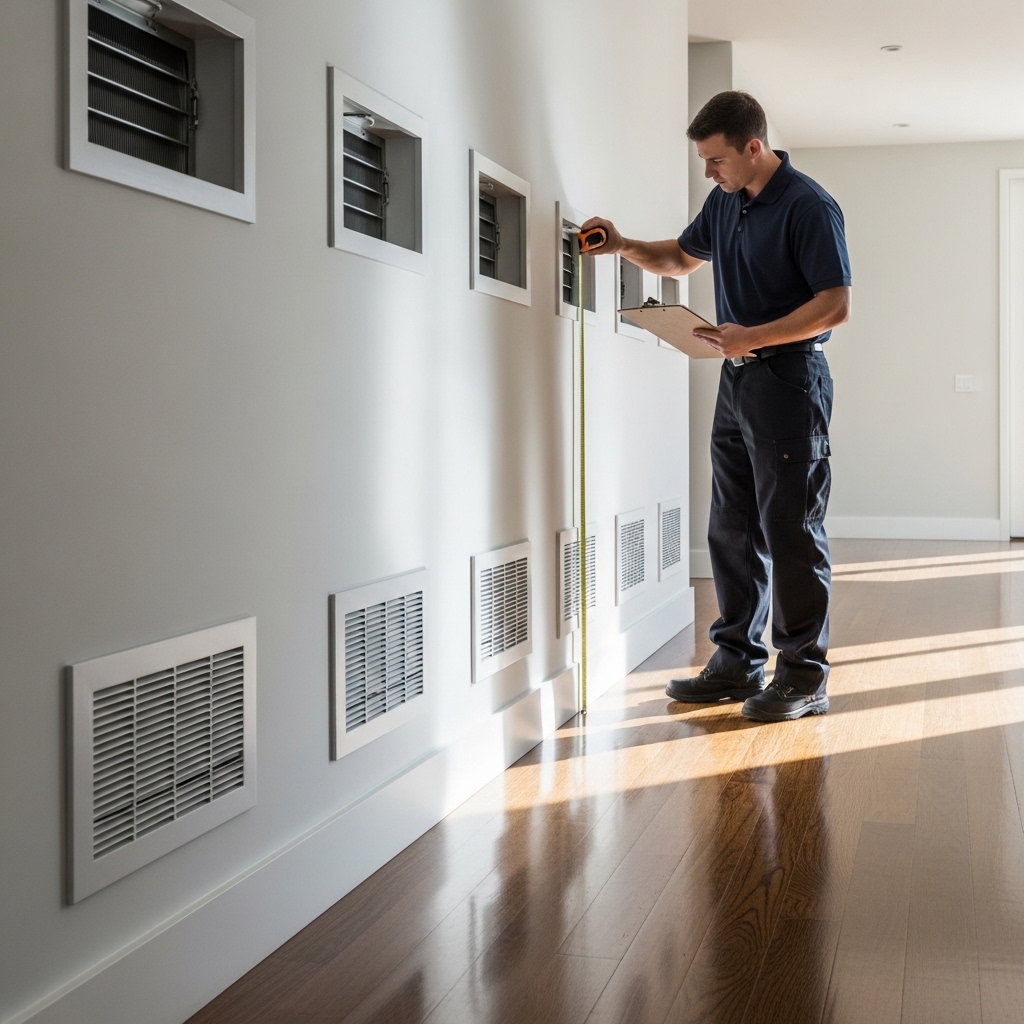
Homeowners in Beverly Hills often hear the phrase “cost per vent” when they begin exploring air duct cleaning. It sounds straightforward, even comforting—count the openings, do the math, and you have your answer. But homes here rarely fit simple formulas. Between multi-zone HVAC designs, architectural variety, and the realities of dust, pollen, and occasional regional smoke, a one-number approach can be misleading. Understanding what drives scope and effort will help you evaluate proposals with confidence and choose a solution that supports your home’s comfort and cleanliness without surprises. And as you weigh options, it helps to ground the conversation in the service itself—what thoughtful air duct cleaning entails and why an experienced assessment often tells you more than a quick tally of vents.
Let’s start with what “per vent” usually means. In casual terms, a vent is any visible opening—supply register or return grille. Counting them is easy. But ducts are networks, not just endpoints. Two homes with twenty visible openings can require dramatically different approaches depending on branch length, main trunk access, the presence of dampers, and the material of the ducts themselves. The promise of a simple cost-per-vent number often ignores these realities, which is why thoughtful providers in Beverly Hills will ask to see your system, not just your floor plan.
Why Per-Vent Pricing Can Be Misleading
Imagine a classic Beverly Hills Spanish Revival with a single system serving a compact footprint. Now compare it to a hillside contemporary with multiple levels, a theater, and a separate guest suite. Both may have a similar number of visible vents, yet the second home likely has longer runs, tighter chases, or zones that require careful staging. The effort to protect finishes and maintain containment in each zone can differ substantially. A per-vent number that looks appealing on paper may fail to account for this complexity, leading to either an incomplete scope or a last-minute revision you did not anticipate.
There is also the question of returns. Returns tend to accumulate more debris than supplies because they draw air back to the system. A per-vent count that treats returns and supplies as equal is already flattening a meaningful difference. Trusted providers weigh the condition and access of returns more heavily when planning a thorough cleaning, and they communicate that nuance clearly.
Scope Drives Value
Instead of starting from a per-vent number, consider starting from outcomes. What do you want to change? If surfaces collect dust quickly, if rooms feel uneven in temperature, or if there is a persistent odor when the system starts, the scope should aim to resolve those issues. That typically includes a deep clean of main trunks, branch lines, and returns under negative pressure with HEPA filtration, along with careful protection and documentation throughout.
In Beverly Hills, finishes are part of the equation. Marble, custom wood flooring, silk wall coverings, and unique millwork are common. Protecting these details requires time and materials, and that is not well captured by a per-vent tally. Value is better understood as diligence: careful setup, methodical cleaning, and considerate cleanup that leaves your rooms as pristine as they were found.
Home Design and Access
Access is a practical driver of effort. Are registers positioned beneath built-in furniture or in soaring ceilings that require specialized ladders? Are there tight chases, concealed panels, or architectural details that demand careful maneuvering? Older homes may present brittle or unusual materials; newer homes may route ducts near smart-home conduits. An honest evaluation weighs all of this, which is why trusted professionals prefer to walk the home or, at a minimum, hold a thorough consultation before aligning on scope.
Consider also the difference between a system that is relatively clean and one that shows signs of heavy buildup or post-construction dust. The tools and time vary accordingly. A simple per-vent number does not distinguish between these conditions, but your experience will. Households recovering from remodeling, living with pets, or managing allergies typically benefit from a more comprehensive approach that resets the system’s baseline.
Environmental Realities in Beverly Hills
Our microclimate plays a role. Dry winds carry fine dust that settles lightly yet persistently. Seasonal blooms add pollen to the mix. On occasion, regional smoke events leave trace residues that linger in subtle ways. These environmental factors do not respect per-vent math; they influence the entire network of ducts. In this context, a thorough cleaning under proper containment and negative pressure is not just a nicety—it is a sensible response to where we live.
Another local factor is lifestyle. Busy households, frequent entertaining, and regular deliveries naturally bring more foot traffic and movement, all of which stir up dust. Even if you keep a meticulous home, the HVAC system quietly collects what floats across rooms. Periodic professional attention helps maintain the calm, neutral scent and consistent comfort Beverly Hills residents value.
What a Professional Assessment Looks Like
A credible provider will begin with questions. How old is the system? Have there been renovations recently? Are there rooms that feel different from the rest? They will map returns and supplies, note how zones are arranged, and consider duct material—metal or flex—before proposing the best tools for the job. During the visit, they will protect surfaces, establish containment, and set up a negative-pressure environment so dislodged debris goes into HEPA filtration rather than back into your home.
Documentation matters here. Before-and-after images or video, when feasible, establish transparency. If there are anomalies—signs of moisture, loose fittings, or degraded insulation—those details are flagged for your decision-making. Thoroughness is part of trust, and trust is the best defense against oversimplified pricing frameworks that sound good but underdeliver in practice.
Thinking Beyond Numbers
Since per-vent pricing invites a mathematical mindset, it helps to reframe the conversation from “How many vents?” to “What results am I seeking?” If your goal is steadier room-to-room temperatures and fewer dust touch-ups, the focus should be on removing accumulated debris from the entire duct network, including returns and main trunks. A per-vent tally makes no distinction between a short branch and a long, winding run that requires more time to clean thoroughly.
There is also the matter of system components adjacent to ductwork. While cleaning coils and blower compartments may be separate services, understanding their condition informs the overall outcome. A company that speaks about these parts thoughtfully is likely to understand that ducts are a piece of a larger system, not an isolated checklist item.
When Per-Vent Might Be a Useful Reference
To be fair, there are scenarios where a per-vent reference helps. In small, simple systems with straightforward access, it can serve as a baseline for comparison. But even then, treat the number as a starting point. Ask for a description of what is included, how returns are handled, what kind of containment the team uses, and how finishes are protected. These clarifications transform a shiny number into a meaningful plan.
In more complex homes, be wary of one-size-fits-all promises. If a company insists on a fixed per-vent figure without asking about access, materials, or recent construction, that is a cue to probe further. Not because the number is necessarily wrong, but because the approach may be.
The Middle Ground: Outcomes and Experience
The best providers in Beverly Hills know that homeowners want clarity without being buried in technicalities. They translate experience into a scope that feels both thorough and manageable. They take ownership of protecting finishes and keeping the process smooth. They explain how they will document the results and how you will notice improvements. When you are ready to anchor the conversation in real-world results, consider a professional assessment and schedule comprehensive air duct cleaning on a day when your household has a comfortable window for access.
Aftercare Extends Value
Once the work is complete, simple steps help sustain the results. Align filter replacement with your household’s activity level and the local environment. Keep returns unobstructed and gently clean the register faces when you dust. During any future renovations, insist on protecting returns and supplies, and ask crews to maintain dust-control practices. These uncomplicated habits amplify the benefits of a thorough cleaning.
Clarity Without Compromise
It is natural to want straightforward answers, and numbers have a reassuring simplicity. But Beverly Hills homes earn better outcomes when the conversation goes deeper than a per-vent count. Choose a partner who listens, observes, and designs a plan for your home’s layout, materials, and lifestyle. You will gain not just a service, but a quieter, steadier, cleaner-feeling home.
Frequently Asked Questions
Is “cost per vent” a reliable way to compare duct cleaning proposals?
It can offer a basic point of comparison in simple systems, but it often glosses over important variables: access, duct length, returns versus supplies, materials, and the level of protection and documentation provided. Treat it as a starting point, not the full picture.
Why do returns matter more than supplies in planning the job?
Returns draw air back to the system and naturally collect more debris. They typically require more attention, and their condition often influences how your home smells and how smoothly the system cycles. A plan that weights returns appropriately is a sign of a thoughtful approach.
How do Beverly Hills homes complicate per-vent pricing?
Architectural variety, high-end finishes, multi-zone systems, and concealed chases all shape the effort needed to do the job thoroughly and cleanly. Protecting delicate materials and maintaining containment are part of the value and are not captured by a simple tally.
What should I ask a provider who quotes per vent?
Ask what is included, how returns are addressed, what containment and filtration methods are used, how finishes are protected, and how results will be documented. The quality of their answers reveals as much as the number they quote.
Will a thorough cleaning help with uneven temperatures and odors?
Clean ducts support smoother airflow, which can help reduce hot and cold spots. Removing accumulated debris also helps restore a neutral scent when the system runs. While no service can promise to eliminate every variable, a comprehensive approach improves the baseline noticeably.
What is the best way to proceed if I am unsure about scope?
Schedule a professional assessment that looks beyond visible vents and considers the entire duct network. A clear, tailored plan grounded in your home’s reality will deliver a better experience than an oversimplified estimate.
Move From Guesswork to Confidence
If you are ready to trade formulas for real-world results, connect with a local expert who respects your home’s details and prioritizes outcomes over buzzwords. When the time feels right, schedule your comprehensive air duct cleaning and enjoy the calm, consistent comfort that follows.