
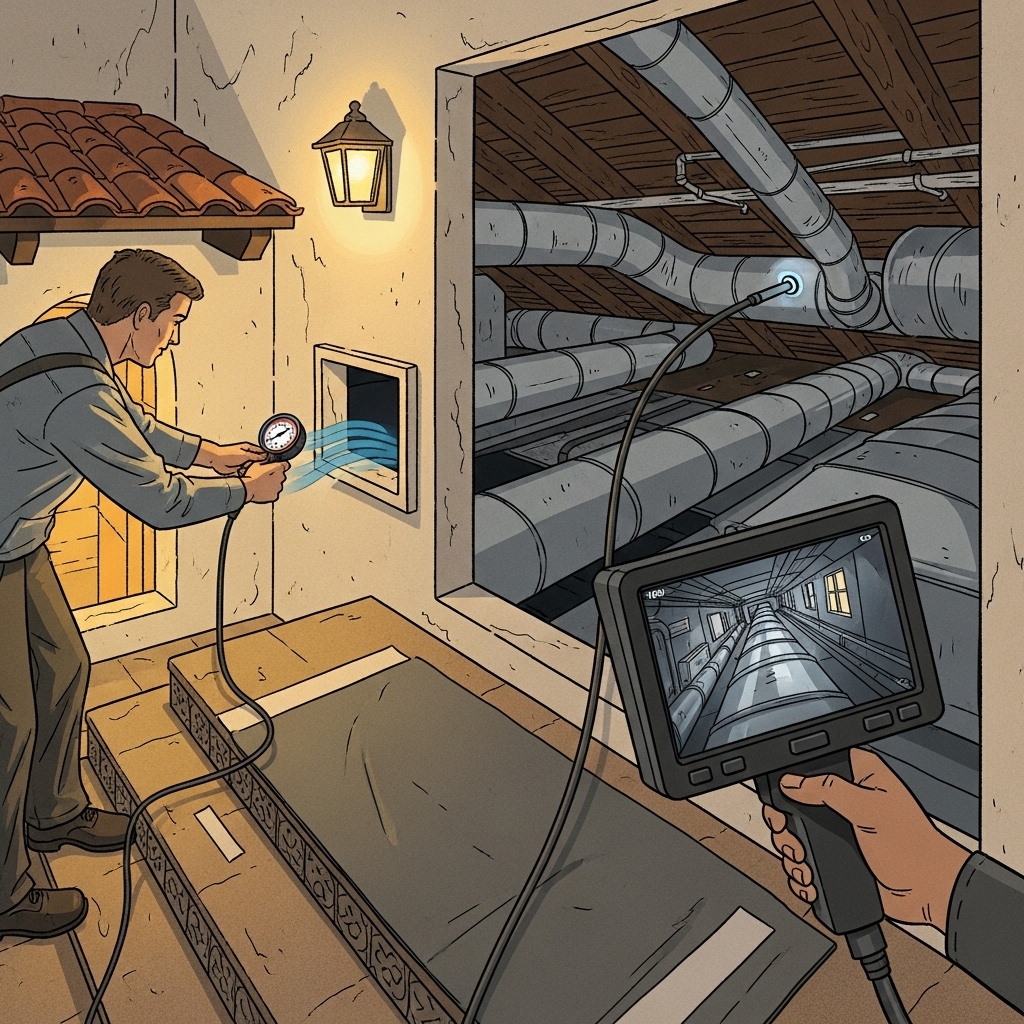
Talking about air duct cleaning in Beverly Hills usually starts with a conversation about what makes each home unique. From hidden mechanical rooms tucked under terraces to long supply runs passing through flat-roofed mid-century spaces, no two systems operate in quite the same environment. While the title of this piece points to the idea of cost, the more practical and helpful way to think about the topic is scope, quality, and the elements that shape a service plan. In other words, what exactly will be done, how thoroughly will it be performed, and how will the work fit the home and its residents? Framing the conversation this way keeps the focus on outcomes and value rather than numbers, which vary widely and tell only a small part of the story. If you are just beginning to explore options, you might start by learning what thorough air duct cleaning actually entails in a local context.
In Beverly Hills, many homes encompass multiple HVAC zones. One wing may have its own air handler, while a second and third serve downstairs living areas and upstairs bedrooms. Each zone brings separate returns, registers, and trunk lines. When people ask what affects the scope of a cleaning, this multi-zone reality is near the top of the list. To be thorough, each area must be isolated, placed under negative pressure, and worked systematically from the far ends of the runs back to the main trunks, with registers, grilles, and plenums addressed along the way. Thoroughness is not about speed; it is about reaching everything that matters without disrupting day-to-day life.
Access is another significant factor. In hillside properties, air handlers may sit in tight attic angles or on rooftops that require careful laddering or lift planning. Crawlspaces beneath older structures can be narrow and delicate. That affects setup time, protective measures, and the pace of work. Importantly, it also influences how a team safeguards finishes—stone stairs, bespoke flooring, paneled corridors—as they move equipment through the home. This attention to the path of travel is not a nice-to-have; it is the essence of how reputable providers work in Beverly Hills.
Then there is the interior environment. Homes with large draperies, open-air entertaining, and frequent door cycling will naturally gather more dust near returns. Properties with fireplaces, collections of textiles, or avid furry companions also collect distinct types of particulate that benefit from careful agitation and capture. If a residence has recently undergone renovation, even with excellent containment by builders, microscopic dust finds its way into returns. That changes the aims of cleaning from routine refresh to post-project remediation, and the approach follows suit.
When we plan a service, we begin by listening. What do you notice when morning light streams across the living room? Are there rooms that feel stuffier than others? Do registers show visible film, or do return grilles collect fibers quickly? These observations guide a visual inspection with cameras, airflow checks, and filter evaluations. We are not chasing a number on a page; we are matching a plan to how the home is used. A well-matched plan means registers are removed and cleaned, ducts are agitated and vacuumed thoroughly, returns are tended carefully, and filtration is checked for proper fit and seal.
Equipment matters, but training and patience matter more. HEPA-filtered negative air machines, flexible agitation tools, and soft-bristle brushes remove debris without damaging duct interiors. In Beverly Hills, where ducts may transition from older metal to newer flex or lined sections, tool selection is not trivial. A thoughtful crew reads materials and adjusts the method to them, preventing scratches or tears and preserving the integrity of the system. That is the type of workmanship that shows up in quieter operation and steadier airflow after the job is done.
Midway through a day of cleaning, as one zone is completed and another begins, homeowners often ask how they will feel the difference. The answer is both immediate and gradual. Immediately, vents look brighter and free of film, and the air exiting supply registers smells neutral and fresh. Over days and weeks, dusting sessions become shorter and less frequent, and the HVAC system modulates with a little less effort. These are the tangible results that justify the decision to prioritize a careful, thorough service. For additional perspective on scope and planning, it helps to understand the rhythm of professional air duct cleaning in homes across the neighborhood.
Many Beverly Hills properties contain items and spaces that require special attention: gallery rooms with sensitive artwork, screening rooms with fabric-wrapped walls, and wine cellars with tightly controlled climate. Even if those rooms are not directly connected to the duct runs being addressed, the workflow must respect them. Dust containment and quiet operation become especially important during daytime cleaning when households are active. Good crews coordinate with estate managers and staff, stage equipment in low-impact areas, and communicate clearly about which rooms are open and which remain undisturbed.
Another consideration people rarely think about is the impact of air balance. If returns or supply runs are restricted by debris, the system can run harder to achieve the same conditions. Cleaning removes that friction. While the result is not a rebate or a figure on a receipt, the practical effect is meaningful: equipment cycles more smoothly, temperatures stabilize, and air feels lighter and more even throughout the home. This is especially important in properties with large glass exposures and varying solar heat across rooms.
For those who love data, before-and-after visuals and airflow readings can help demonstrate improvement. We capture images of key sections and measure flows at registers where feasible, not to create a spectacle but to give you a narrative you can trust. When household managers need to report maintenance progress or plan seasonal tasks, these records make planning easier and more transparent.
Because we avoid focusing on numbers, the question becomes how to plan the timing. The answer lives in your life patterns and the environment around you. If you host regularly, have beloved pets, recently completed a remodel, or noticed residue after smoky months, it is a good time to schedule. If your home is calmer and sealed tightly with high-quality filtration, you can space services out. Either way, thinking in terms of freshness, comfort, and system care keeps the conversation grounded in what matters to you.
Clients also ask about sanitizing. The guiding principle is restraint and appropriateness. Physical removal is the priority; products are reserved for specific situations. When needed, we select options compatible with materials and safe for occupied homes, applying them precisely rather than broadly. The goal is air that smells like nothing at all and ducts that are simply clean.
What shapes the scope of an air duct cleaning in Beverly Hills homes?
Architecture, number of zones, accessibility, and lifestyle all play roles. Large estates with multiple air handlers require more systematic work. Hillside properties may demand careful access, while high-activity homes receive more particulate. A thoughtful plan considers these factors and tailors the method to them, protecting finishes while delivering a thorough result.
How do I know it is time to schedule service?
Look for visible film on registers, quick buildup on return grilles, rooms that feel stuffy, or lingering dusty scents. After remodeling or a season of smoky air, it is wise to refresh ducts. If morning light reveals a cloud of particles or you find yourself dusting more than usual, those are practical signals.
Will this reduce dusting around the house?
Yes, especially when cleaning is paired with good filtration and consistent filter changes. Removing buildup inside returns and supply runs reduces the amount of material recirculating. You should also see brighter, cleaner registers and more neutral-smelling air from supply vents.
How long does the work typically take?
Timing depends on the size of the property, number of systems, and access points. A compact residence can be completed efficiently, while a multi-zone estate takes longer. What matters is thorough coverage: dislodging debris from the ends of runs, capturing it under negative pressure, and cleaning registers and plenums.
Do you protect surfaces and finishes?
Absolutely. We plan the travel path, cover delicate flooring, use protective mats, and handle registers according to their material. In Beverly Hills, where many homes feature statement finishes, surface protection is a core part of the job and a marker of professionalism.
Is chemical treatment necessary?
Only when indicated by specific conditions. Physical removal is the priority, and products are chosen carefully when persistent odors or certain contaminants are present. The goal is to leave ducts neutral, safe, and truly clean, not perfumed.
What can I do to maintain results?
Change filters on schedule, vacuum returns gently, and keep doorways clear of outdoor debris. After parties or dusty projects, a quick wipe of registers helps. These small habits extend the freshness you feel after service and keep airflow smooth.
Will cleaning affect HVAC performance?
Clean ducts reduce resistance and allow the system to operate more smoothly. Many homeowners notice steadier temperatures and quieter operation. While results vary by home, a clean system supports comfort across seasons.
When you are ready to take the next step, the most effective move is to align the work with your home’s story—its architecture, lifestyle, and the comfort you want every day. Reach out to discuss an assessment and plan a session with a team that treats your property with care, and when the moment feels right, go ahead and schedule your air duct cleaning so your home can breathe as beautifully as it looks.