
Step outside on a clear Beverly Hills morning and you can smell the mix of canyon breezes, eucalyptus, and a hint of marine air pushing up from the Westside. It is a beautiful setting, but anyone who has lived here through a Santa Ana event or a busy construction streak knows how quickly dust, pollen, and fine particulates find their way indoors. That is where thoughtful, well-executed air duct cleaning comes in. As a local who has spent years inside crawlspaces beneath mid-century gems and in mechanical rooms of large estate homes, I can tell you that the way we approach ductwork in Beverly Hills needs to match the architecture, the hillsides, and the daily habits of the people who live here.
Air duct systems are the lungs of a home. They pull air from return vents, condition it, and deliver comfort to each room. Over time, dust from fabric, skin cells, pet dander, fireplace soot, and outdoor debris accumulate inside the return pathways and supply runs. In our area, add the occasional wildfire smoke intrusion and fine plaster dust from remodels, and you have a recipe for heavy buildup. Cleaning is not a single pass with a shop vacuum; it is a methodical process designed to protect finishes, contain debris, and restore clean airflow.
When we evaluate a Beverly Hills residence, we start with the story the house tells. Is it a 1920s Spanish revival with thick plaster and fewer returns? A classic Trousdale mid-century modern with long, low runs weaving through flat roofs? A newer construction with multiple zones, high-efficiency filtration, and dedicated fresh air intake? Each of these home types demands a slightly different approach. The common thread is a commitment to sealing off the system, creating negative pressure, and dislodging debris without forcing it into living spaces.
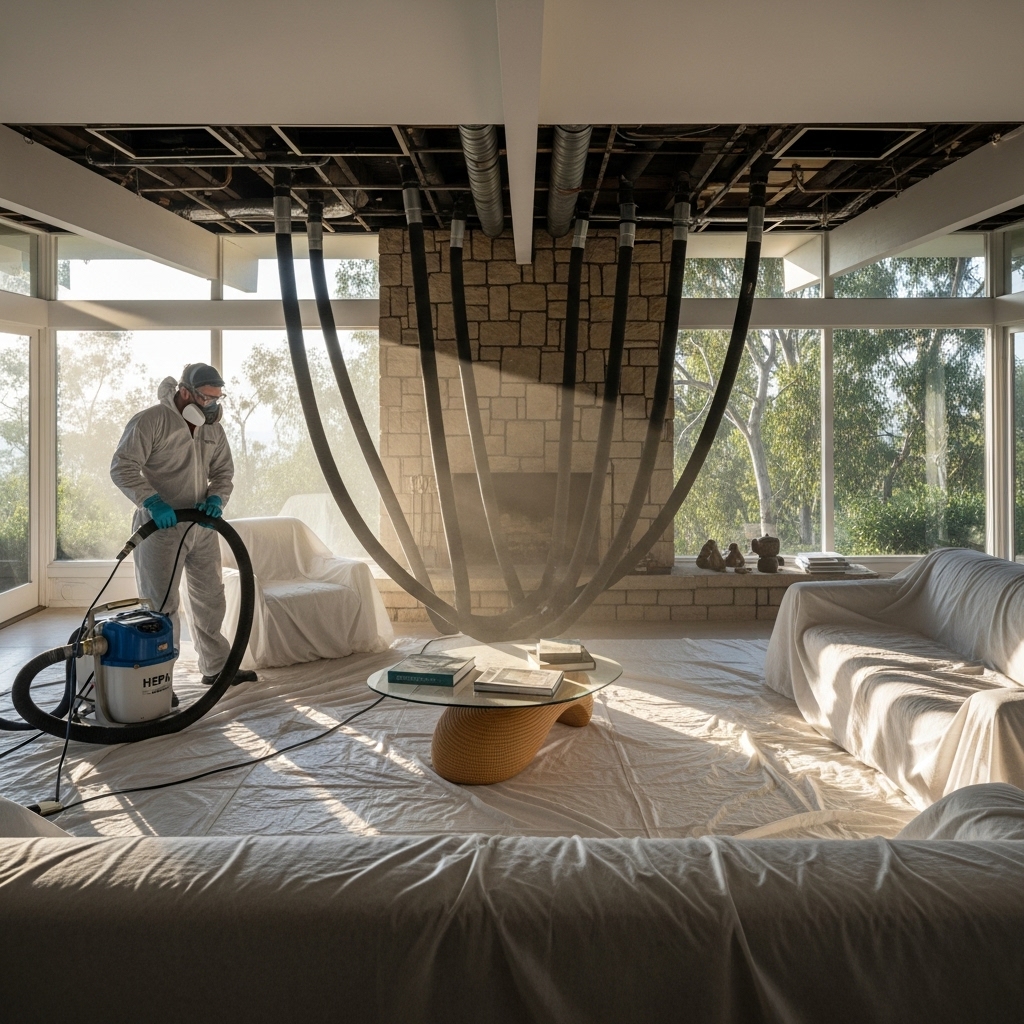
The preparation stage often determines the quality of the result. Registers and grilles are carefully removed and bagged for separate cleaning. Furniture and delicate surfaces are covered along travel paths, and containment measures are put in place around returns to prevent back-drafting dust. We connect HEPA-filtered negative air machines to the main trunks, then use specialized brushes and whips to agitate buildup from the far ends of the runs toward the collector. Every motion is measured; the goal is to be thorough without scarring the duct interior or displacing mastic at seams.
In many Beverly Hills homes, mechanical equipment lives in tight utility rooms, finished garages, or discreet rooftop enclosures. Access matters. Part of responsible duct cleaning is evaluating how technicians will reach each section safely and cleanly. That could mean navigating steep hillside stairs, protecting stone and wood flooring in narrow corridors, or planning lift access to roof-mounted package units. The attention to logistics shows in the final result: less disruption, cleaner outcomes, and a more predictable schedule.
There is also the question of filtration and sealing after the cleaning itself. Once registers and ducts are free of accumulated dust and debris, we often review filter cabinets, gaskets around doors, and any gaps that might pull in attic or crawlspace air. Many homes have gorgeous architectural returns that hide modern filter racks behind them; ensuring those racks sit square and seal properly keeps the system from bypassing filtration. A clean duct is a fresh start; pairing it with well-fitted filtration sustains the benefits.
Homeowners are sometimes surprised to learn how much of the perceived “dust problem” lives in returns rather than supply runs. Return grilles attract fibers and pet hair, and their chases can be larger, providing more room for accumulation. We take time to detail those areas, wipe and sanitize grille surfaces if requested, and check for gaps where return cavities open to wall voids. Quiet issues like those can undo the best cleaning work if left unaddressed, so we aim to close the loop while we are on site.
Another nuance here in Beverly Hills is the blend of lifestyle factors. Homes that host frequent gatherings, maintain large fabric draperies, or feature open sliding walls to the garden naturally cycle more air and invite in more particles. Likewise, houses with home gyms, wine rooms, or home offices kept cooler for equipment or comfort will run systems more often. Duct cleaning, in those cases, is as much about maintaining a pleasant, neutral indoor scent and reducing dusting frequency as it is about airflow and HVAC health. People notice the difference most in morning light: fewer floating particles and a brighter look to the space.
Our conversations often turn to what we find inside ducts beyond dust. Small objects can fall through registers; we have recovered children’s building bricks, earring backs, pen caps, and even a vintage coin in a historic property. More importantly, we occasionally encounter signs of moisture intrusion—staining, rust flakes near seams, or a faint musty odor. When that happens, we pause, document with images, and discuss what condition might be causing it, whether insulation issues, roof flashing near rooftop ducts, or condensation around poorly insulated sections. Cleaning removes what is there; identifying and resolving the source keeps it from coming back.
In the middle of a cleaning day, when the negative air machine hums and agitation is underway, you would see us working zone by zone. Large homes may have three or more zones with their own air handlers. We isolate one at a time, protect transitions, and verify better airflow after each section before moving on. That midpoint check is also a perfect time to talk about ongoing practices that keep ducts cleaner longer—changing filters on schedule, vacuuming return grilles, and using a dedicated mat near patio doors to catch garden dust. And if you want to make a note to schedule future service, bookmark a trusted resource for professional air duct cleaning so it is easy to return to the topic when the time is right.
A common question is how long the results last. For most Beverly Hills households that maintain filters and avoid major construction dust, the improvement in air clarity and HVAC freshness can be felt for quite some time. Lifestyle shifts and seasonal events matter; for example, after a season with nearby brush fires, the faint smoky residue that naturally sneaks in can accumulate and dull indoor air. Likewise, after remodeling—no matter how tidy the crews—fine dust settles everywhere, and the return system is very effective at pulling it in. Those are moments when a fresh cleaning restores balance.
We also field questions about disinfecting or deodorizing. Our approach is measured: we focus on physical removal first, and only use sanitizing products compatible with duct materials and appropriate for occupied homes when they are specifically indicated, such as after certain types of contamination or persistent odors. The goal is to leave the ducts clean, neutral, and safe. Overuse of chemicals can be counterproductive, masking issues rather than solving them and introducing scents where none are wanted.
Beyond the ducts themselves, we look at the registers and grilles as design elements. In Beverly Hills, these details are often part of the home’s character—bronze insets, custom linear diffusers, or historic grilles that have been refinished over time. Cleaning them requires a gentle touch and respect for finishes. We remove, wash or wipe depending on material, dry completely, and re-seat with care so they sit flush and quiet, avoiding whistle or rattle at higher fan speeds.
Finally, a word about documentation. Many clients appreciate seeing what we see. We offer before-and-after views of key areas, not only for satisfaction but also to keep a record of any conditions that may need attention in the future. On larger estates with staff, these images help household managers plan maintenance cycles, especially when seasonal occupancy or travel means the system sits idle for stretches.
How often should Beverly Hills homes consider duct cleaning?
Frequency depends on lifestyle, filtration quality, and environmental events. In homes with high-traffic entertaining, pets, or nearby construction, cleaning more regularly helps maintain clarity and comfort. After remodels or smoky seasons, it is wise to schedule sooner rather than later to remove residue and restore freshness. In quieter households with excellent filtration and minimal dust sources, the interval can be longer. The right timing is really about how the air feels and what you see on returns and registers.
Will duct cleaning make my home less dusty?
Yes, when returns and supply runs are cleaned thoroughly and paired with good filtration, many homeowners report less frequent dusting and fewer particles visible in sunlight. It is important to remember that dust has many sources, including fabrics and outdoor air. Duct cleaning tackles the accumulation inside the system; combining it with mindful housekeeping and proper filters gives the best result.
Is the process messy or disruptive?
Done correctly, it is carefully contained. We protect surfaces along our travel path, create negative pressure so dislodged debris is pulled into HEPA filtration, and work zone by zone to keep the home organized. During agitation you may hear equipment, but dust should not escape into living spaces. We tidy as we go, and the home is left clean, with registers replaced and system running smoothly.
How long does a typical service take?
Timing varies with the size of the home, number of zones, and accessibility. A compact residence with a single system can be completed efficiently, while large hillside estates with multiple air handlers and long runs take longer. What matters most is thoroughness: reaching the ends of each run, attending to returns, and cleaning registers and plenums so the improvement is comprehensive.
Do I need to be home?
Many clients prefer to be on site for the walk-through and then come and go during service. Others coordinate with estate managers or trusted staff. We work with your schedule, communicate progress, and keep you informed about any findings. If there are pets, we plan around their comfort and ensure doors and gates are managed carefully.
Will duct cleaning help with odors?
It can. Odors often cling to dust and debris inside returns and supply runs. Removing that buildup, cleaning registers, and making sure filters fit correctly often reduces stale or musty scents. For persistent issues, we investigate potential sources such as moisture intrusion or appliance venting. If a targeted sanitizing step is warranted, we choose products suited for occupied homes and compatible with your duct materials.
What about older homes and delicate finishes?
Historic properties are a point of pride here, and they deserve a careful touch. We adapt containment and access strategies to protect original plaster, wood, and metalwork. Registers are cleaned according to material, and any agitation inside ducts is gentle and controlled. Communication with homeowners and caretakers helps us plan a path that safeguards finishes while still producing a thorough result.
Can duct cleaning improve system performance?
Clean ducts reduce resistance to airflow, helping your HVAC operate more smoothly and quietly. While performance benefits vary, many homeowners notice more even temperatures and a system that ramps up and down with less strain. Pairing clean ducts with fresh filters and clear outdoor condensers completes the picture.
If reading this has you thinking about your own vents and the light you see in your living room, now is a good moment to plan next steps. Whether your home is a quiet hideaway north of Sunset or a lively family space near the flats, a careful approach to clean ducts makes a daily difference. When you are ready, reach out to schedule an assessment and schedule your air duct cleaning with a team that understands Beverly Hills homes inside and out.