
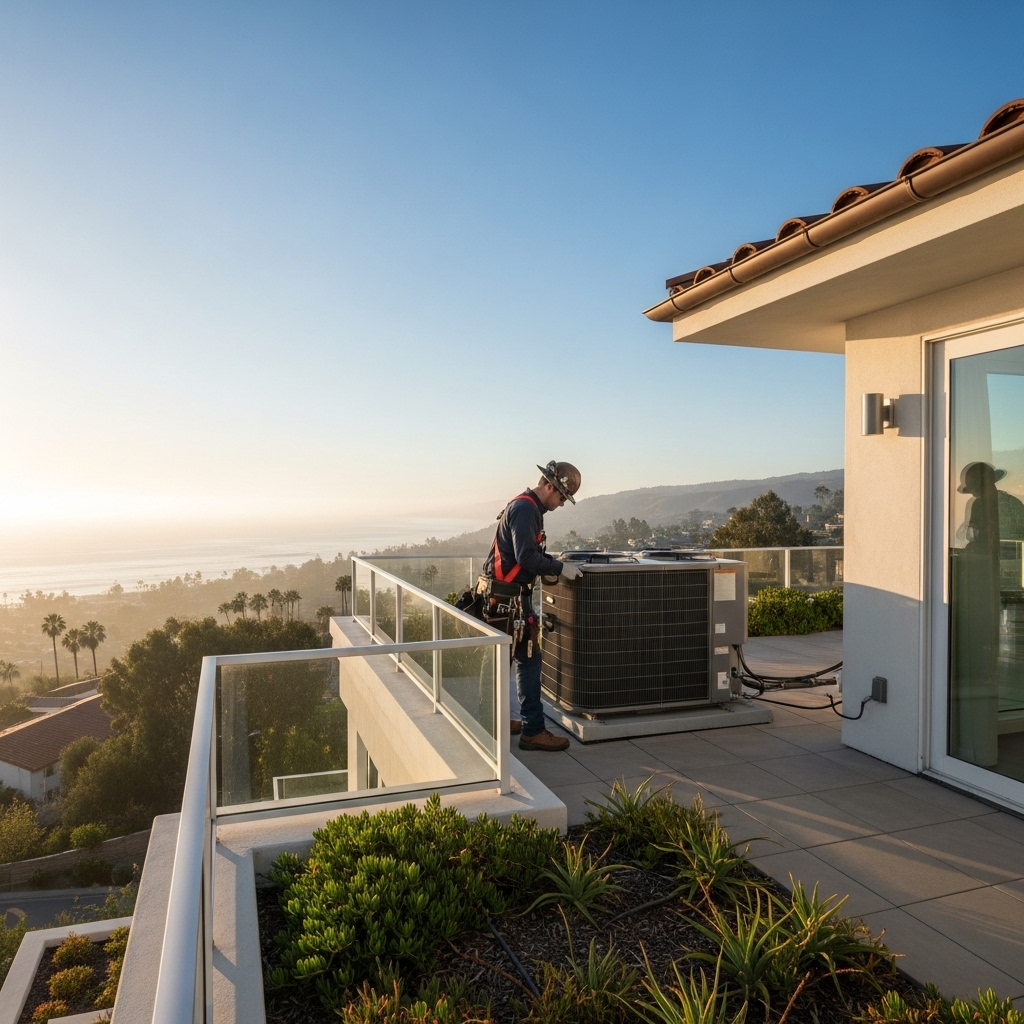
Condo living in Beverly Hills offers a unique blend of coastal calm and community convenience. From beachfront buildings along Pacific Coast Highway to hillside complexes with sweeping canyon views, every property faces the same elemental forces—salt air, sun, and wind—while navigating building rules, shared access, and tight mechanical spaces. Proper air conditioning maintenance in this setting requires more than a standard checklist; it demands coordination with building management, respect for HOA guidelines, and a careful touch with rooftop and balcony equipment. Beginning with a clear plan for routine care and timely professional support, anchored by thoughtful air maintenance, you can keep your condo comfortable, quiet, and efficient through every season.
When I evaluate a Beverly Hills condo system, I start with access. Is the condenser on the roof behind a locked gate? Is it tucked on a balcony near plantings and furniture? Does the air handler sit in a closet with limited room to work? These practical considerations shape what “proper” looks like. A well-maintained condo system is one whose owner or manager knows the access steps, schedules service slightly ahead of peak seasons, and keeps the immediate surroundings clear so airflow remains unobstructed. This approach respects community rules while ensuring the equipment gets the attention it requires.
Understanding HOA rules and building rhythms
Every association has its norms—quiet hours, elevator reservation windows for contractor access, requirements for proof of insurance, and sometimes even approved service schedules. Proper maintenance integrates seamlessly with these expectations. If rooftop access requires a building escort, schedule early to avoid delays. If work must be done during specific hours, plan for spring and early summer visits before calendars fill. Good communication is the cornerstone of smooth, proper maintenance in condominium settings.
In high-occupancy buildings, shared HVAC chases and rooftops see a lot of activity. The best time for a thorough check is when weather is mild and service demand is lower. This timing helps technicians spend the right amount of time on cleaning coils, verifying electrical health, and testing drains without pressure from a long queue of calls. With a little foresight, your condo’s system stays in prime shape when warmth and humidity arrive.
Rooftop and balcony condensers: special care in salt and sun
Rooftop units soak in sunshine and wind, which can degrade wire insulation and dry out vibration pads. Balcony condensers, while shaded, encounter salt spray, planter debris, and furniture encroaching on airflow. Proper maintenance means creating a habit of quick visual checks: confirm two to three feet of clearance around the unit, listen for smooth fan startups, and watch for early rust on fasteners and coil edges. Gentle fresh-water rinsing of the coil—done carefully to protect fins and electrical enclosures—can delay corrosion and keep heat exchange strong.
One often-overlooked detail is vibration transmission. In quiet buildings, a slightly off-balance fan can carry through the structure. Securing panels, replacing worn pads, and confirming the unit is level reduces noise that neighbors appreciate. If you notice a new hum or rattle, treat it as a maintenance signal rather than tolerating it until it becomes disruptive.
Air handlers in closets: airflow and drainage
Many Beverly Hills condos house the air handler in a compact closet. Proper maintenance here focuses on three constants: filtration, coil cleanliness, and drainage. Filters are easy to neglect when they are tucked behind a narrow panel, yet they control airflow and protect the coil. Check monthly during summer and after any smoky or windy stretch. The evaporator coil, especially in homes where windows open to invite the morning breeze, can collect fine dust that bypasses filters. Periodic professional cleaning restores efficiency and reduces the musty odors that sometimes greet you at startup.
Drainage is critical in multi-story buildings. A clogged condensate line can set off float switches or, worse, overflow into neighboring spaces. Ensure traps are properly configured and primed, and that secondary drains and safety switches function. In Beverly Hills’s variable humidity, traps can dry out during mild periods, so it pays to test and flush them as part of a proper seasonal routine.
Filters and indoor air quality in shared buildings
Condo life often means more people, more foot traffic, and potentially more indoor particulates, especially in pet-friendly communities. If your building allows, consider improving return air pathways or upgrading filter cabinets to accommodate higher-efficiency filters without over-restricting airflow. This balance is delicate in compact systems, where undersized returns are common. A professional static pressure check during maintenance tells you what your system can comfortably handle.
When wildfire smoke rolls in or the winds pick up, be prepared to increase the frequency of filter changes. Condo corridors and shared lobbies can also contribute dust as doors open and close throughout the day. It is not unusual for a well-run condo system to need two or three filters in a long summer, depending on conditions and occupancy.
Coordinating with management: the practical path
Proper maintenance in a Beverly Hills condo is as much about logistics as it is about tools. Communicate with management early about access, elevator pads, or any required forms. Ask about building-wide service windows that reduce elevator traffic conflicts. Keep basic details handy: the unit number, equipment location, and any special instructions for keys or alarms. This preparation allows technicians to arrive ready to focus on the equipment rather than navigating hurdles.
When maintenance requires rooftop work, consider the time of day. Early mornings often bring calmer winds and cooler metal, leading to better cleaning outcomes and a quieter experience for neighbors. In heavy tourist seasons, weekday mornings may also be less congested, making service smoother for everyone involved.
Noise etiquette and comfort
Condo living rewards a gentle touch. A system that starts softly and runs steadily keeps the peace. If your unit rattles or vibrates, the fix may be small—tightening a panel, adjusting a fan blade, or renewing isolation pads. Proper maintenance includes these refinements as standard, not afterthoughts. Beverly Hills’s serene evenings are part of the charm; keeping equipment discreet preserves that atmosphere.
Indoors, even distribution matters. In compact condos, a blocked register or a poorly placed rug can rob a room of airflow. Use maintenance visits to reassess furniture placement and register direction, ensuring each space receives the airflow intended by the design. A small redirection at a register can make a big difference in a bedroom or home office.
Mid-season checks and the Beverly Hills factor
Because Beverly Hills’s winds and marine layers ebb and flow, a mid-season check often pays dividends. After a burst of east winds, filters can load up and coils may dull. A focused mid-season visit to refresh filters, recheck temperature splits, and verify electrical stability catches issues while they are small. This is particularly helpful in buildings where rooftop access requires advance coordination; planning a mid-season appointment avoids the scramble during peak heat.
In the heart of summer, when demand is sustained, scheduling professional air maintenance provides the assurance that coils, drains, and controls are in top form. This cadence—preseason preparation plus a mid-season refresh—is a proven formula for steady, comfortable air in Beverly Hills condos.
Frequently Asked Questions
How often should a Beverly Hills condo AC be professionally serviced?
Twice yearly is a strong baseline: once in late spring and again late summer or early fall. This schedule addresses salt exposure, wind-driven dust, and sustained runtime. In beachfront or high-wind zones, a brief mid-season check can add valuable protection.
What is the best way to manage filter changes in a condo?
Create a simple routine: check monthly during summer and after any smoky or windy episode. Keep a spare filter on hand sized for your specific return grill or cabinet, and replace promptly when airflow looks restricted or the filter darkens significantly.
Are balcony condensers allowed to be enclosed for aesthetics?
Enclosures often reduce airflow and complicate maintenance. If your HOA allows them, ensure there is ample clearance on all sides and that panels are removable for service. Prioritize function over form; a condenser that breathes freely runs quieter and lasts longer.
What special drainage concerns do condos have?
Multi-level buildings demand extra caution. Verify primary drains, traps, and float switches as part of each maintenance visit, and keep condensate lines clear. A small clog that might merely trip a switch in a single-family home can cause significant inconvenience in a condo setting.
How can I reduce noise that bothers neighbors?
Keep units level, panels tight, and vibration pads healthy. Address any new hums or rattles promptly, and ensure line sets are secured with proper isolation. Indoors, confirm registers and returns are free of obstructions to prevent whistling or pulsating sounds.
Do HOA rules affect when I can schedule service?
Yes, most associations have guidelines for contractor hours and access. Coordinate early with management, reserve elevators if needed, and provide any required documentation so your technician can focus on the equipment and minimize disruption.
If you want your condo to stay cool, quiet, and neighbor-friendly through every season, the next step is simple. Coordinate access with your building and book a visit that respects both the environment and community rhythms. Arrange your professional air maintenance today and enjoy Beverly Hills comfort that feels effortless from the lobby to the living room.