
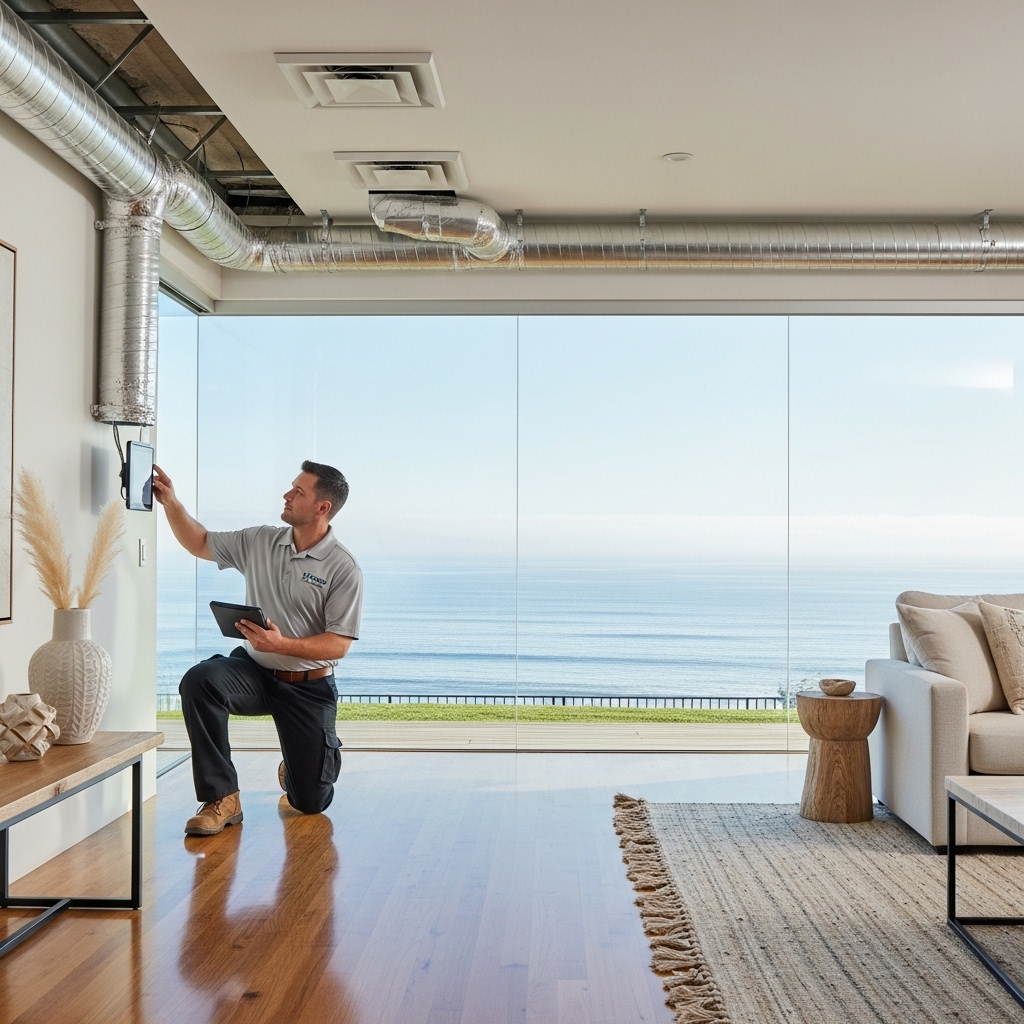
Understanding the Beverly Hills Context
Living and working in Beverly Hills, you develop a feel for the quiet forces that shape comfort inside a home: the marine layer that rolls in before sunrise, the salt air that settles invisibly on metal, and the afternoon sun that can turn a hillside room into a heat pocket. Beneath the design aesthetics and dramatic views, comfort often comes down to a simple, hidden network—your ductwork. When those ducts are tired, leaky, or poorly sized, you feel it as drafts, hot and cold spots, dust on every surface, and an HVAC system that never seems to rest. That is why many local homeowners eventually consider duct replacement as a strategic improvement, not merely a repair. Done thoughtfully, it changes the day-to-day experience of living in your space.
Beverly Hills’s climate is famously mild, but the nuance matters. We have cold, damp mornings; dry, windy Santa Ana events; and summer heat that lingers in canyons. Older ducts—especially those routed through attics with minimal insulation—struggle to keep conditioned air at the right temperature as it travels. In many homes, the duct system was installed decades ago, sized for older equipment or modified piecemeal after remodels. Replacement is an opportunity to correct these inherited compromises and to set your home up for reliable, quiet, even comfort in every season.
The Comfort You Can Feel Every Day
One of the most immediate benefits of modern ducts is balance. When a system is properly designed, sized, and sealed, rooms that used to be chronically too warm or too cool begin to converge toward the same consistent temperature. You notice it first in the primary bedroom that no longer bakes in the afternoon, or the family room that finally holds warmth on those foggy January evenings. Balanced supply and return airflows also reduce the whistling and rushing noises that come from a starved return or constricted supply, so the home feels quieter without the soundtrack of a straining blower.
Comfort isn’t just about temperature. Air movement shapes how we experience a room, and well-placed registers and returns prevent the stuffy, stagnant feeling that can creep into closed-off spaces. With a replacement, we can rethink register placement, move a return out of a hallway and into a living area, or add a dedicated return to a primary suite. These small changes alter the whole personality of the interior, making a home feel fresher with gentler, more continuous circulation.
Indoor Air Quality Gains That Accrue Over Time
Beverly Hills’s beauty comes with airborne challenges—salt-laden air along the coast, dust that rides inland on Santa Anas, and seasonal wildfire smoke that can linger in the canyons. Ducts are the pathways that carry this air, filtered and conditioned, to your rooms. When ducts are leaky, the system pulls in unfiltered air from attics or crawlspaces, adding particulates you never intended to breathe. New ducts, properly sealed with modern mastics and tapes, greatly reduce infiltration. Pair that with a right-sized return and an accessible filter location, and the home’s lungs become more efficient and cleaner with every passing month.
Another air quality benefit is condensation control. Old metal trunk lines that run through a cooler, damp crawlspace can form condensation and rust, especially near the coast where salt accelerates corrosion. New insulated duct assemblies, with vapor barriers and correct insulation values, keep air at temperature and greatly reduce surface moisture. That means less chance of musty odors, fewer microbial growth opportunities, and a more neutral, fresh indoor atmosphere even after a long marine layer morning.
Energy Efficiency and System Longevity
People are often surprised that the least glamorous part of the HVAC system can produce such outsized energy gains. Leaky ducts lose conditioned air into attics and subfloors before it ever reaches a register. In a hillside home, long runs to distant rooms can multiply these losses. A well-sealed, well-insulated system reduces wasted energy every hour the system runs. That lighter load shows up not only in the monthly energy picture but also in the health of the equipment. Compressors and blowers that no longer have to compensate for leaks and pressure imbalances cycle less aggressively and last longer. You are not just saving energy; you are giving your HVAC system a gentler life.
Beverly Hills’s microclimates also mean zoning can be smart. When you replace ducts, you can introduce zoning strategies that fit the home’s use patterns—perhaps a separate zone for a glassy great room with afternoon sun, another for bedroom wings that need quiet and stable nights. Modern duct architectures accommodate these controls gracefully, and when they are planned from the start, dampers and sensors work in harmony rather than fighting resistance in undersized runs. The cumulative effect is a home that behaves predictably, without the temperature swings that make you reach constantly for the thermostat.
Noise Reduction You Can Hear
Noise is an underrated part of comfort. If you have ever paused a movie because the system kicked on like a wind tunnel, you know the irritation. New ducts allow for bigger, smoother transitions, longer radius elbows, and properly sized returns that lower air velocity. With carefully selected register types, the home becomes quieter during operation, especially at night. In several coastal homes near PCH, we have reduced mechanical noise to the point where it fades beneath the ambient ocean hush. That change alone alters the lived experience more than people expect.
Return air strategy is central to noise control. Too few returns, or one overly small return, forces the system to pull too hard, creating turbulence that translates into sound. In a replacement, we can add a discrete return in a hallway ceiling or convert a decorative grille into a functional, acoustically lined return. These tweaks bring the HVAC soundtrack from noticeable to barely there, allowing the rhythms of the home—conversation, music, ocean—back to the foreground.
Resilience During Challenging Seasons
Wildfire smoke is not an everyday reality, but when it arrives, it becomes the only thing that matters. Duct systems with tight seals and accessible, high-quality filtration stand up better during those episodes. Replacement lets you reconfigure for a deeper, quieter return path with a filter cabinet that encourages frequent swaps during smoky days. Because the system is not pulling attic air through leaks, indoor conditions stabilize more quickly when doors and windows are closed. Even on less extreme days, when Santa Anas carry dust and pollen, tight ductwork keeps your interior from becoming a dust sink that needs constant cleaning.
Coastal corrosion is another resilience factor. If your ducts run near vented eaves or in underfloor spaces that breathe in ocean air, metal components suffer. Modern materials—properly rated flex ducts, insulated rigid ducts, and corrosion-resistant fittings—help systems withstand the coastal environment. Replacement is also your chance to remove obsolete materials, correct sagging sections that trap debris, and replace compromised boots and registers that are past their prime.
Design Opportunities During Replacement
Because ducts are out of sight, it is tempting to think of replacement as a like-for-like swap. But it is often the best time to correct architectural compromises. In many Beverly Hills remodels, a room addition or a reconfigured kitchen shifted the home’s airflow demand, but the duct design never evolved to match. With a full replacement, you can centralize returns, add a dedicated line to a home office that overheats with equipment, or re-route a supply to avoid a soffit that has bothered you for years. The project becomes a quiet renovation of your home’s circulation, tailored to your current lifestyle.
Another design opportunity is aesthetic cleanup. New supply boots and grilles can be selected with low-profile styles that blend with coastal-modern interiors. If you have struggled with ceiling grilles that stain from condensation or dust, replacing the upstream ducts and fittings often eliminates the root cause. The ceiling then stays clean, and the system feels invisible in the best possible way.
Health, Sleep, and Daily Well-Being
Good sleep starts with stable temperature and clean, calm airflow. Families tell us that after duct replacement, bedrooms become more consistent, which means fewer nighttime thermostat adjustments and less waking to noise or drafts. For those with mild allergies, the combination of sealed ducts and better filtration often means clearer mornings and fewer dusting marathons. Even pets seem to settle; animals notice noise and drafts as much as we do, and quieter, steadier airflow helps them find their favorite napping corners again.
We also see an effect on home routines. When the HVAC system behaves predictably, you stop negotiating with it—no more cooling the whole house just to make a home office tolerable, or warming up a kitchen zone to comfort a cold den. Replacement introduces a calm baseline, so you can fine-tune usage with doors and shades rather than constant thermostat interventions.
Mid-Project Awareness: What to Expect
During a typical Beverly Hills duct replacement, the team will map the existing runs, confirm equipment compatibility, and identify any code or seismic strapping upgrades needed in the attic or crawlspace. Optimizing the layout for accessibility is key; we always think about the next decade of filter changes and inspections. The right plan respects existing architecture while eliminating bottlenecks. Somewhere in the middle of this process is when most homeowners feel the power of a planned system, and it is also a good moment to revisit any special goals—quiet in a nursery, stronger airflow in a studio, or future-ready space for advanced filtration. If you are still weighing whether comprehensive duct replacement makes sense for your situation, that midpoint clarity often answers the question.
Scheduling is usually flexible around Beverly Hills’s rhythms. We avoid tearing open attics during the most humid mornings when insulation can be sticky, and we plan crawlspace work to respect tides of daily life—school runs, meetings, quiet hours. Good communication keeps disruption low, and because much of the work happens out of sight, most homeowners are surprised by how normal the house feels during the upgrade.
Cost Is Not the Only Metric—Value Is
While people naturally want to talk dollars and cents, the more meaningful conversation is about value. What is the worth of a home that maintains a gentle, even climate without fuss? What is the value of dusting less, sleeping better, protecting finishes, and extending the life of expensive mechanical equipment? The returns accumulate silently, month by month, every time the system runs without waste and without noise. Over years, that adds up to a home that feels resolved, not temperamental, and that is a quality people sense immediately when they cross the threshold.
Durability is part of that value conversation. Properly hung ducts with correct supports, sealed and insulated to modern standards, resist sagging, sweating, and vibration. Ten years from now, the system should still look and perform like it did the week it was installed. That kind of reliability becomes the quiet background to a house you want to be in, rather than a source of recurring maintenance surprises.
Environmental Considerations
Energy efficiency has a planetary story as well. Beverly Hills homeowners tend to be thoughtful about their footprint, and tight ducts are one of the simplest ways to reduce the energy you need for comfort. If you are considering heat pump technology—either now or as a future upgrade—duct replacement sets the stage for that transition. Heat pumps perform best with right-sized, low-leakage duct systems and generous return paths. In other words, what is good for your comfort is equally good for next-generation HVAC.
There is also a materials story. During replacement, we can recycle metal where appropriate and responsibly dispose of obsolete or degraded insulation and ductboard materials. The new system, once installed, uses fewer resources day-to-day simply by reducing waste from leaks. Environmental benefit becomes woven into the home’s operation without asking you to think about it.
Local Knowledge Makes a Difference
Every Beverly Hills neighborhood has its quirks. A Point Dume cottage near the bluffs faces salt air head-on; a Latigo Canyon home may deal with long duct runs that climb through tight framing; a Broad Beach property might prioritize quiet above all else due to open-plan living. Local experience means anticipating these variables—how fog lifts late certain months, how sun exposure changes with seasons, and how to route ducts so that maintenance remains easy for years. These are not theoretical details; they are the practical differences between an upgrade that looks good on paper and one that feels excellent in day-to-day life.
Even permitting and inspections benefit from local familiarity. A replacement is an occasion to ensure the whole system meets current standards, that clearances are respected, that seismic strapping and attic pathways are safe, and that everything about the install supports long-term serviceability. When these details are right, you won’t think about them again. The system will just work.
The Emotional Payoff
There is satisfaction in walking into a room and feeling…nothing. No drafts, no stale corners, no mechanical roar—just a space that supports whatever you want to do there. That is the emotional payoff of proper duct replacement. It is a foundational upgrade that recedes from attention and lets the home’s architecture and setting shine. In Beverly Hills, where so much of life revolves around light and air, it feels especially appropriate to get the unseen pathways of that air exactly right.
For many homeowners, the change reveals itself subtly over time: family members stop mentioning that one cold bedroom; windows fog less on chilly mornings; you find yourself setting the thermostat and forgetting it for days. These are the signs of a home that is finally behaving the way it should, attuned to the coast’s rhythms rather than fighting them.
Frequently Asked Questions
Q: How do I know my ducts need replacement rather than repair? A: If you have persistent comfort imbalances, visible deterioration in accessible sections, evidence of widespread leakage, or a system layout that no longer matches your home’s use, replacement lets you address root causes instead of patching symptoms.
Q: Will replacement make my home quieter? A: Yes, properly sized returns, smoother transitions, and strategic register selection reduce air velocity and turbulence, significantly lowering operating noise compared to older, constricted systems.
Q: How long does a typical Beverly Hills duct replacement take? A: Scope varies, but most projects span a few days to a week, scheduled to minimize disruption and tailored to attic or crawlspace access and any architectural adjustments.
Q: Can new ducts help with wildfire smoke episodes? A: Tight, well-sealed ducts paired with accessible filtration improve indoor air quality during smoke events by limiting infiltration and supporting frequent filter changes when outdoor air is compromised.
Q: Are there benefits if I plan to switch to a heat pump later? A: Absolutely. Heat pumps thrive with right-sized, low-leakage ducts and generous return paths; replacement prepares your home for efficient, quiet operation with future equipment.
Q: Do I need to change all registers and grilles? A: Not always, but many homeowners take the opportunity to select low-profile, performance-friendly grilles that complement interiors and support quieter airflow.
Take the Next Step
If you have been living with uneven rooms, constant dusting, or a system that calls attention to itself, consider a thoughtful plan for your home’s air pathways. A well-executed project restores comfort, quiet, and confidence in your HVAC. When you are ready to explore options, start a conversation about duct replacement tailored to Beverly Hills’s unique conditions, and set your home up for years of easy, breezy living.