
Talking about air duct replacement in Beverly Hills is a little like discussing a home remodel on a hillside estate: there is no single script that fits every property, and the details matter a great deal. When neighbors ask what drives the overall investment for a duct project, what they truly want is clarity about the moving parts, the sequence of decisions, and the conditions that make one home more involved than another. In a community where architectural styles range from 1920s Spanish Revival to sleek contemporary glass boxes, it helps to approach the topic the way a local mechanical contractor would, with attention to the particulars of your structure, your comfort goals, and the realities of working in tight attics or tucked-away mechanical rooms.
Before we go any further, it is worth grounding the conversation in the basics. Ductwork is the circulatory system of your forced-air heating and cooling, and its design and integrity determine how evenly and quietly comfort reaches your rooms. When people search for a neat answer to what air duct replacement “should” run, they usually discover that the question opens into a series of choices about materials, layout, accessibility, and performance testing. If you are just beginning your research, you will see the term duct replacement come up repeatedly, and it helps to understand not only what is being replaced, but why those components and steps add up the way they do.
Why Beverly Hills Homes Are Unique
Beverly Hills homes are not cookie-cutter constructions. Many sit on slopes, feature multiple levels, and carry design elements that complicate mechanical pathways. Plaster walls, vaulted ceilings, and tight soffits can limit where ducts can reasonably route, and in some historical homes, previous owners have layered renovations over time, creating a patchwork of duct materials and diameters. These quirks influence how long it takes to remove old runs, how the new ducts must be sized, and how carefully new supports, vibration isolation, and airtight connections have to be placed. The work is less about swapping like-for-like and more about tailoring a distribution system that respects the home’s architecture and the present-day performance standards.
Understanding the Work Behind the Number
From a process standpoint, replacing ducts involves more than just pulling out flexible tubing and dropping in a shiny new line. A thoughtful project begins with evaluation: static pressure readings, temperature differentials across supply and return, visual inspection of insulation, and verification of how returns are balanced. These checks uncover whether uneven temperatures come from undersized trunks, kinked runs, poor sealing, or a return-side bottleneck. Then there is design. Even in an existing home, a good designer lays out a plan that considers the equipment’s airflow requirements, room-by-room load, preferred register locations, and the realities of access. The installation itself is only one part; sealing, insulating, suspending, and commissioning are equally important.
Access and Logistics Shape the Scope
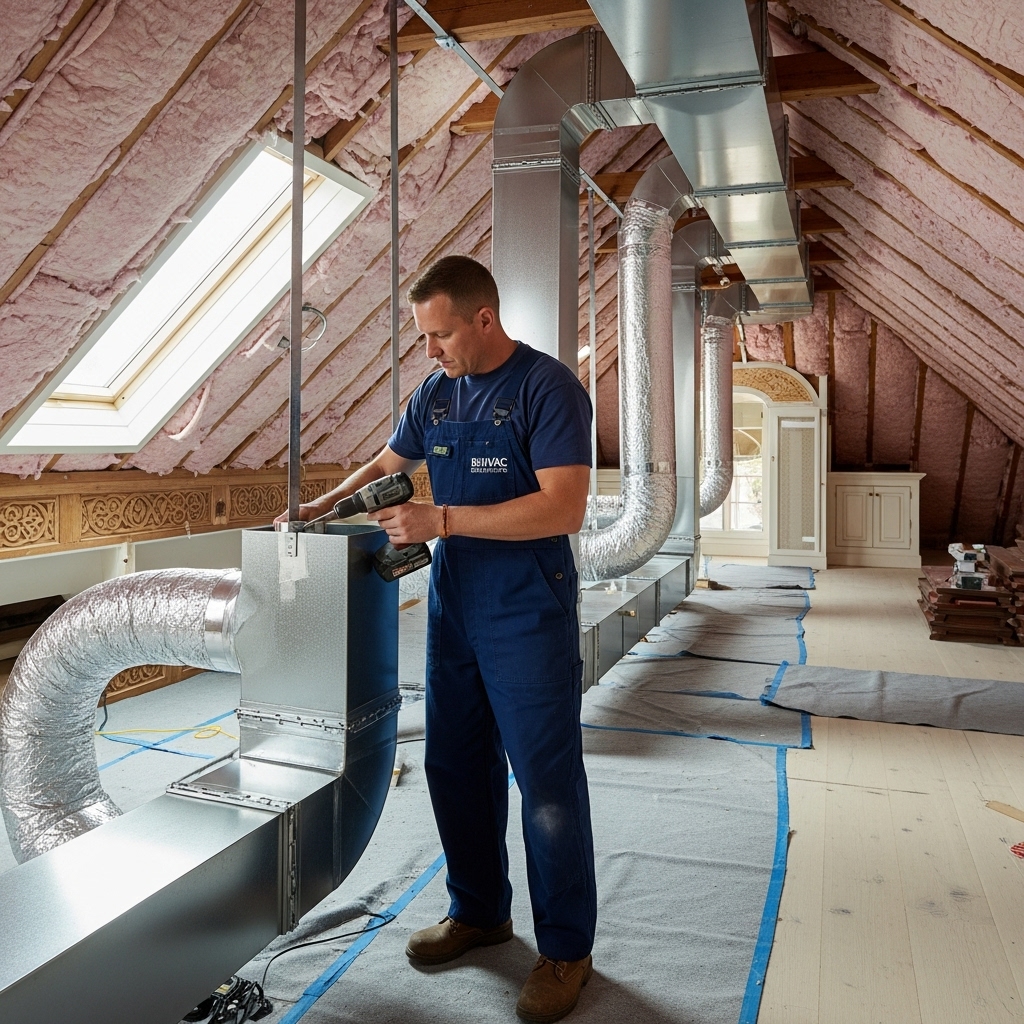
Where your ducts live dictates how easily a crew can reach them and how thorough the replacement can be. Attics above flat-roof sections can be shallow and hot, crawlspaces can be narrow, and basement mechanical rooms may have limited headroom. In Beverly Hills, it is common to find ducts threaded through tight chases that share space with electrical or plumbing, which calls for careful coordination to avoid conflicts. Homes with high-end finishes also require protective measures—floor coverings, corner guards, and dust management—because the route from the driveway to the attic ladder often winds past artwork, custom millwork, and delicate surfaces. These logistics don’t just influence the time on site; they shape how the project is staged, what tools are used, and how many technicians can realistically work in one area.
Material Choices and Performance Goals
The conversation about materials usually touches on flexible duct versus rigid duct, trunk-and-branch systems versus radial layouts, and the selection of fittings that minimize turbulence. Flexible duct has its place, especially for short, straight runs where it can be pulled tight and supported properly. Rigid metal, on the other hand, excels in longevity, clean interiors, and lower friction when designed well. The best solution often blends types to balance ease of installation with the airflow characteristics your equipment needs. Insulation quality, vapor barriers, and the sealing method—mastic, approved tapes, or both—contribute to long-term performance. When residents prioritize quiet operation, strategic use of lined trunks and takeoffs can soften sound without compromising airflow.
Code, Permits, and Testing Culture
In Los Angeles County, compliance with the California Energy Code and local standards plays a big role in the sequence of work. Permits aren’t just paper; they come with inspections and, for many projects, third-party HERS (Home Energy Rating System) verification to prove the system has been sealed and performs as designed. That means leakage testing, airtight transitions at the air handler, and often verification that registers deliver expected airflow. These steps elevate predictability. They help ensure that when you set the thermostat, each space receives the comfort you expect, without the invisible waste that can creep into older or loosely built systems.
Homes with Allergies, Odors, and Indoor Air Quality Goals
Another influence on the total scope is your indoor air quality plan. If the household is sensitive to pollen, wildfire smoke, or odors, the duct replacement conversation will include filtration strategies, fresh air considerations, and how to keep the return path clean and pressure-balanced. Upgraded filtration often means revisiting the return duct sizing to maintain healthy static pressure. If you have felt a faint dusty smell when the system starts or notice visible particulates on furniture, it may be that the older duct interior is shedding or that there are small breaches pulling in attic air. Replacing with clean, sealed, properly supported ducts can make an immediate difference you can feel when you wake up in the morning.
Architectural Details That Matter
Large, open entertaining spaces, rooms with big glass exposures, and long hallways are hallmarks of many Beverly Hills floor plans. These design elements can create microclimates inside the home—a sun-bathed family room that runs warm by afternoon, a north-facing guest suite that stays cool, or a gym over the garage with special ventilation needs. In practice, this means thoughtful placement of supply registers and careful branching from the main trunk. When ducts are replaced, it is an opportunity to correct past compromises: re-angle boots to push air across the room, adjust branch diameters to balance a stubborn office, or re-route a return to quiet the whoosh you’ve tuned out for years. These refinements are part of the craft and can be every bit as impactful as the new materials themselves.
Working in Occupied Luxury Homes
Replacing ducts in a home that is lived in year-round requires choreography. Crews stage materials so that daily life can continue with minimal disruption. Sections are completed and tested methodically so that cooling or heating downtime is contained. Dust control and cleanup standards are non-negotiable, and communication about which rooms are impacted on a given day keeps everyone comfortable. For second homes, scheduling windows may be tight, and coordination with property managers or estate staff becomes essential. These realities do not show up as a line item in a brochure, but they define the experience and the confidence you feel when the last register is reinstalled and the system hums quietly to life.
Energy Efficiency and Comfort as Outcomes
Talking about cost is ultimately a way of talking about outcomes. The goal is a system that delivers even temperatures, quiet operation, and efficient airflow so that the equipment runs within its design sweet spot. Well-designed ducts can reduce unnecessary cycling, protect compressors and furnaces from stress, and help the entire system age gracefully. In homes where owners value a serene environment for work and entertaining, a thoughtfully balanced distribution network means conversations aren’t interrupted by rushes of air, and bedrooms settle into the right temperature by the time you turn in for the night.
Mid-Project Decisions and What They Mean
Even with a thorough plan, real-world projects uncover surprises. Hidden junctions appear behind a chase, a framing member sits where a trunk was expected to pass, or a return shows signs of previous water intrusion. The best teams treat these discoveries as moments to refine the plan, not as detours from it. They share options, explain the tradeoffs, and keep the commissioning goals front and center. Somewhere around the midpoint of a project, it is common to ask whether an additional run to a trouble room should be added or whether a register needs repositioning. It is also a good moment to revisit priorities such as noise levels or filtration targets. These conversations are all part of achieving the at-home experience you imagined when you first started researching duct replacement.
Seasonal Timing and Site Conditions
The time of year affects working conditions, particularly in attics. Summer heat in a low attic can slow progress and call for shorter, safer work intervals. In the cooler months, moisture control and keeping interiors comfortable while sections are open become focal points. If your property has landscaping that limits equipment access or narrow side yards that complicate staging, small schedule adjustments might be needed. These are not obstacles so much as considerations that experienced crews plan around, drawing on local knowledge of neighborhoods from the Flats to Trousdale Estates and the particularities each area presents.
From First Walkthrough to Commissioning Day
The flow of a well-executed project moves from discovery to design, from careful removal to clean installation, and finally to testing and owner orientation. During the final phase, technicians measure airflow at registers, verify static pressure, check for any air noise at boots, and confirm that thermostatic controls are communicating as intended. This is also when you will see that registers sit flush, dampers are accessible, and supports are secure. The finishing touches—patching old penetrations, closing removed chases neatly, and labeling key branches—contribute to pride of ownership and future serviceability.
Common Missteps and How to Avoid Them
Two frequent pitfalls in older duct systems are excessive length and unnecessary turns. A branch that snakes around obstacles accumulates friction and robs rooms of air. Another error is starving the return side, which forces equipment to strain and makes supply ducts sound louder. Replacing ducts offers the chance to shorten runs, smooth transitions, and right-size returns. Likewise, under-supporting flexible runs allows them to sag, introducing hidden restrictions. Close attention to strapping intervals and bend radiuses keeps airflow healthy and quiet. You can hear the difference in a master suite at 11 p.m. when the system cycles on and all you notice is the room staying just right.
Communication: The Soft Skill That Protects Quality
In neighborhoods where schedules are tight and details matter, communication can be the difference between an acceptable project and an excellent one. Clear expectations about daily start and stop times, access, parking, and which zones will be offline on a given day help everyone plan. When your contractor explains why a boot angle is being changed or why a larger return will serve the equipment, you are better equipped to make decisions that align with your comfort goals. There is a confidence that comes from seeing a plan executed carefully, with questions answered along the way and small refinements captured before they become frustrations.
Looking Beyond the Project: Maintenance and Longevity
Once new ducts are in place, routine filter changes, occasional grill cleaning, and visual checks of attic or crawlspace sections help keep the system in top shape. If you upgrade equipment in the future, the new distribution network will be ready to support it, and the benefits of lower leakage and smoother airflow will continue to show up in everyday comfort. Think of the replacement as a foundation—quiet, reliable, and invisible most of the time—that supports the home’s rhythm through seasons and gatherings.
FAQ
How do I know my home actually needs ducts replaced and not just sealed? A thorough evaluation with airflow and static pressure measurements, along with a visual inspection of duct interiors and connections, will reveal whether the system suffers more from leakage at seams or from aging materials, crushed runs, and sizing issues. When layout and condition are the primary problems, replacement is the path that resolves root causes rather than surface symptoms.
Will replacing ducts change the appearance of my ceilings or walls? In most cases, existing register locations are reused, and interior finishes remain unchanged. When improvements require relocating a register for better throw or balance, careful patching and paint blending return surfaces to their original look. In attics and crawlspaces, new supports and sealing are largely out of sight.
What about noise—can new ducts make my system quieter? Yes. Smoother transitions, correct sizing, and thoughtful return design all reduce turbulence and air velocity noise. Lined sections or strategic use of flexible connectors can also soften sound where appropriate, especially near bedrooms and home offices.
How long does a typical project take? Duration varies with access, home size, and the extent of reconfiguration. Many projects are staged so that portions of the home remain comfortable while work progresses, and crews coordinate with your schedule to minimize disruption.
Do I need to be home during the work? Not necessarily, though it helps to be available at key checkpoints to review findings or decisions. Homeowners often coordinate through property managers or remote access systems, with daily updates and photos shared as the project advances.
Will new ducts improve indoor air quality? Replacing deteriorated or unsealed ducts can significantly reduce dust and odors drawn from attics or crawlspaces. When paired with a right-sized return and appropriate filtration, many households notice cleaner surfaces and easier breathing during high-pollen or smoke events.
When you are ready to turn ideas into a concrete plan, a conversation with a seasoned local team can make the path forward clear and predictable. If you have been weighing options, sketches, or room-by-room comfort goals, consider starting with a professional assessment and design discussion. To connect with experienced help that understands the nuances of Beverly Hills properties, reach out and explore your options for duct replacement that respects your home, your schedule, and your standards.